Summary
Editor's rating
Is it worth the money compared to other small wine fridges?
Tall, skinny, and easy to place… but with some practical quirks
Noise, everyday use, and living with it in a small space
Build quality, long-term feel, and potential issues
Cooling, dual zones, and real-world temperature behavior
What this wine cooler actually offers on paper
Pros
- Very narrow footprint (10.7" wide) fits in tight spaces where normal wine fridges won’t
- True dual zones with independent temperature ranges for reds and whites
- Upright bottle rack for open bottles is practical and actually holds them securely
Cons
- Compressor and occasional electrical buzzing can be noticeable, especially in quiet rooms
- Manual defrost and some reports of mixed customer service if you get a noisy or faulty unit

Specifications
View full product page →| Brand | Wine Enthusiast |
A skinny wine fridge for small spaces… with a few catches
I’ve been using this Wine Enthusiast 18-Bottle Slimline Dual Zone Wine Cooler for a while now in a pretty normal setup: small apartment, open living room/kitchen, not a fancy cellar. I bought it because I wanted something narrow that wouldn’t eat up floor space, but still let me keep both reds and whites at half-decent serving temps. On paper, this one ticks all the boxes: dual zone, upright storage for open bottles, digital controls, and supposedly energy efficient.
In day-to-day use, it mostly does what it says: it cools wine and doesn’t hog space. But it’s not perfect. The main things that stand out are the slim footprint, the dual temperature zones that are actually independent, and the noise level, which seems to be hit-or-miss depending on the unit you get and how you install it. Some people online say it’s almost silent, others complain about buzzing. I’m somewhere in the middle: it’s not crazy loud, but I definitely hear it when the compressor kicks in.
I’ll go through the design, performance, noise, and whether it’s actually good value compared to other compact wine coolers I’ve used (Nutrichef, Magic Chef, and a random no-name thermoelectric unit). I’m not a sommelier, I just like having bottles ready to drink and not crammed in my regular fridge. So this review is more “friend at a bar telling you how it really is” than polished showroom talk.
If you’re short on space and you want dual zones in a narrow column format, this cooler is pretty solid overall, but you need to be ready for manual defrost, some fiddling with leveling, and the chance that the compressor noise might bug you if you’re sensitive or you keep it near your couch or bed.
Is it worth the money compared to other small wine fridges?
Price-wise, this Wine Enthusiast 18-Bottle Slimline usually sits in the mid-range for compact wine coolers. It’s not the cheapest 12-bottle thermoelectric unit, but it’s also not in the same league as built-in under-counter models. For what you pay, you’re mainly getting three things: dual zones, a very slim footprint, and better energy efficiency than older tech. If those three points matter to you, the value is pretty solid. If you don’t care about dual zones or space is not an issue, there are cheaper options that will chill wine just as well.
Compared to the Nutrichef and Magic Chef 12-bottle coolers I’ve used before, this one feels more capable and a bit more serious. Those smaller units were fine at first but didn’t last long and had temp accuracy issues. The Wine Enthusiast feels more stable and the temps are more trustworthy. On the flip side, those smaller units were sometimes quieter because they used different cooling systems, though they struggled more in warmer rooms. So you’re basically trading a bit of potential noise and complexity for better performance and capacity.
Where the value starts to slip is if you get unlucky with a noisy or buzzing unit and then have to fight with customer service. At that point, even a mid-priced fridge feels expensive. The fact that some people report almost silent operation and others report constant buzzing tells me the experience is very unit-dependent. If you’re willing to send it back or exchange it if you get a bad one, then the risk is manageable. If you live somewhere where returns are a pain, that’s a bigger gamble.
Overall, I’d say the value is good but not perfect. If you specifically need slim, dual-zone, freestanding in a small space, this is one of the better options around and the price makes sense. If you just want something to keep a few bottles cold and don’t care about zones or width, you can save money with a simpler single-zone fridge and probably be just as happy.
Tall, skinny, and easy to place… but with some practical quirks
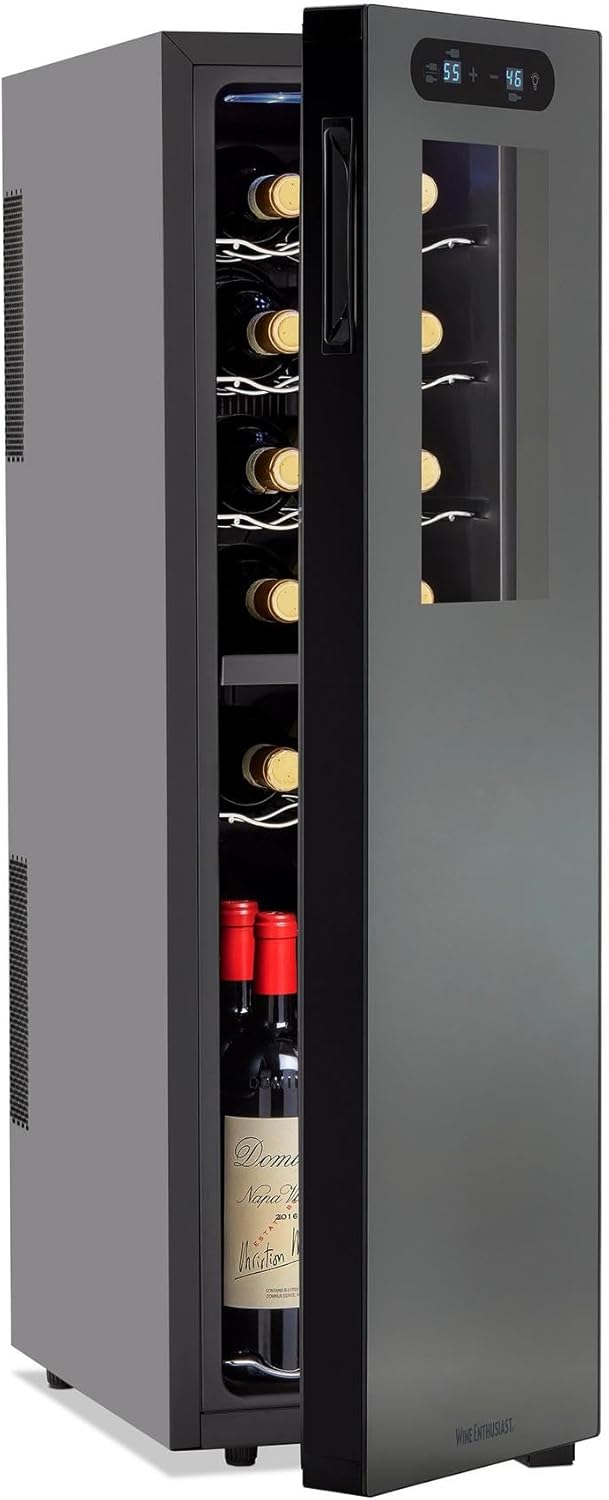
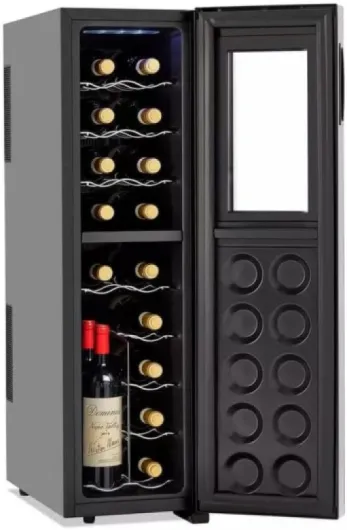
The main design win here is the footprint. At just 10.7 inches wide, this thing can slide into spaces where a normal under-counter fridge just won’t fit. In my case, it sits between a cabinet and a wall where nothing else would have gone, so from a space-usage point of view, it’s pretty smart. The height (36.8 inches) is basically counter height, so you can treat the top like a small extra surface for a tray, some glasses, or a small bar setup, as long as you don’t block ventilation behind it.
The front is plain black with a digital touchscreen panel and a small display. It looks fine, nothing flashy, but it doesn’t scream “cheap plastic” either. The door is solid and insulated, not a big glass front, which I actually like because it helps keep light and heat out. You still get a glass section in the door with LED lighting inside so you can see your bottles when the light is on, but it’s more discreet than those full-glass showcase units. It blends into a kitchen better than chrome-heavy models, in my opinion.
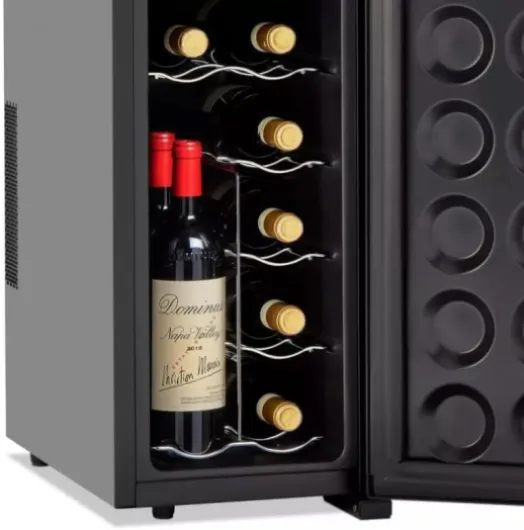
Inside, the wavy chrome shelves slide out just enough to grab bottles, but they’re not on smooth rails, it’s more of a simple slide-in metal shelf system. They’re removable and you can move them between top and bottom zones, which is handy if you need more height for different bottle shapes. The upright storage rack is a nice idea: it actually holds open bottles reasonably securely without wobbling, as long as you don’t yank the door open. If you’re the type who opens a bottle and keeps it for a few days, that part is genuinely useful.
On the downside, the slim width means you don’t have much flexibility in how you angle or stack bottles. Anything with a wider base or long neck can get awkward. Also, because it’s freestanding only, you can’t really build it into cabinetry unless you leave a lot of ventilation space, otherwise it might overheat and get noisy. And one more point: getting it perfectly level is more important than you’d think. If it’s even slightly off, you’ll notice more vibration and noise from the compressor. The leveling feet work, but it took me a bit of trial and error, especially on uneven flooring.
Noise, everyday use, and living with it in a small space
This is where things get a bit mixed. Noise-wise, my unit is not terrible, but it’s not "completely silent" either. When the compressor kicks on, there’s a low hum and sometimes a faint electrical buzz for a few seconds. It’s not constant, but you notice it in a quiet room. Compared to a full-size kitchen fridge, I’d say it’s slightly quieter overall, but because it’s often closer to where you sit or sleep, it feels more noticeable. If you’re very sensitive to sound and plan to keep this right next to your couch or in a studio apartment, this is something to think about.
Some reviewers say it’s dead quiet, others say the buzzing is unbearable. That tells me quality control is a bit hit-or-miss and installation matters a lot. When I first set it up slightly unlevel, the vibration noise was worse. Once I leveled it properly and made sure it wasn’t touching the wall or cabinets, the sound dropped to a more tolerable level. I still hear the compressor cycling, but it’s not enough to bother me while watching TV. If your floor is hollow or you have thin walls, you might get more resonance, so placement matters.
In terms of daily use, the touchscreen controls are straightforward. You tap up/down to adjust temps, and the display is bright enough to read but not so bright that it lights up the room at night. The interior LED light is decent for seeing labels, though it’s more of a cool white than a warm bar vibe. Shelves slide out enough to grab bottles, but they’re a bit basic; you need two hands sometimes to avoid knocking neighboring bottles. The upright rack is actually handy if you’re mid-week on an open bottle and don’t want it lying down.
Living with it, I’d say comfort is acceptable but not perfect. The main trade-offs are: you get a slim, dual-zone cooler that fits almost anywhere, but you might deal with occasional buzzing and the need to level it carefully. If you stick it in a kitchen or a corner away from where you sleep, you’ll probably forget about it most of the time. If you put it in a tiny studio right next to your bed, you might regret it on quiet nights.
Build quality, long-term feel, and potential issues
From a build quality point of view, the cooler feels reasonably solid for the price and size. The cabinet doesn’t flex, the door closes with a proper seal, and the hinges haven’t sagged or loosened so far. The chrome shelves are basic but don’t feel like they’ll bend under normal use. I wouldn’t sit on them or stack heavy non-wine items, but for standard bottles, they’re fine. The touchscreen hasn’t glitched on me yet; the buttons respond every time, and the display hasn’t faded or flickered.
Where I do have some doubts is long-term compressor reliability and noise changes over time. One of the Amazon reviews mentioned that the unit started making a noticeable buzzing sound after just a couple of days, and the brand’s customer support didn’t handle it well. My own unit did get slightly louder after a few weeks compared to day one, not dramatically, but enough that I noticed. That could be normal break-in, or it could be a sign that some units are more prone to vibration or electrical hum. Hard to say, but it doesn’t scream “built like a tank.”
The fact that it’s manual defrost also means you need to keep an eye on moisture and frost buildup. If you ignore it and let ice accumulate around the cooling elements, you’ll probably shorten its life and make it noisier. So from a durability angle, this is not a “set and forget for a decade” appliance. It’s more like: treat it decently, keep it level, give it enough ventilation, defrost when needed, and it should last a reasonable number of years. But if you want something to last forever with zero maintenance, this probably isn’t it.
Overall, I’d call durability decent but not bulletproof. The thousands of reviews and its age on the market suggest it’s not failing left and right, but the occasional buzzing complaint and slow or unhelpful support are red flags. If you buy it, I’d keep the packaging for a bit and test it thoroughly in the first weeks so you can return or exchange it if you get a particularly noisy or faulty unit.
Cooling, dual zones, and real-world temperature behavior
In terms of actual cooling, the unit does its job, but it’s not instant and you have to be a bit patient. When I first plugged it in (after letting it sit upright for several hours like they tell you), the top zone reached my target temperature (around 58°F for reds) fairly quickly, within a couple of hours. The bottom zone, which I set to 47°F for whites, took noticeably longer, more like half a day to fully stabilize. This lines up with what other users reported: the bottom is slower to catch up but eventually gets there.
Once both zones are stabilized, they’re pretty consistent, but you should expect a small swing of a couple of degrees when the compressor cycles on and off. That’s normal for this type of cooler and not a big deal unless you’re extremely picky. I kept a simple fridge thermometer on each shelf for a week, and the readings stayed roughly in the range I set, usually within ±2°F. For home use, that’s totally fine. Your wine will be at a decent drinking temperature, which is the whole point.
One thing to keep in mind is the ambient room temperature. The manual and some reviews mention that if your room is too hot, the unit struggles and can get noisy. I keep my place around 69–72°F, and it handled that without issues. If you’re in a hot climate and your room is regularly above mid-70s, I wouldn’t push this fridge into a tight corner. It will work harder, cycle more, and likely be louder. It’s also manual defrost, so if you live somewhere humid, you might see a bit of condensation or frost buildup over time and you’ll have to unplug and defrost periodically.
Overall performance: for short- to medium-term storage and ready-to-drink bottles, it’s nothing special but effective. It’s not a professional cellar, but that’s not what it’s pretending to be. If you keep it reasonably loaded (not empty, not jam-packed to the point where air can’t move), it keeps both reds and whites at sensible temps and recovers fairly quickly after you open the door. Just don’t expect perfect lab-grade precision or ultra-fast chilling from room temp; pre-chill bottles in your main fridge if you want them ice-cold in a hurry.
What this wine cooler actually offers on paper
On the spec sheet, the Wine Enthusiast 18-Bottle Slimline looks fairly straightforward. It’s a freestanding, freezerless wine fridge with a single door, dual internal zones, and a total stated capacity of 18 standard 750ml bottles. The footprint is 20.5" deep x 10.7" wide x 36.8" high, so it’s basically a tall, skinny column. Capacity-wise, they say 14 bottles laid down + 4 upright, which matches what I’ve managed in real life with regular Bordeaux-style bottles. If you have a lot of chunky Champagne or weird-shaped bottles, forget about hitting 18.
It uses solid-state cooling technology (basically a more efficient modern system vs older thermoelectric units), and they claim up to 65% more efficient than some of their previous models. It’s rated around 1.9 cubic feet, and there’s no freezer section, so all the space is focused on wine. You get wavy chrome shelves that can be removed and rearranged between the top and bottom zones, plus a special upright rack that’s meant for open bottles to keep them from leaking.
The top zone is rated for 8 bottles and can be set between 54–66°F, which is more the range for red or slightly chilled whites. The bottom zone holds 10 bottles and goes from 46–66°F, so that’s where you stick your whites, rosés, and anything you want colder. Control is via a front LED digital touchscreen on the door, and there’s interior LED lighting that you can toggle. The door is insulated and solid (not a big glass showcase door), which is meant to help with UV and ambient heat.
On Amazon, it sits around 4.1/5 with over a thousand reviews and ranks pretty high among freestanding wine cellars. That tells me it’s not junk, but it’s also not flawless. The technical stuff is all there: manual defrost, right-hinged door, compact form factor, and no batteries or weird extra parts. The big question is how all of that feels and behaves in normal use, and that’s where things get more mixed.
Pros
- Very narrow footprint (10.7" wide) fits in tight spaces where normal wine fridges won’t
- True dual zones with independent temperature ranges for reds and whites
- Upright bottle rack for open bottles is practical and actually holds them securely
Cons
- Compressor and occasional electrical buzzing can be noticeable, especially in quiet rooms
- Manual defrost and some reports of mixed customer service if you get a noisy or faulty unit
Conclusion
Editor's rating
This Wine Enthusiast 18-Bottle Slimline Dual Zone Wine Cooler does what most people want: it keeps reds and whites at sensible temperatures, fits into tight spaces, and doesn’t look cheap. The dual zones actually work, the temps stay close to what you set, and the upright bottle rack is genuinely handy if you often keep open bottles for a few days. For apartments, small kitchens, or anyone who doesn’t have room for a wide under-counter unit, the narrow footprint is the main selling point and it delivers on that.
It’s not perfect, though. The noise is the biggest wildcard: some units are almost silent, others have a noticeable hum or buzzing when the compressor runs. Getting it perfectly level and giving it decent ventilation helps, but if you’re very sensitive to sound or planning to put it right next to your bed, you might find it annoying. Add in the manual defrost and reports of slow or unhelpful customer service, and you can’t just buy it and forget about it forever.
If you’re a casual wine drinker with limited space who wants separate temps for reds and whites and you’re okay with a bit of background noise, this cooler is a pretty solid choice for the money. If you care more about silence than dual zones, or you have plenty of room for a wider single-zone unit, you might be better off with something simpler and cheaper. It’s a good fit for small homes and wet bar setups, less ideal for bedrooms or ultra-quiet living rooms.