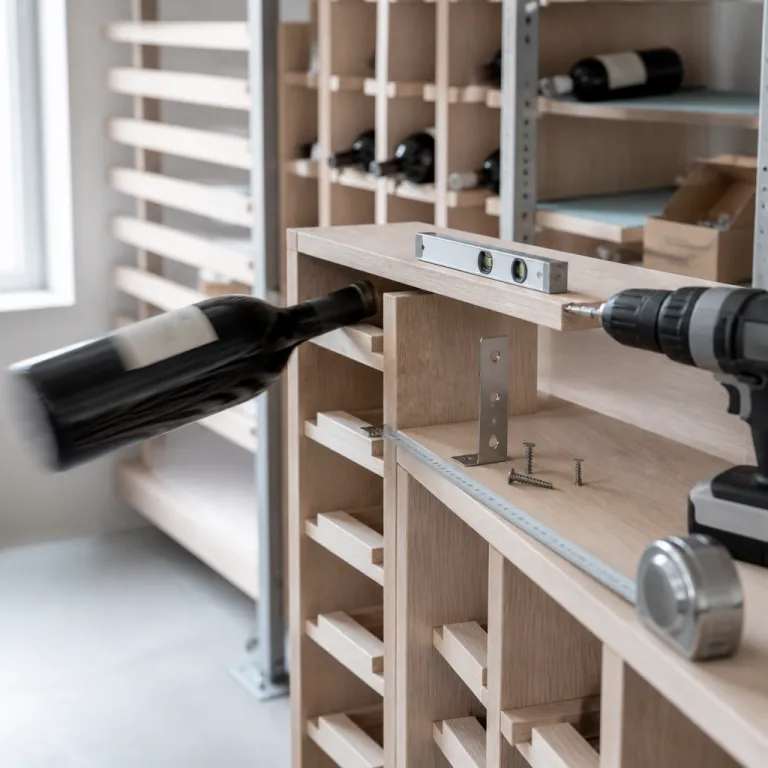
Why big wine bottle formats change your storage strategy
A big wine bottle immediately alters how you plan your storage space. When one bottle holds 1.5 to 18 liters of wine, the weight, balance and access inside a cooling unit become critical. For anyone managing both standard bottles and large format wines, the first decision is how to divide shelves between everyday drinking and long term aging.
Most racks are designed around the 0.75 liter standard bottle, so a magnum or double magnum quickly exposes weak points in your shelving. A serious collector of Bordeaux or Napa Valley wines who buys magnums for ageing needs deeper shelves, stronger rails and more generous bottle spacing than a casual drinker. If you plan to store champagne in big bottles, you also need wider cradles because the bottle diameter and shoulder shape differ from still red wine bottles.
Think about how you move bottles in and out of the store or cellar. A large format wine bottle such as a magnum, jeroboam or even an imperial of cabernet sauvignon can weigh several kilograms, so flimsy wire racks are a risk. Robust wooden or steel shelving that supports both single large bottles and rows of standard bottles will protect your wine gift investments and prevent dangerous slips.
Mapping capacity for mixed bottle sizes in a cooling unit
Capacity labels on a cooling unit almost always refer to standard bottles of 0.75 liters. Once you introduce a big wine bottle or several magnum formats, the real capacity for wines drops sharply. Anyone planning a serious collection of red wine, champagne and sweet wines must calculate how many large format bottles will share space with standard bottles.
Start by listing the bottle sizes you actually buy, from half bottles to magnum, double magnum and larger. A collector focused on Bordeaux chateau releases such as Château Haut Brion will often prefer magnum or jeroboam formats for ageing, while a fan of Napa Valley cabernet sauvignon might mix magnum bottles and regular wine bottles. Use a simple grid on paper or a digital cellar management tool to assign each shelf a maximum bottle size and number of bottles, then adjust as your wines arrive.
To make this concrete, imagine a 120 bottle cooler rated for 0.75 liter Bordeaux bottles. If you dedicate one shelf to eight magnums of cabernet sauvignon, that shelf now holds the equivalent of sixteen standard bottles, but in practice you may only fit six or seven magnums because of extra spacing. Your effective capacity might drop from 120 to around 105 standard bottle equivalents, which is typical when you mix formats. Memory fails once you juggle dozens of wines, formats and prices, so pairing tailored racks with a digital cellar log is essential. Record every big bottle, its volume in liters, the chateau or producer, and the intended drinking window, then match this information to the exact shelf or unit position. This disciplined approach keeps wine gift bottles visible, avoids forgotten treasures and ensures that both large formats and standard bottles are opened at their peak.
Choosing racks and shelving that respect big bottle geometry
Not all racks that claim to hold a big wine bottle actually respect its geometry. A magnum of champagne has a wider base and different curve than a Bordeaux magnum, while a large format bottle of cabernet sauvignon from Napa Valley can be longer than a traditional chateau bottle. When racks ignore these differences, pressure points form on the glass and labels tear as you slide bottles in and out.
Look for shelving that specifies compatible bottle sizes, from standard bottles to magnum, double magnum and jeroboam. Adjustable shelves or modular racks let you reconfigure the large format layout as your wines evolve, whether you add more big bottles of red wine or shift toward champagne and sparkling wines. As a practical example, many standard racks are around 30 cm (12 in) deep, while comfortable storage for magnums often requires 33–35 cm (13–14 in) of usable depth.
The table below summarizes indicative dimensions and static load targets for common formats, based on typical trade specifications rather than a single manufacturer:
| Bottle format | Approx. volume (L) | Typical length / height | Recommended shelf depth | Suggested static load per bottle |
|---|---|---|---|---|
| Standard bottle | 0.75 | 30–32 cm | 30 cm | 1.5–2.0 kg |
| Magnum | 1.5 | 33–35 cm | 33–35 cm | 3.0–3.5 kg |
| Double magnum | 3.0 | 38–40 cm | 38–40 cm | 4.5–5.5 kg |
| Jeroboam (Champagne) | 3.0 | 45–50 cm | 40–45 cm | 5.0–6.0 kg |
For a mixed collection, combine horizontal cradles for long term storage with angled display shelves for a special large bottle or wine gift. Horizontal racks keep corks moist in both standard bottles and large format bottles, while angled shelves let you highlight a favorite magnum from a favourite chateau or a rare champagne in big bottle format. As a rule of thumb, a shelf that safely holds ten standard bottles at 2 kg each should be rated for at least 25–30 kg if you plan to store six magnums. Always test with empty bottles first to ensure the unit doors close smoothly and that wine glasses or other accessories do not collide with the necks.
Temperature, service and accessories for large format wines
Serving a big wine bottle correctly requires more than just extra glasses. Because a magnum or double magnum contains more liters of wine, it warms more slowly once removed from the cooling unit. That slower temperature change is an advantage for red wine and champagne, but only if you plan the service ritual carefully.
Dedicated chillers that wrap around a big bottle help maintain a stable serving temperature at the table. Tests such as a dual wrap wine and champagne bottle chiller review show how modern accessories can both cool and gently warm wines to the ideal range. When you pour from a magnum or larger format wine bottle, use slightly larger wine glasses to allow proper aeration, especially for structured cabernet sauvignon or powerful Bordeaux blends.
Think about how many guests you usually host and match bottle sizes to the occasion. A jeroboam or other large format bottle is perfect for a celebration where you want everyone to share the same chateau or Napa Valley cuvée. For smaller gatherings, a single big bottle may be too much, so plan to use preservation systems or choose a standard bottle size instead, keeping the large formats for events where the entire bottle can be emptied in one evening.
Balancing price, rarity and practicality in big bottle collecting
Large format wines often command a higher price than their standard counterparts. A magnum of Bordeaux from a renowned chateau can cost significantly more per liter of wine than two standard bottles of the same cuvée. Collectors accept this premium because big bottles age more slowly and evenly, offering a different expression of the same red wine or champagne.
When you evaluate price, compare the total volume in liters and the long term value. A magnum of cabernet sauvignon from Napa Valley may seem expensive, but if it ages gracefully for decades while standard bottles peak earlier, the investment can be justified. Many estates such as Château Haut Brion release limited quantities of magnum and jeroboam formats, which become sought after wine gift options and centrepieces for special dinners.
Practicality still matters, especially in smaller homes or apartments. A big wine bottle takes more space in the cooling unit and on racks, so you must decide how many large formats you can realistically store without sacrificing everyday wines. Aim for a balanced cellar where large format bottles coexist with standard bottles, half bottles and perhaps a few experimental sizes, giving you flexibility for both casual evenings and major celebrations.
Designing an elegant display for big bottles in living spaces
Many enthusiasts want at least one big wine bottle on display rather than hidden in a cellar. A well placed large format bottle can anchor a room, especially when paired with tasteful glasses and subtle lighting. The key is to separate decorative bottles from those that still need stable temperature and humidity inside a dedicated unit.
Use sturdy pedestals, wall mounted brackets or low consoles to showcase a favourite magnum or double magnum. Position a set of fine wine glasses nearby to signal that the bottle is meant for sharing, not just decoration, and keep the original wooden chateau case if it complements your interior style. For rare wines such as a jeroboam of Bordeaux or a special Napa Valley cabernet sauvignon, consider transparent cases that protect labels from dust and sunlight while still celebrating the big bottle format.
In living areas, avoid placing big bottles near heat sources or direct light. If you want a rotating display of wines, keep the main stock of large format bottles in a temperature controlled store and bring out one bottle at a time for short term display. This approach preserves the ageing potential of your wines, respects the bottle size and format specifications, and keeps your most precious wine gift bottles safe until the right occasion arrives.
Key figures and trends for large format wine bottles
- Industry commentary from major auction houses suggests that large format bottles such as magnum and double magnum formats can achieve price premiums of roughly 50 to 100 percent over standard bottles from the same chateau, reflecting both rarity and ageing potential. These ranges are indicative estimates compiled from trade reports rather than a single published study, and exact premiums vary by vintage, producer and region.
- Cellar performance observations from oenologists indicate that magnum formats often mature about 20 to 30 percent more slowly than 0.75 liter bottles, which can help preserve freshness and complexity in structured red wine from regions like Bordeaux and Napa Valley. These figures are based on comparative tasting experience and should be treated as rules of thumb, not strict guarantees.
- Market surveys of wine gift buyers report that more than one third of respondents consider a big bottle or jeroboam the most impressive format for celebrations, especially for champagne and iconic cabernet sauvignon cuvées. Percentages differ between markets and price segments, and most surveys are conducted by retailers or trade bodies rather than academic researchers.
- Retail analysis from specialist stores suggests that while large format wines represent less than 5 percent of total bottle volumes sold, they account for a disproportionately high share of revenue because of their higher average price per liter. These shares are approximate and should be read as industry benchmarks rather than precise statistics.
FAQ: big wine bottle storage and shelving
How many standard bottles equal one magnum
A magnum wine bottle holds 1.5 liters of wine, which equals two standard bottles of 0.75 liters each. When planning shelving in a cooling unit, treat each magnum as occupying at least the horizontal space of two bottles and often more height. This helps you avoid overcrowding and protects labels and corks.
Are large format bottles better for ageing
Large format bottles such as magnum, double magnum and jeroboam generally age more slowly and steadily than standard bottles. The ratio of wine volume to oxygen in the neck is more favourable, which can preserve freshness in red wine and champagne. For long term cellaring of top Bordeaux or Napa Valley cabernet sauvignon, many experts prefer at least a magnum size.
What type of rack is safest for big bottles
The safest racks for big bottles use solid wood or heavy gauge metal with deep cradles. They should specify compatibility with magnum, double magnum and other large format sizes, not just standard bottles. Avoid thin wire shelves that flex under the weight of a big wine bottle, especially inside a sliding shelf unit.
Can I store big bottles in a regular fridge
A regular kitchen fridge is rarely ideal for long term storage of big bottles because of temperature fluctuations and limited space. Short term chilling of a big bottle of champagne or white wine is possible if you use space saving racks designed for fridges. For ageing red wine in large format bottles, a dedicated wine cooler or cellar with adjustable shelving is strongly recommended.
How should I serve a big bottle at the table
When serving a big bottle, chill it in a wine cooler or ice bath until it reaches the correct temperature for the style. Use a sturdy table, a large decanter for structured red wine and enough wine glasses so guests can be served promptly. Pour slowly to control the weight of the bottle and consider using a cradle or stand for very large formats.