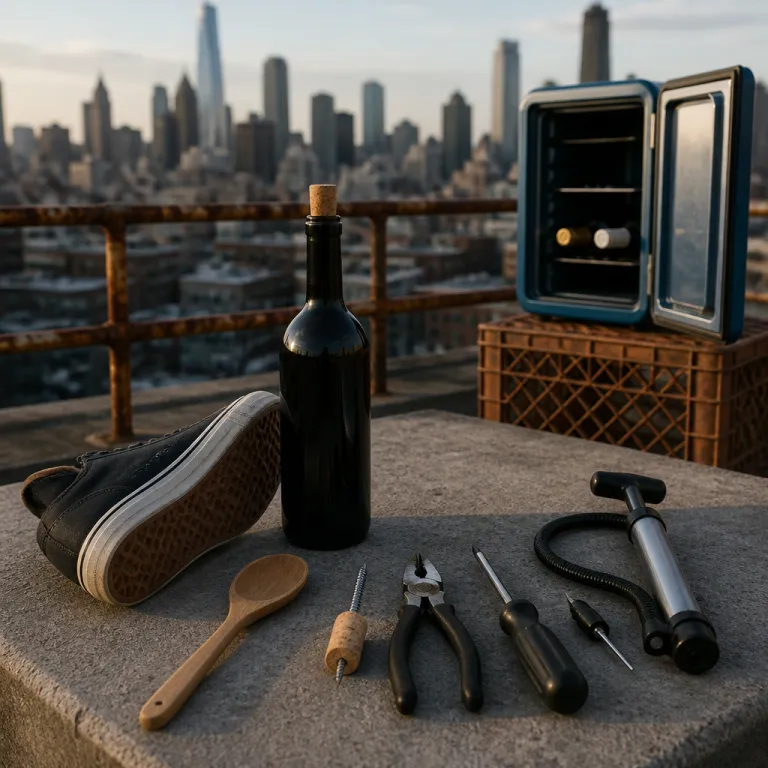
How can I open wine without a corkscrew while protecting the wine
When you ask how can I open wine without a corkscrew, you are really asking how to remove a fragile cork from a bottle without damaging the wine. The key is choosing a method that respects the cork, the glass and your safety, especially if the bottle came from a carefully calibrated wine cooler or cellar. Every technique to open a wine bottle without a traditional corkscrew must balance force, control and cleanliness so that you can still enjoy wine in a proper glass.
Start by examining the bottle and cork closely, because an older closure in aged red wine behaves very differently from a fresh cork in young wines. If the cork looks dry, crumbly or slightly shrunken inside the neck, gentle methods that push the cork inward or use a pump of air are safer than aggressive attempts to pull it out with improvised tools. When the cork appears elastic and healthy, you have more ways to open the bottle without a corkscrew, from the classic shoe method to controlled heat techniques that ease the cork out.
Temperature matters more than most people think when they try to open a bottle of wine without tools. A bottle that has been stored too cold in a wine cooler can make the cork contract, while too much heat can expand the air and push the cork out suddenly, which risks spilling wine without warning. Aim for a serving temperature that suits the style of wines you are opening, then choose the best opening method that keeps the cork intact and the bottle free from cracks or stress.
Expert note (updated 2024): The practical tips in this guide are based on standard bottle designs and still wines. None of the impact, heat or air-pressure methods described here should be used on sparkling wine or champagne-style bottles, which are under much higher internal pressure.
Using household tools to open a wine bottle without a corkscrew
Many people facing a sealed bottle in a holiday rental or a new apartment wonder how they can open wine without a corkscrew using only basic tools. A sturdy screw and a strong household item like a fork handle or pliers can become a makeshift wine opener if you work slowly. This method works best on younger wines where the cork is firm enough to grip the screw threads without crumbling.
Step-by-step screw method
- Wipe the top of the bottle clean so no dust falls into the wine.
- Insert a clean metal screw straight into the center of the cork, leaving about one centimetre exposed above the top.
- Hook the back of a hammer, a solid key ring or another tool under the screw head.
- Pull the cork upward in small stages, keeping the bottle steady on a non slip surface.
- Pause if you feel the cork twisting or tearing, then adjust your angle before continuing.
- Safety tip: Keep your other hand away from the leverage point so you do not slip and hit the glass.
This approach to opening wine without corkscrew equipment is controlled, and it gives you time to react if the cork starts to break or twist.
A serrated knife can also help you open a wine bottle without a dedicated opener, but it demands patience and care. Insert the serrated knife gently at an angle into the cork, then twist and pull in a slow spiral, using the blade like a temporary corkscrew while keeping your other hand clear of the edge. For anyone designing elegant wine spaces at home, such as those inspired by refined basement wine cellar ideas, it is wise to store a real corkscrew near your wines so that these improvised methods remain an emergency option rather than a routine habit.
Illustration idea: A simple diagram showing the screw entering the cork straight down the center, with arrows indicating the pulling direction, helps beginners visualise the leverage and hand positions.
How can I open wine without a corkscrew using pressure, heat and leverage
When no screw, knife or wine opener is available, you can still open wine by using pressure and leverage, but you must control every movement. The famous shoe method relies on cushioning the base of the bottle inside a shoe, then tapping the heel of the shoe against a solid wall so that air pressure slowly pushes the cork outward. This shoe method works best with standard bottles of red wine, because thicker glass and a natural cork respond more predictably to repeated impacts.
Step-by-step shoe method
- Place the base of the bottle firmly inside a sturdy shoe with a cushioned heel.
- Hold the neck of the bottle with one hand and the shoe with the other.
- Tap the heel of the shoe rhythmically against a solid wall, keeping the bottle horizontal.
- Stop every few taps to check whether the cork has moved outward.
- When the cork protrudes by about one centimetre, pull it out gently by hand.
- Safety tip: Do not hit the wall too hard, because you risk cracking the glass or forcing the cork out suddenly.
Always keep your hand around the neck of the bottle while using this method, so you can stop as soon as the cork has moved far enough to remove it by hand. If you hit the wall too hard, you risk cracking the glass or forcing the cork out suddenly, which can waste wine without giving you time to place a glass underneath. For people who want a more refined guide to these techniques, the detailed tutorial on elegant ways to open a wine bottle without a corkscrew explains how to adapt the shoe method and other ways to open bottles for different bottle shapes.
Heat can also help when you need to open a bottle of wine without a corkscrew, but it must be applied with restraint. Running warm water over the neck of the bottle or using a hair dryer on low can gently expand the air beneath the cork and push it upward, yet too much heat can damage delicate wines and even affect champagne sparkling bottles. In a wine storage context where temperature quality matters, heat based opening methods should remain a last resort, because they can undermine the careful climate control that allows you to enjoy wine at its best.
Illustration idea: A side-on sketch of a bottle in a shoe, with the impact direction and cork movement marked, can clarify how gentle, repeated taps build pressure.
Safe ways to push cork into the bottle and manage the wine
Sometimes the most realistic answer to how can I open wine without a corkscrew is to accept that the cork will end up inside the bottle. Using a clean wooden spoon handle or a similar blunt tool, you can push the cork gently into the bottle, then pour slowly into a glass while catching fragments with a fine mesh strainer. This method avoids broken glass and keeps the outside of the bottle free from damage, which is crucial if the wine came from a carefully organized cellar or wine cooler.
Step-by-step push-in method
- Stand the bottle upright in a sink or over a towel.
- Place the rounded end of a clean wooden spoon handle on the center of the cork.
- Hold the neck firmly and apply slow, steady pressure straight downward.
- Allow the cork to slide into the wine rather than forcing it suddenly.
- Pour the wine through a fine strainer or clean cloth into a decanter or jug.
- Safety tip: Expect a brief splash of wine as the displaced air escapes, so keep the bottle angled slightly away from you.
When you push the cork into the liquid, be prepared for a brief splash of wine without warning as the displaced air escapes. Hold the bottle over the sink, angle it slightly and apply steady pressure rather than sudden force, because a rapid push can send wine onto your clothes or the floor. Once the cork is inside, you can enjoy wine by decanting it into a carafe, which also helps separate any cork pieces before they reach the glass.
This approach works for many still wines but is unsafe for champagne sparkling bottles, where internal pressure is much higher and any attempt to push the cork inward can be dangerous. For sparkling wines, it is better to wait until you have a proper wine opener or a dedicated sparkling wine key, because safety must outrank convenience. If you frequently face situations where you need to open a bottle without tools, consider keeping a small box wine as a backup in your wine cooler, since box wine eliminates the cork problem entirely while still allowing you to serve red wine or white wine quickly.
Illustration idea: A top-down diagram of the spoon handle pressing the cork, with a warning icon near the neck, reinforces the need for slow, even pressure.
Protecting wine quality and your storage when opening bottles without tools
Every improvised method to open wine without a corkscrew has consequences for both the wine and your storage environment. For collectors who use a wine cooler or a dedicated cellar, the way you handle each bottle can influence long term stability, especially if you disturb sediment in mature red wine. Gentle opening techniques that limit vibration and avoid sudden heat changes will help you enjoy wine at its intended quality level.
Air pumps designed for opening a cork bottle without a traditional screw based wine opener can be effective, but they must be used correctly. When you insert a thin needle through the cork and pump air into the bottle, internal pressure will push the cork upward, yet too many strokes can cause the cork to shoot out violently and spill wine without control. Always point the bottle away from people and fragile objects, and stop pumping as soon as you see the cork move.
Quick checklist for air-pump openers
- Check that the needle is straight and clean before inserting it.
- Hold the bottle upright on a stable surface while pumping.
- Use short, controlled strokes and watch the cork closely.
- Stop immediately once the cork begins to rise and remove it by hand.
In a wine cooler guru setting, you also need to think about humidity, insulation and structural safety when using methods that involve impact or heat. Repeatedly applying the shoe method against a wall near your cellar could disturb racks or even compromise sensitive materials like vapor barriers, which are explained in depth in this guide to vapor barriers in wine cellars. The editorial team behind serious cellar design advice always stresses that the best opening strategy is the one that protects both the wine and the room, so plan your ways to open bottles with the broader storage system in mind.
Consolidated safety rules (for still wines only): work slowly, keep hands clear of leverage points, avoid direct heat on the body of the bottle, never point a pressurised cork toward people, and remember that any impact, heat or air-pressure technique is not appropriate for sparkling bottles.
Troubleshooting common problems when opening wine without a corkscrew
Even with careful planning, things can go wrong when you try to open a bottle without a proper corkscrew, especially if the cork is old or the wine has been stored horizontally for years. A partially broken cork is the most common issue, and it usually happens when improvised tools twist or pull unevenly. If this occurs, stop and reassess the method rather than forcing the remaining cork out, because aggressive pulling can send fragments into the wine without giving you time to filter them.
When the cork crumbles and falls into the bottle, treat the situation like a decanting exercise. Pour the wine slowly through a fine strainer or a clean cloth into a carafe, keeping the neck of the bottle steady so that sediment and cork pieces stay behind. This approach works well for red wine and many still wines, and it allows you to enjoy wine with minimal texture issues even after a difficult opening attempt.
Another frequent problem arises when people use too much heat or pressure on champagne sparkling bottles while trying to open wine without a corkscrew, which can lead to dangerous cork ejections. Never apply the shoe method, a pump or direct heat to sparkling wines, because the internal pressure is already high and any extra force can turn the cork into a projectile. For these bottles, the best and safest choice is to wait for a proper wine opener or to keep a reserve of box wine and still wines that you can open more easily in emergencies.
Planning ahead so you rarely need to open wine without a corkscrew
While it is useful to know how can I open wine without a corkscrew, the most reliable strategy is to reduce how often you face that problem. Building a small toolkit near your wine cooler or cellar, including a double hinged wine opener, a spare corkscrew and a simple pump for preserving opened bottles, will save you from risky improvisation. Store these tools in a visible place so that every bottle you select can be opened calmly and safely.
Think about the mix of wines you keep on hand, because variety in closures can make your life easier. Alongside traditional cork bottle formats, include some screw cap wines and at least one quality box wine, which you can open instantly without any device and still enjoy wine in a proper glass. This balance ensures that if you misplace your corkscrew or key tools, you still have ways to open and serve red wine or white wine to guests.
For serious enthusiasts in the wine cooler guru community, planning also means training everyone in the household on safe opening practices. Share clear instructions on which methods are acceptable for still wines, which are unsafe for champagne sparkling bottles and why pushing a cork into the bottle without preparation can create mess and waste. When your editorial team of family or friends understands these principles, your storage system, your bottles and your enjoyment of wine without stress will all benefit.
Key statistics about wine openings and storage safety
- Global wine consumption has remained around 23 to 24 billion litres per year according to the International Organisation of Vine and Wine (OIV), which means billions of opportunities for cork or screw cap opening errors that can affect enjoyment. Recent OIV reports (for example, 2022 and 2023 overviews) confirm that this level has been broadly stable in the last decade.
- Industry surveys from major closure manufacturers such as Amorim and Nomacorc report that roughly 70 % of still wines are sealed with natural or technical cork, so knowing at least one safe method to open wine without a corkscrew is practically useful for most drinkers. These figures are drawn from closure market analyses published in the early 2020s.
- Studies on wine storage show that maintaining a stable temperature between 11 °C and 14 °C and humidity around 60 % to 70 % significantly reduces cork failure, which in turn lowers the risk of crumbling corks during improvised opening attempts. These ranges are widely cited in cellar design guides and oenology textbooks updated through 2023.
- Consumer research from large retailers indicates that screw cap and box wine formats together now account for more than one third of everyday wine sales in several markets, offering easy open bottle options when a traditional corkscrew is unavailable. Retail trend reports from 2020–2023 consistently highlight this shift toward alternative closures.
Source note: The statistics above summarise data available up to 2023–2024. Exact figures vary slightly by country and vintage, but the overall patterns remain consistent across recent reports.
FAQ: opening wine without a corkscrew
What is the safest way to open a wine bottle without a corkscrew
The safest method is usually to use a clean screw and a sturdy tool to pull the cork out slowly, because this gives you control and keeps the glass stable. Avoid high impact techniques or excessive heat, especially with older wines or champagne sparkling bottles. Always work over a sink or towel so that any spill from the bottle is contained.
Can I use the shoe method on any type of wine bottle
The shoe method is best reserved for standard still wine bottles with natural corks and thick glass. It is not suitable for champagne sparkling bottles or unusually shaped bottles, because internal pressure and glass thickness differ. If you are unsure, choose a gentler way to open a wine bottle without a corkscrew, such as the screw based method.
Is it safe to push the cork into the bottle and drink the wine
For most still wines, pushing the cork into the bottle is safe if the tool is clean and you pour the wine through a strainer to remove fragments. The main risks are splashing and minor cork particles, not toxicity. This method should never be used on sparkling wines, where trying to push the cork inward can be dangerous.
Will heating the neck of the bottle damage the wine
Applying gentle, brief heat to the neck can help push the cork upward, but prolonged or intense heat can harm delicate aromas and flavours. If you must use heat, keep it short, indirect and focused only on the neck of the bottle. For high value wines, it is better to wait for a proper wine opener than to risk quality loss.
How can I avoid needing improvised opening methods in the future
Keep at least one reliable corkscrew and a backup wine opener near your wine cooler or storage area, and consider stocking some screw cap wines or box wine for emergencies. Check that travel bags and picnic kits also contain a compact opener. With a little planning, you will rarely need to rely on emergency ways to open bottles again.
