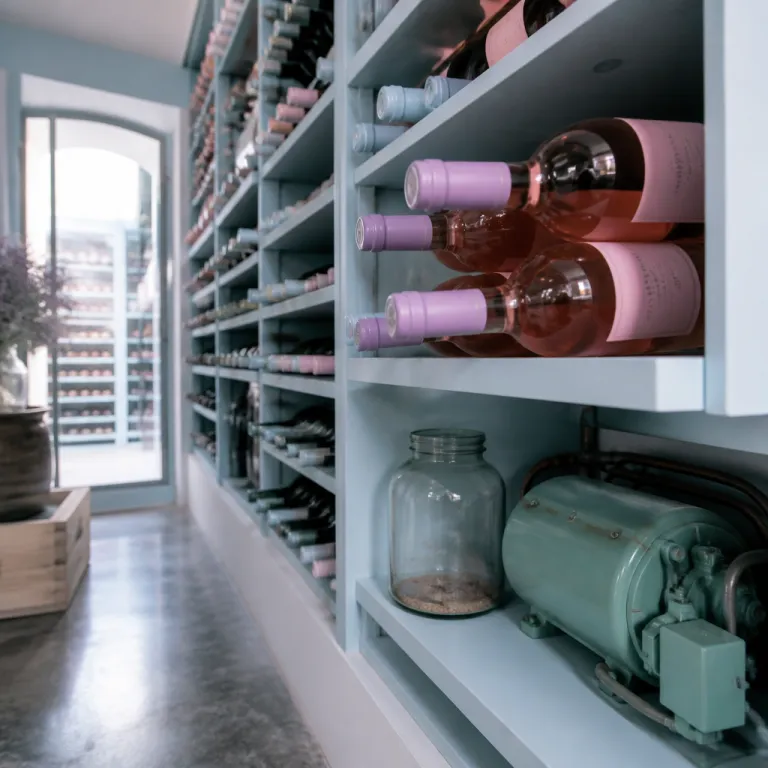
Why vibration matters more than most home collectors think
Most home enthusiasts obsess over storage temperature yet ignore constant vibration. The real impact of a vibrating wine fridge on wine is slower and subtler, quietly shaping how your favourite bottles age over months of storage. In a small apartment or busy kitchen, a single appliance fridge humming beside your wine cooler can change how a premium wine feels on the palate.
Inside every bottle of wine, microscopic particles of tannin and pigment gradually settle into a compact sediment layer. Persistent vibrations from compressor fridges and coolers keep that sediment slightly suspended, which means the wine will age differently and the mouthfeel may stay harsher for longer term storage. When you rely on a compact wine cabinet instead of a traditional wine cellar, the low level mechanical movement becomes one of the key storage conditions to manage.
Studies on wine quality under vibration show that constant low frequency movement is more disruptive than occasional handling. For example, research by the Australian Wine Research Institute (AWRI; Pocock & Waters, 2006) and experiments reported in the Journal of Food Engineering (López-Barajas et al., 2001, doi:10.1016/S0260-8774(01)00040-0) found that continuous shaking at 20–50 hertz with amplitudes around 0.3–0.5 mm can increase dissolved oxygen by 10–20 percent and keep colloids from settling, both of which influence texture and aroma development. That is why the background hum from a kitchen fridge or other appliance near your wine coolers can matter more than opening the door once a day. For collectors in dense urban areas such as Dallas or Houston, where space is tight and multiple fridges share one wall, planning calm wine storage becomes as important as choosing the right storage temperature and temperature humidity range.
How compressor hum changes sediment, tannins, and flavor
To understand how a vibrating wine cooler influences wine, start with what happens inside the bottle. Red wine carries more tannins and pigments than most white wines, so its sediment is heavier and more sensitive to vibrations over long term storage. When a wine fridge or standard fridge cycles on and off, those vibrations repeatedly disturb the sediment layer and slow the natural clarification that usually softens tannins.
In a calm wine cellar, tannin molecules gradually link together, forming longer chains that taste smoother and feel silkier. Under constant vibration, these chains break apart more often, which means the wine will keep more aggressive edges and the impact wine lovers notice is a firmer, sometimes slightly bitter finish. Laboratory work on model wine solutions, such as the vibration trials summarized in the American Journal of Enology and Viticulture (e.g., Oberholster et al., 2009, doi:10.5344/ajev.2009.09016), supports this mechanism by showing slower tannin polymerization and higher astringency scores when samples are agitated for weeks at 20–40 hertz. This effect is most obvious in premium wine and structured red wine styles that you expect to age gracefully over several years rather than in young, ready to drink wines.
Light also plays a role, but vibration and temperature control usually matter more for wine quality in modern homes. If your cooler sits under bright kitchen light and next to a noisy appliance, the combined stress on your favourite wines can be significant over months of storage. For cork sealed bottles, unstable storage conditions with frequent vibrations and fluctuating storage temperature can even nudge tiny amounts of oxygen past the cork, subtly changing aroma and flavor development.
When you handle a single bottle, short movements rarely cause lasting harm. The real risk comes from the constant low level vibrations that travel through metal shelving in many wine fridges and coolers, especially when the compressor starts with a brief but stronger surge. Independent tests with accelerometers on domestic appliances, reported in trade publications such as Wine Business Monthly and in appliance engineering notes, show that startup spikes can briefly double or triple the vibration level measured during steady running, from roughly 0.1–0.2 m/s² to 0.3–0.5 m/s². That is why some professional services now recommend wood shelves or hybrid shelf designs, which absorb vibrations better than bare wire racks and protect both individual bottles and mixed cases of wines.
If you are planning a compact zone wine corner in your kitchen, think about where the compressor hum will travel. A built wine cabinet that shares a rigid countertop with a heavy fridge can transmit more vibrations into your wine storage than a freestanding wine cooler on isolation pads. For collectors who care about long term aging, the way a wine fridge vibrates is not theoretical; it is a practical design question about how to keep sediment still and tannins evolving in peace.
For opened bottles that you plan to keep a few days, vibration matters less than oxygen exposure and closure quality. Using high quality silicone stoppers, as explained in this guide to elegant silicone wine stoppers, will usually protect short term wine quality better than any vibration tweak. Yet even for these bottles, avoiding the top of a noisy fridge and choosing a quiet corner of your cooler is still a sensible habit.
Compressor versus thermoelectric: choosing the right cooling system
Most wine fridges on the market use either compressor based cooling or thermoelectric modules. From a vibration perspective, this choice has more impact on wine than many marketing brochures admit, especially when you care about the long term influence of a vibrating cabinet on wine quality over several years. Compressor wine coolers are powerful and flexible, but they introduce mechanical vibrations that travel through the cabinet, shelves, and finally into your bottles.
Compressor units typically vibrate in the 25 to 45 hertz range during normal running, with a sharper burst when the motor starts. This band is consistent with measurements published by appliance engineers in journals such as Applied Acoustics (e.g., Barbosa & Melo, 2008, doi:10.1016/j.apacoust.2007.05.004), where domestic refrigerators often show peak energy between 20 and 60 hertz and velocity levels around 0.2–0.6 mm/s at the cabinet walls. In a large wine fridge or full height cooler, that startup surge can be strong enough to rattle metal shelves and slightly shake every bottle at once. Thermoelectric wine coolers, by contrast, have no moving parts in the cooling module, so they operate with almost zero vibrations and are naturally gentle on wines that you plan for long term storage.
The trade off is that thermoelectric coolers struggle in hot rooms and cannot handle very large capacities. If you live in a warm climate such as Dallas or Houston and keep your appliance in a bright kitchen, a compressor based wine fridge with strong temperature control will usually protect wine quality better than an underpowered thermoelectric model. For serious collectors who need top large wine coolers, this guide to large capacity wine coolers explains which compressor systems balance power, noise, and vibration control most effectively.
Dual zone wine fridges add another layer of complexity, because each zone may cycle at different times. When the upper zone wine compartment cools while the lower zone rests, vibrations can still travel through the shared frame and reach every bottle. If you use one zone for red wine and the other for whites, consider placing your most age worthy premium wine in the quieter zone and reserving the more active zone for everyday wines.
Built wine cabinets that slide under counters often sit on hard floors, which transmit compressor vibrations more efficiently than carpet or wood. Tests by vibration control manufacturers, summarized in engineering white papers, show that simple rubber isolation feet can reduce transmitted vibration by roughly half to two thirds on hard surfaces, depending on load and frequency. For home enthusiasts who want professional level storage conditions without building a full wine cellar, choosing the right cooling system and adding basic vibration damping is one of the most cost effective steps you can take.
Practical ways to tame vibration in real homes
Once you understand how a vibrating wine fridge can influence aging, the next step is practical mitigation. You do not need a commercial wine cellar to protect wine quality; you just need to control how vibrations reach your bottles. Start by looking at where your wine fridge or cooler sits in relation to other appliances and structural elements.
Avoid placing wine fridges directly beside washing machines, ice makers, or very loud fridges that cycle frequently. Shared countertops and rigid cabinet runs can act like bridges, carrying vibrations from one appliance to another and into your wine storage. If your kitchen layout forces this proximity, isolation pads under each appliance and soft spacers between cabinets can significantly reduce the impact wine feels from those vibrations.
Shelf material matters as much as floor material. Wood shelves in wine coolers absorb and damp vibrations better than bare metal wire, which tends to ring and transmit every small movement into the bottle. In comparative tests by equipment reviewers, bottles resting on wooden shelves or cork inlays often show vibration readings 20–40 percent lower than the same cooler fitted only with wire racks. If your current wine fridge uses wire racks, adding thin wood slats or cork liners under each bottle will help stabilize your favourite wines and keep sediment undisturbed.
Pay attention to storage temperature and temperature humidity while you adjust vibration control. A stable storage temperature in the 11 to 14 degrees Celsius range for mixed wines, combined with relative humidity around 60 percent, creates forgiving storage conditions that help wines tolerate minor vibrations. When temperature control is poor and humidity swings widely, the wine will already be stressed, and any extra vibrations from the cooler or nearby appliance will have a larger effect on flavor and texture.
For collectors managing dozens of bottles across several wine fridges or a small wine cellar, digital tools can help track how wines respond over time. This detailed review of wine cellar management apps shows how long term tasting notes can reveal patterns linked to storage conditions, including vibration and light exposure. When you log how a particular premium wine evolves in a quiet zone wine cabinet versus a busier kitchen cooler, you build your own evidence base rather than relying only on theory.
In multi level homes, consider where structural vibrations are strongest. A wine fridge placed on a ground floor concrete slab will usually transmit fewer vibrations into the bottles than the same cooler on a flexible upper floor near a staircase. For serious long term aging, many professional services recommend dedicating the most stable location to your most age worthy red wine and using more exposed positions for everyday drinking wines.
Which wines are most sensitive, and when vibration truly matters
Not every bottle in your collection reacts the same way to vibration. The influence of a vibrating wine cooler is most pronounced in age worthy reds with visible sediment and in premium wine that you intend to keep for long term cellaring. Young, fruit driven wines designed for early drinking are more forgiving and will usually be enjoyed before subtle vibration effects accumulate.
Red wine with high tannin levels, such as Bordeaux blends, Barolo, or structured Cabernet Sauvignon, depends on slow tannin polymerization to soften over time. Constant vibrations from fridges, coolers, or nearby appliances can keep fine particles suspended and interfere with that gradual smoothing, leaving the wine feeling firmer and slightly less integrated. Delicate older wines, especially those with fragile corks, are also more vulnerable because any extra movement can disturb sediment that has taken years to settle.
White wines and rosés usually contain less tannin and sediment, so their sensitivity to vibration is lower. For these wines, storage temperature, light exposure, and oxygen management play a larger role in preserving freshness and aroma than low level vibrations from a wine fridge. That said, if you are aging high quality Riesling or Champagne for many years, calm storage conditions still help maintain precision and fine bubbles.
The honest threshold for most home collectors is time. If you typically drink your favourite wines within three to five years of purchase, moderate vibrations from a well maintained wine cooler with good temperature control are unlikely to ruin wine quality. The impact wine experiences from vibration becomes critical mainly when you aim for decade scale aging or when storage conditions are already marginal in terms of temperature humidity and light.
For mixed collections in cities such as Dallas or Houston, where climate and space constraints push many people toward compact wine fridges, prioritise your most sensitive bottles. Place older reds and premium wine in the most stable zone wine area of your cooler, ideally on wooden shelves near the middle of the cabinet, away from the compressor. Everyday wines and short term bottles can safely occupy the more exposed positions near the door or at the top of the fridge.
Remember that wine will always reflect the sum of its storage conditions. Temperature, humidity, light, and vibrations all interact, and no single factor tells the whole story of how wines age. By treating vibration as one more controllable variable rather than an abstract threat, you give every bottle in your wine storage the best chance to reach the glass in the state the winemaker intended.
FAQ
Does vibration from a wine cooler really affect wine aging ?
Yes, persistent low level vibration from a wine cooler or nearby fridge can influence how wine ages over months or years. It keeps fine sediment particles suspended, which can slow tannin softening and slightly alter mouthfeel in structured red wine. Controlled trials on model wines and bottled reds, reported in technical journals such as the American Journal of Enology and Viticulture (Oberholster et al., 2009, doi:10.5344/ajev.2009.09016), have documented higher astringency scores and slower clarification in samples exposed to continuous shaking at 20–40 hertz. The effect is most relevant for premium wine stored for long term aging rather than for everyday wines consumed quickly.
Are thermoelectric wine fridges better than compressor models for vibration ?
Thermoelectric wine fridges generate almost no vibration because they have no moving parts in the cooling module. Compressor wine coolers, by contrast, create mechanical vibrations each time the motor starts and runs, which can travel through shelves into the bottles. Measurements published in appliance engineering studies show that thermoelectric units often run below the detection threshold of basic vibration meters, while compressors produce clear peaks in the 20–60 hertz band with amplitudes around 0.2–0.5 mm/s. If your priority is minimizing vibration related changes in wine and you live in a moderate climate, a thermoelectric cooler is often the gentler choice.
How can I reduce vibration in my existing wine fridge ?
You can reduce vibration by placing the wine fridge on rubber isolation pads and ensuring it sits level on a stable floor. Switching from metal wire racks to wooden shelves or adding wood slats under bottles helps absorb vibrations before they reach the wine. Comparative measurements with simple smartphone accelerometer apps and dedicated sensors often show noticeably lower readings once isolation feet and wood supports are added, typically cutting peak acceleration by 30–50 percent. Keeping the cooler away from other noisy appliances and rigid shared countertops further limits transmitted vibrations.
Which wines are most sensitive to vibration during storage ?
Age worthy red wine with significant tannin and sediment is most sensitive to vibration during storage. Classic examples include Bordeaux blends, Barolo, and structured Cabernet Sauvignon that you plan to age for many years. Delicate older bottles of any style also benefit from the calmest possible wine storage conditions.
Does vibration matter if I drink my wines within a few years ?
For wines you drink within three to five years, moderate vibration from a well maintained wine cooler is unlikely to cause dramatic damage. Stable storage temperature, correct temperature humidity, and protection from strong light usually matter more at this time scale. Vibration control becomes critical mainly for premium wine and favourite wines that you intend to age for a decade or longer.
How can I measure vibration in my wine storage at home ?
The simplest method is to use a smartphone accelerometer app placed on an empty shelf while the compressor cycles. For more precise readings, inexpensive USB accelerometers or vibration meters that report acceleration in m/s² or velocity in mm/s can be attached to a bottle neck or shelf. In typical domestic wine fridges, steady state levels around 0.05–0.2 m/s² (roughly 0.005–0.02 g) at 20–50 hertz are common, with brief startup spikes up to about 0.3–0.5 m/s²; adding isolation pads and wooden shelves should noticeably reduce those peaks.
Disclosure: Product recommendations and guides mentioned in this article may include affiliate links. If you purchase through these links, the site may earn a small commission at no extra cost to you, which helps support independent testing and long term reviews.