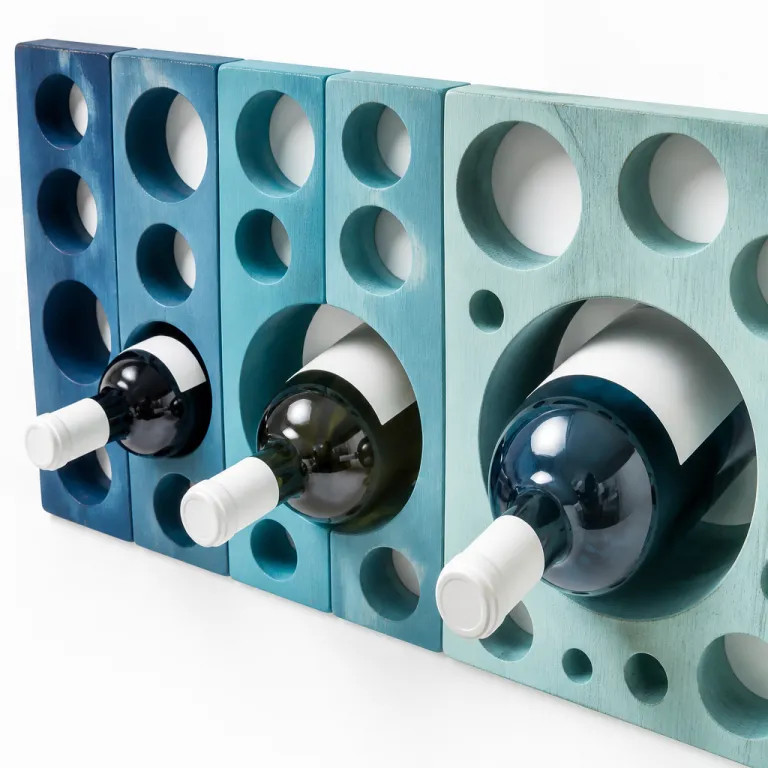
Why wine bottle diameter matters for every wine rack
Most people only notice a wine bottle diameter when a bottle jams in a shelf or refuses to slide into a cooler. The diameter of each wine bottle directly determines how many bottles fit safely into wine racks, how deep the rack must be, and how stable your wine storage will remain over time. When you plan a wine cellar or even a single countertop rack, ignoring bottle dimensions leads to wasted space, broken bottles, and poor ageing conditions.
For still wine, the standard wine bottle diameter usually sits around 72 to 75 millimetres, while many sparkling bottles and magnum bottles can reach 90 millimetres or more and require deeper racks. These standard sizes influence the spacing of metal wine cradles, the width of wood wine slats, and the internal dimensions of stackable wine cubes or bins that you might install in a custom wine cellar. When you mix different bottle sizes in the same rack, you must balance capacity, access, and long term stability for all wine bottles.
Designers of modern wine racks often work with a standard series of bottle sizes, from half bottles to large format magnum bottles and beyond. Each bottle type has a typical size bottle profile, and the wine bottle diameter is the most critical measurement for calculating safe clearances. If you plan to store both bordeaux bottles and broader Burgundy bottles, you should choose racks with slightly generous dimensions, so the bottles slide easily without scraping labels or knocking glasses wine stored nearby.
Standard wine bottle sizes, from half bottles to magnum formats
Understanding the main bottle sizes helps you choose the right wine racks and shelving. A classic bordeaux wine bottle usually holds 750 millilitres and follows a relatively slim bottle size with a straight profile, while Burgundy and many New World bottles use a wider bottle type with a more pronounced shoulder. These differences in bottle dimensions mean that a rack optimised for bordeaux bottles may feel tight for fuller shapes, even if the nominal storage capacity looks identical on paper.
Half bottles, at 375 millilitres, use a reduced size bottle and often a smaller wine bottle diameter, which can rattle in over generous metal wine cradles or in wide pine shelves. Magnum bottles, at 1.5 litres, require larger cubes or dedicated bins, and their bottle sizes can vary significantly between Champagne, bordeaux, and New World producers. When you design a series of wine cubes or a modular wine rack system, you should allocate at least one section for magnum bottles and other large format bottles, otherwise these special wines end up lying on the floor of the wine cellar.
Many modern refrigerators now include a dedicated wine rack insert, and the same rules about bottle size apply there. If you are evaluating a wine bottle rack shelf insert for a Samsung fridge, check the internal dimensions against your favourite bottles before buying. A shelf that fits slim bordeaux bottles may not accept wider sparkling bottles, so always compare the stated bottle dimensions with your own wine bottles to avoid unpleasant surprises.
For quick reference, the following typical ranges are widely cited by rack manufacturers and sommelier training manuals: half bottles often measure around 60–63 mm in diameter, standard bordeaux bottles about 72–73 mm, Burgundy bottles roughly 74–76 mm, Champagne bottles around 85–90 mm, and magnum bottles from 95 mm upward depending on the producer. Always treat these figures as indicative guidelines and confirm them against the technical sheets supplied by your preferred wineries or storage brands.
How to measure wine bottle diameter and match it to racks
Measuring wine bottle diameter accurately is simple but essential for serious wine storage planning. Place the bottle on a flat surface, use a caliper or a ruler across the widest point of the body, and note the bottle size in millimetres, not just the nominal volume. Repeat this for several bottles, including half bottles, standard wine bottles, and any large format bottles you intend to keep, then record the bottle sizes as a reference when you shop for wine racks.
Once you know your bottle dimensions, compare them with the internal dimensions of each wine rack or wine cubes module you consider. A good rule is to allow at least 3 to 5 millimetres of clearance around the wine bottle diameter, so bottles slide smoothly without rattling or scraping labels. For metal wine racks, check that the metal rods or cradles support the bottle along its length, while for wood wine racks you should ensure the slats are wide enough to cradle both bordeaux bottles and rounder shapes without pressure points.
When reviewing rack specifications, pay attention to three numbers: internal cradle width, internal depth, and vertical spacing. As a practical example, a rack designed for mixed collections might offer 95 mm cradle spacing, 300 mm internal depth, and at least 100 mm vertical clearance per row, which comfortably accommodates standard bordeaux bottles and most Champagne bottles. If your measurements show that your widest bottle reaches 90 mm in diameter and 310 mm in length, you should look for slightly larger figures in each of these categories to maintain safe clearances.
If you plan to retrofit a refrigerator with a universal wine bottle rack for all refrigerators, the same measurement discipline applies. Measure the internal width and depth of the fridge, then compare these dimensions with the rack and with your measured wine bottle diameter. This approach avoids the common mistake of buying a rack that technically fits the appliance but not the bottles, especially when you own many magnum bottles or unusually shaped bottles.
Choosing between wood, metal, cubes and wall mounted systems
Material and structure influence how well a rack handles different wine bottle diameters over time. Traditional pine or hardwood wine racks offer a warm aesthetic and gentle support for glass, while metal wine racks can provide slimmer profiles and higher density storage in tight spaces. When you choose between wood wine and metal wine structures, consider not only style but also how the material interacts with your preferred bottle sizes and long term wine storage goals.
Modular wine cubes and stackable wine racks excel when you need flexible storage for mixed bottle sizes. A grid of cubes or bins can hold standard wine bottles on their sides, while one or two cubes can be reserved for large format magnum bottles or mixed cases. Because each cube has fixed internal dimensions, you must match those dimensions to the largest wine bottle diameter you plan to store, otherwise the most valuable bottles may not fit safely.
Wall mounted wine racks add another layer of complexity, since they rely on secure fixings and precise spacing to hold wine bottles horizontally. For these systems, the distance between pegs or rails must exceed the bottle diameter slightly, and the depth must accommodate both bordeaux bottles and broader shapes without letting the neck protrude dangerously. When you mount such racks near a tasting area, remember to leave clearance for glasses wine and for safe movement, especially if children or pets share the space.
Designing a wine cellar around bottle dimensions and storage needs
A well planned wine cellar starts with a clear inventory of bottle types and their diameters. Count how many standard wine bottles, half bottles, and large format bottles you own or expect to buy, then translate those numbers into required rack space and cube capacity. This inventory driven approach prevents the common error of building a beautiful cellar that cannot accept your favourite producers because their bottle dimensions are slightly unconventional.
For a mixed collection, many specialists recommend dedicating roughly 70 percent of storage to standard wine bottles, 20 percent to magnum bottles and other large format bottles, and 10 percent to half bottles or odd shapes. Within that framework, you can combine wood wine racks for long term ageing, metal wine racks for high density storage, and stackable wine cubes for flexible bins that adapt as your tastes evolve. Always ensure that the internal dimensions of each rack or cube exceed the largest wine bottle diameter you expect in that section, especially for Champagne and certain bordeaux producers who use broader bottles.
Temperature and humidity control matter as much as physical storage, so consider pairing your racks with a dedicated wine cooler or climate controlled room. When evaluating a coloured unit such as the shell pink wine bottle cooler WA 126, check not only capacity in bottles but also the internal shelf dimensions and maximum bottle diameter. A cooler that claims a high bottle count based on slim bordeaux bottles may hold far fewer real world bottles once you include sparkling wine, magnum bottles, and unusual bottle sizes.
Practical tips for everyday wine storage and handling
Day to day habits around wine storage can either protect or damage your collection, regardless of how carefully you calculated wine bottle diameter. Always store wine bottles horizontally to keep corks moist, but avoid stacking bottles directly on top of each other without a proper rack, because uneven pressure can crack glass. Even in a small apartment, a compact wine rack with correctly spaced dimensions will outperform improvised piles of bottles on a pantry floor.
When loading or unloading wine racks, handle each bottle by the body rather than the neck, especially with heavier magnum bottles and large format bottles. Check that the bottle diameter sits comfortably within the cradle or shelf, with no sharp edges or screws pressing into the glass. If you notice tight spots where certain bottle sizes scrape, mark those positions and reserve them for slimmer bordeaux bottles or half bottles, while keeping broader shapes in more generous bins or cubes.
Serving practices also interact with storage design, particularly in compact spaces where glasses wine share shelves with bottles. Leave enough vertical clearance above each rack so you can tilt bottles out without hitting the shelf above, and ensure that any wall mounted racks are far enough from doorways to avoid accidental knocks. Over time, these small ergonomic details, guided by an understanding of wine bottle diameter and bottle dimensions, will make your wine storage safer, quieter, and more enjoyable to use.
Key statistics on bottle sizes, racks and wine storage
- Industry surveys from major rack manufacturers indicate that around 80 percent of residential wine racks are designed primarily for the standard wine bottle diameter of approximately 72 to 75 millimetres, which means wider bottles often reduce the advertised capacity by 10 to 20 percent in real use. These figures are consistent with capacity notes published in technical brochures from several European and North American storage brands and in manufacturer technical sheets.
- Data from several European cellar design firms show that mixed collections typically contain about 60 to 70 percent standard wine bottles, 15 to 25 percent magnum bottles and other large format bottles, and 10 to 15 percent half bottles or unusual bottle types, a ratio that strongly influences recommended cube and bin dimensions. Comparable distributions appear in case studies shared at professional wine cellar design conferences and in sommelier training guides.
- Measurements compiled by professional sommeliers indicate that typical Champagne and sparkling wine bottles have a wine bottle diameter of 85 to 90 millimetres, roughly 15 to 20 percent wider than a classic bordeaux bottle, which explains why many standard racks struggle with sparkling wine storage. These ranges align with bottle specifications published by major Champagne houses and sparkling wine consortia in their public technical documentation.
- Technical sheets from leading wine cooler brands show that stated capacities often assume only slim bordeaux bottles, and independent tests frequently find real capacities 25 to 30 percent lower when a mix of bottle sizes is used, underlining the need to check internal shelf dimensions carefully. Comparative reviews in specialist wine magazines and consumer testing reports regularly highlight this gap between nominal and practical capacity.
- Architectural guidelines for residential wine cellars commonly allocate at least 0.2 to 0.3 square metres of wall space per 100 standard wine bottles when using wall mounted racks, a figure that increases significantly when the design must accommodate many magnum bottles and other large format bottles. Similar rules of thumb appear in design handbooks used by interior architects and hospitality consultants, as well as in continuing education material for cellar designers.
FAQ about wine bottle diameter and rack design
What is the typical wine bottle diameter for standard bottles ?
The typical wine bottle diameter for a standard 750 millilitre still wine bottle ranges from about 72 to 75 millimetres at the widest point. Bordeaux bottles tend to sit at the slimmer end of this range, while Burgundy and many New World bottles are slightly wider. Always measure a few representative bottles from your collection, because individual producers can deviate from these norms.
How does bottle diameter affect wine rack capacity ?
Wine rack capacity figures usually assume a slim standard wine bottle, so wider bottle diameters reduce the real number of bottles you can store. If your collection includes many Champagne, magnum, or unusually shaped bottles, you may lose 10 to 30 percent of the advertised capacity. To avoid disappointment, compare your measured bottle dimensions with the internal spacing of the rack before purchasing.
Can one rack handle both bordeaux bottles and Champagne bottles ?
Many quality wine racks can handle both bordeaux bottles and Champagne bottles, but only if the internal dimensions are generous enough. Look for racks with slightly wider cradles or adjustable shelves that can accept a wine bottle diameter of at least 90 millimetres. If space allows, dedicate one section or cube specifically to sparkling and other large format bottles for easier access.
What is the best material for racks when storing mixed bottle sizes ?
Both wood wine racks and metal wine racks can work well for mixed bottle sizes, provided the design allows sufficient clearance around each bottle. Wood offers a slightly softer contact surface and can be easier to customise, while metal structures often provide slimmer profiles and higher density storage. The best choice depends on your aesthetic preferences, budget, and whether you prioritise flexibility for future changes in your collection.
How should I plan a small wine cellar around different bottle sizes ?
For a small wine cellar, start by listing how many standard wine bottles, half bottles, and large format bottles you expect to store, then allocate space accordingly. Combine a main section of standard racks for everyday bottles with a few cubes or bins sized for magnum bottles and odd shapes. Always verify that the internal dimensions of each storage element exceed the largest wine bottle diameter you plan to place there, so every bottle fits safely.