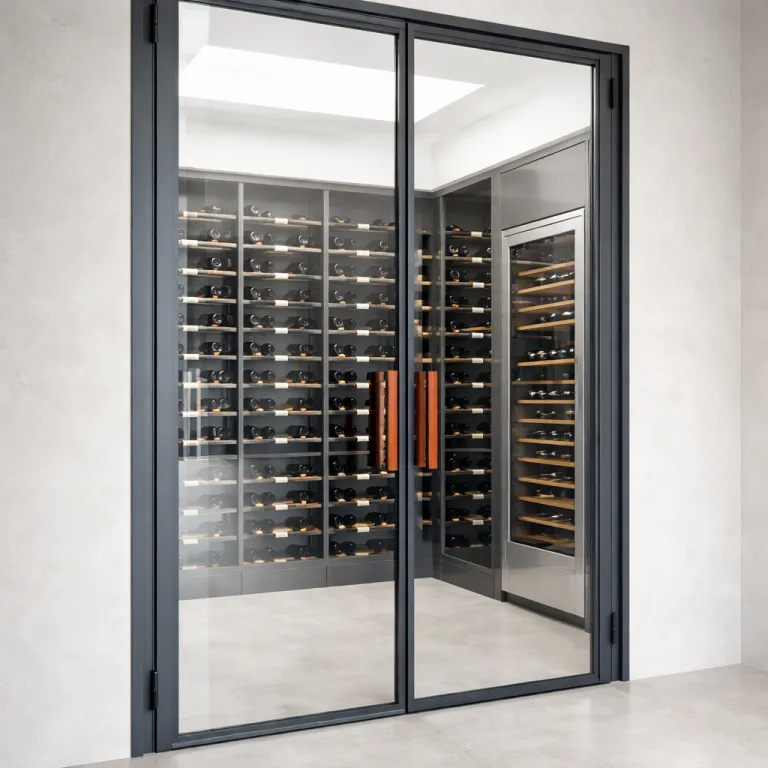
Why glass wine cellar doors define a modern wine room
Glass wine cellar doors have become a signature element in contemporary wine rooms. They frame the wine as a living artwork, while the glass and cellar architecture quietly protect every bottle. In a well planned wine cellar, the right door balances aesthetics, performance, and price.
Designers now treat each cellar door as part of a larger interior feature wall that connects the wine room to the surrounding space. Transparent or lightly tinted insulated glass allows you to read labels, assess the wine display, and still maintain stable air conditions. When glass wine cellar doors are specified correctly, they support serious wine storage rather than acting as fragile decorative panels.
Homeowners often start with a mini wine room carved from an unused side space, then expand into full glass wine walls as their wine cellars grow. A single glass wine cellar door can later be replaced by double doors or a frameless glass enclosure without rebuilding the entire room. This flexibility makes glass enclosed wine rooms attractive for both compact apartments and large houses.
Architects also appreciate how cellar glass doors align with modern windows and interior doors throughout the home. Matching the wood species of surrounding joinery or echoing existing arch shapes helps the wine room feel integrated rather than added on. In luxury wine projects, the cellar door becomes a focal point that signals the quality of the wine storage hidden behind it.
Balancing insulation, air control, and glass aesthetics
The technical performance of glass wine cellar doors depends largely on insulated glass and precise air management. A wine room needs stable temperature and humidity, so the cellar door must seal as reliably as any exterior door. Poorly specified doors allow warm air to infiltrate, forcing cooling systems to work harder and compromising wine storage.
Most serious wine cellars use double or even triple pane insulated glass with low emissivity coatings. These panels reduce heat transfer between the wine room and adjacent interior spaces, while still showcasing the wine display. For glass enclosed wine rooms near kitchens or living areas, this insulation is essential to prevent condensation on the full glass surfaces.
Hardware choices also influence how well a cellar door controls air movement and protects the wine. Quality hinges, perimeter gaskets, and automatic door bottoms help a single or double door close tightly every time. When specifying frameless glass doors, pay particular attention to the threshold and side seals, because even small gaps can disrupt the delicate air balance inside the wine cellar.
Many luxury wine rooms pair glass wine cellar doors with dedicated cooling units and accessories that refine the wine experience. For example, owners who regularly open and close the cellar door may also use specialized wine pumps to preserve opened bottles longer. In this way, the door, the air system, and the wine rack layout all work together to protect both sealed and opened wine.
Design choices for doors, frames, and surrounding panels
Choosing glass wine cellar doors starts with deciding how visible you want the wine room to be. A full glass door with minimal framing maximizes transparency, turning the wine wall and wine racks into a dramatic display. By contrast, doors with wood stiles or metal panels create a more subtle wine display that hints at the cellar behind.
Single doors suit narrow openings or compact mini wine rooms carved from hallways or under stair spaces. Double doors feel grander and work well when the wine room opens into a dining room or main living area. In both cases, aligning the cellar door height with nearby windows and interior doors keeps the composition harmonious.
Frameless glass doors rely on thicker cellar glass and discreet hardware to achieve a floating effect. These doors often sit within larger fixed glass panels that form a glass enclosed feature wall, especially in contemporary luxury wine projects. When planning such installations, coordinate the layout with the wine rack system so vertical mullions do not block key labels.
Material combinations around the door strongly influence the character of wine rooms and wine cellars. Warm wood cladding, metal trims, or even cardboard wine boxes used as decorative elements can soften the sleekness of glass. For more rustic wine aesthetics, some owners pair glass wine cellar doors with reclaimed timber, stone, or reused packaging crates that reference the journey of the wine itself.
Integrating glass wine cellar doors into different interior styles
Glass wine cellar doors adapt surprisingly well to both modern and traditional interiors. In contemporary homes, a full glass wine wall with frameless glass doors can replace a conventional partition, turning the wine room into a luminous feature wall. The cellar door then reads as part of a continuous glass plane rather than a separate element.
In more classic settings, designers often introduce arch shapes or divided light windows within the cellar door to echo historic joinery. Wood frames around insulated glass panels can match existing interior doors, while the wine racks inside remain sleek and minimal. This blend of traditional wood and modern cellar glass allows the wine storage to feel timeless rather than trend driven.
For compact apartments, a mini enclosed wine room along one side of an open plan living area can be highly effective. Sliding glass doors or narrow single doors minimize the swing footprint while still revealing the wine display. Careful placement of wine racks and windows within the wine room ensures that every bottle is visible through the glass wine surfaces.
Homeowners seeking a warmer atmosphere sometimes combine glass wine cellar doors with rustic finishes and textured materials. Ideas such as a reclaimed wood ceiling, stone floor, and aged metal hardware can be explored in depth through specialist rustic wine cellar design guides. In these projects, the cellar door becomes a transparent frame that connects the tactile interior to the surrounding room.
Planning capacity, layout, and long term wine storage
Before selecting glass wine cellar doors, it is essential to define how much wine storage you truly need. A small wine rack for everyday bottles demands a different layout than a full wine wall designed for long term cellaring. The size and swing of the cellar door should never obstruct access to key wine racks or reduce usable capacity.
Many wine rooms combine display oriented racks at eye level with higher density storage below and above. Glass wine cellar doors then act as a viewing frame for the most important labels, while less decorative cases sit deeper in the cellar. When planning wine cellars with windows, ensure that direct sunlight never reaches the wine, even through insulated glass.
Enclosed wine rooms with full glass fronts require careful coordination between the cooling system, the door seals, and the surrounding panels. Any weakness in the cellar door or side glass can create temperature gradients that age wine unevenly. For large luxury wine collections, some owners add an interior secondary door or curtain to further stabilize the air around the most valuable bottles.
As collections grow, flexible wine racks and modular panels make it easier to reconfigure the wine room without replacing the cellar door. Adjustable wine rack systems can shift from mixed bottle formats to more uniform layouts as preferences change. This adaptability ensures that glass wine cellar doors remain a long term investment rather than a constraint on future wine storage strategies.
Cost, value, and practical maintenance considerations
The price of glass wine cellar doors varies widely depending on size, hardware, and glass specification. A simple single door with standard insulated glass will cost far less than a custom full glass feature wall with frameless glass and specialized hinges. When comparing quotes, always confirm whether the price includes installation, seals, and any surrounding fixed panels.
From a value perspective, well designed cellar doors can enhance both daily enjoyment and property appeal. Prospective buyers often respond strongly to a visible wine room or wine wall, especially when the glass wine surfaces are spotless and the wine display is thoughtfully arranged. In luxury wine properties, a dramatic glass enclosed cellar can become a defining selling point.
Maintenance for glass wine cellar doors is relatively straightforward but should be regular. Use non abrasive cleaners on the glass and avoid harsh chemicals on wood frames, metal trims, or hardware. Check gaskets and door closers periodically to ensure the cellar door still seals properly and protects the air conditions inside the wine room.
Owners should also monitor for condensation on interior or exterior glass surfaces, which can indicate issues with insulated glass performance or humidity control. Addressing these signs early helps preserve both the wine and the surrounding finishes, including wood racks and adjacent interior walls. Over time, this attention to detail keeps glass wine cellar doors functioning as both a technical barrier and an elegant frame for your wine cellars.
Key statistics about glass wine cellar doors and wine rooms
- No dataset with topic specific quantitative statistics was provided for this article.
Questions people often ask about glass wine cellar doors
Are glass wine cellar doors suitable for serious wine storage ?
Properly specified glass wine cellar doors with insulated glass and quality seals are suitable for serious wine storage. They must be paired with an appropriate cooling system and controlled humidity to protect the wine. When these conditions are met, glass doors perform comparably to solid doors while offering superior visibility.
Do glass wine cellar doors cause temperature fluctuations in the room ?
Glass wine cellar doors can cause fluctuations if they are poorly insulated or inadequately sealed. Using double or triple pane insulated glass and reliable gaskets minimizes heat transfer and air leakage. Correct installation and regular maintenance are essential to keep the wine room stable.
How much do glass wine cellar doors typically cost ?
The price ranges from relatively modest for standard single doors to significantly higher for custom full glass walls. Costs depend on glass thickness, insulation level, hardware quality, and installation complexity. Requesting detailed quotes that separate materials, labor, and optional panels helps clarify the investment.
Can glass wine cellar doors be used in small apartments or mini wine rooms ?
Glass wine cellar doors work well in compact spaces because they visually enlarge the room. Sliding or narrow single doors are often chosen for mini wine rooms along one side of a living area. Careful planning of wine racks and cooling equipment ensures that even small enclosed wine spaces perform reliably.
What maintenance do glass wine cellar doors require over time ?
Routine cleaning of the glass, inspection of seals, and lubrication of hinges are usually sufficient. Owners should watch for condensation or drafts around the cellar door, which may signal emerging issues. Addressing these signs promptly preserves both the wine room environment and the appearance of the doors.
