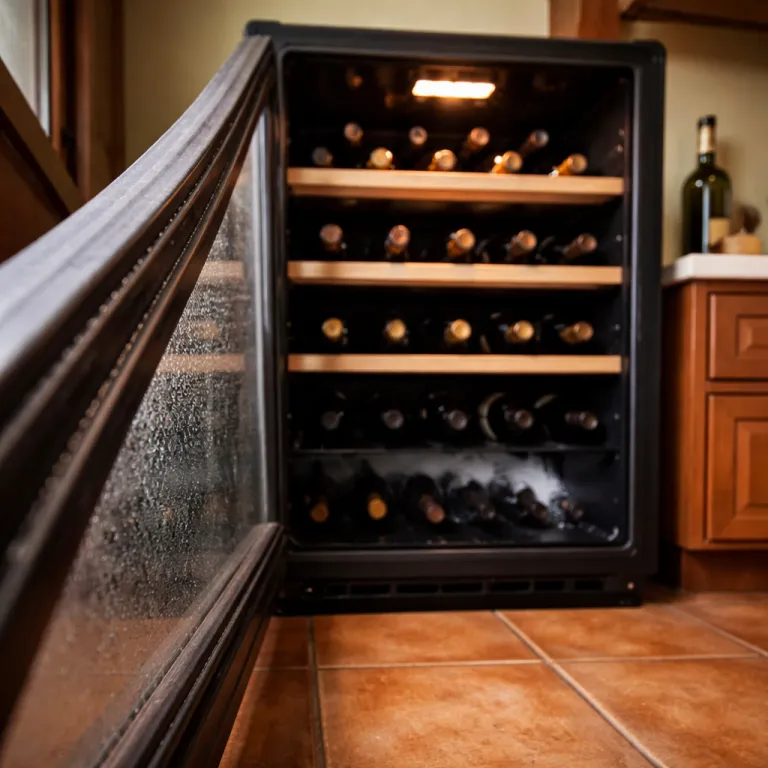
What really changes between a 400 and a 1 000 wine fridge
Most upgrade seekers expect a dramatic leap when they move from a 400 wine fridge to a 1 000 wine refrigerator. The reality is that mid range pricing often buys nicer trim, a stainless steel glass door, and blue LEDs while the compressor, temperature range, and shelving feel almost identical to cheaper fridges. If you already own a regular freestanding wine cooler, this can feel like paying a higher price for the same bottle storage in a slightly shinier box.
Look closely at specifications for popular mid tier wine fridges and you will notice familiar patterns. A typical 46 bottle dual zone wine fridge in this band uses a single compressor, a shared evaporator, and basic vibration pads that are nearly the same as entry level single zone units. The mid range wine cooler value question becomes whether that extra spend will actually protect your wines better or simply give you a heavier door model with stainless steel trim and a touch panel.
Between 400 and 1 000, the main upgrades are cosmetic and layout related rather than engineering based. You might gain a slightly wider temperature range, a nicer glass door, and smoother sliding shelves that fit Bordeaux bottles more gracefully but still struggle with Champagne or magnum bottle wine formats. For a wine enthusiast who already understands zone wine management and cares about long term wine storage, that is not always the best wine use of budget.
Compressor quality is the first place I look when judging mid range wine cooler value. Many mid tier wine cooler models share the same compact compressor and fan assembly as cheaper wine fridges, which means similar noise, similar cycling, and similar temperature swings. If the core cooling hardware in your new wine refrigerator is unchanged, the extra price is going into cabinetry, lighting, and a slightly more substantial door rather than into better protection for your bottles.
Noise and vibration matter more than most marketing copy admits. A freestanding wine refrigerator that hums and rattles every time the compressor starts will agitate sediment in older wines, even if the label promises a premium dual zone layout. When a mid range cooler still uses thin metal racks and a lightweight door, the overall storage environment for your wines may not feel meaningfully calmer than your current regular fridge.
Capacity claims also deserve scrutiny when you evaluate mid range wine cooler value. That 46 bottle dual zone specification usually assumes only standard Bordeaux bottles, tightly packed with no room for Pinot Noir or sparkling wines. Once you mix in wider bottles, the real storage capacity of many mid range fridges drops by 20 to 30 bottles, which makes the effective price per bottle wine stored much higher than the brochure suggests.
Door construction is another subtle but important factor. A heavier insulated glass door with a tight seal will hold temperature more steadily than a thin, flexing panel, especially in a warm kitchen space. Some mid range door model designs still use budget gaskets and basic hinges, so cold air spills every time you reach for bottles and the compressor must work harder to restore the set temperature.
From a usability standpoint, shelf design often reveals whether a mid range wine cooler was engineered for wine enthusiasts or for showroom appeal. Wooden trimmed shelves that look luxurious in photos can flex under the weight of full bottles and snag labels when you slide them out. If you regularly access different wines across both the upper and lower zone, flimsy shelving will become more annoying than any lack of stainless steel accents.
Smart features are the newest way manufacturers justify mid range pricing. Wi Fi connectivity, app based temperature reviews, and alerts when the door is left open sound helpful, but the reliability data for these systems is still thin and firmware support can be inconsistent. When a control board fails in a mid range wine fridge, you may lose both zones at once and face expensive repairs that erode any perceived value.
For many upgrade seekers, the most rational move is to treat this price band as a holding pattern. Either stay with a solid budget single zone or dual zone freestanding wine refrigerator that cools reliably, or save for a true built wine cellar style unit with independent compressors and serious insulation. Splitting the difference on a mid range cooler often means paying more for the same core performance, which is the central problem with mid range wine cooler value.
Features that justify premium pricing versus cosmetic mid range upgrades
When you step above the mid tier, the best wine refrigerator designs start to change in ways that matter for your collection. Premium wine cooler engineering focuses on stable temperature, low vibration, and flexible wine storage rather than on a flashier stainless steel door. That is where the gap between true performance and mid range wine cooler value becomes obvious.
Independent dual compressors are the first meaningful upgrade beyond the mid range. A genuine dual zone wine refrigerator with two sealed systems can hold red wines at 12 to 14 degrees Celsius while keeping whites at 6 to 8 degrees without one zone stealing cold from the other. This separation also reduces cycling, so your bottles experience fewer temperature swings and your wine storage behaves more like a small wine cellar than a dressed up fridge.
Premium units also invest in better cabinet insulation and thicker walls. That extra mass keeps the internal temperature range tighter when the room warms up, which is crucial if your wine fridge sits near an oven or in an open plan living space. In contrast, many mid range fridges still use thin panels that allow heat to seep in, forcing the cooler to run harder and shortening compressor life.
Vibration control is another area where premium pricing can be justified. High end wine fridges use rubber mounted compressors, isolated fan assemblies, and heavier shelving that dampens micro vibrations before they reach the bottle. Mid range models often bolt the same compressor directly to the frame, so every start up sends a small shudder through your wines even if the door looks luxurious.
Shelving design in premium wine refrigerator lines tends to be wider, smoother, and more flexible. You can usually mix Bordeaux, Burgundy, and Champagne bottles on the same shelf without forcing bottle dual stacking or removing racks entirely. That means the stated bottle capacity is closer to real world storage, which improves the effective price per bottle and makes the unit feel like a genuine wine cellar substitute.
Build quality around the door model is also markedly different at the top end. A premium glass door uses low emissivity coatings and multi pane construction to reduce heat gain, while the frame and hinges are engineered to prevent sagging over time. Mid range doors may look similar at a glance but often rely on lighter hardware that can warp, compromising the seal and undermining the cooler’s ability to hold a steady zone temperature.
Where mid range wine cooler value leans heavily on stainless steel trim and interior lighting, premium units prioritize serviceability and customer support. Access panels, modular control boards, and clear documentation make repairs feasible long after the warranty expires, which matters when you are protecting higher value wines. If a manufacturer cannot point to a robust service network and responsive customer support team, the long term value of that mid range refrigerator is questionable.
Capacity is another area where premium models justify their higher price. Large capacity wine fridges with 100 bottles or more often include stronger shelving rails, deeper cabinets, and better airflow management so every bottle sees similar conditions. If you are planning a serious collection, it is worth studying dedicated guides to top large capacity wine coolers before committing to a mid range unit that may max out too quickly.
Humidity management, while still rare, appears more often in premium wine storage than in mid range fridges. Systems that maintain 50 to 70 percent relative humidity help corks stay elastic and reduce the risk of premature oxidation in long term bottle wine storage. Mid range models usually rely on ambient room conditions and basic condensation, which is acceptable for short term wines but less ideal for aging.
When you compare all these factors side by side, the pattern is clear. Premium pricing tends to follow real engineering investments in compressors, insulation, shelving, and service, while mid range wine cooler value often rests on surface level upgrades. For an upgrade seeker who already owns a functional cooler, it is usually smarter either to stay budget or to wait until a true premium wine fridge fits both your space and your collection.
When spending less is smarter than splitting the difference
For many readers, the most rational path is not a mid range wine refrigerator at all. If your collection is under 40 bottles and you mostly drink wines within a year or two, a well chosen budget wine fridge can deliver better value than a fancier looking mid tier cooler. The key is to focus on core performance metrics rather than on stainless steel handles or a frameless glass door.
A solid entry level single zone freestanding wine refrigerator with a stable temperature range between 10 and 14 degrees Celsius will protect most mixed collections. You can store reds, whites, and sparkling wines together at a compromise temperature without worrying about dual zone complexity or app based controls. For this use case, mid range wine cooler value is weak because the extra price rarely buys better cooling hardware or longer lasting components.
Budget units also make sense as stepping stones in an upgrade path. You might start with a 24 bottle wine cooler in a small apartment, then move to a larger dual zone model when you have more space and more bottles to protect. When that time comes, it often makes more sense to jump directly to a premium built wine refrigerator than to replace a working budget fridge with a mid range unit that offers only marginal gains.
Space constraints should also guide your decision. If you are squeezing a cooler into a tight kitchen corner, a compact freestanding wine fridge with a reversible door can be easier to live with than a deeper built in door model that requires precise ventilation. In such situations, paying extra for mid range aesthetics does little to improve how your wines are stored day to day.
Another argument for staying budget is redundancy. Two smaller fridges can sometimes serve you better than one mid range unit, especially if you like to separate everyday wines from special bottles. One single zone refrigerator can hold regular drinking wines, while a second dual zone cooler can be reserved for aging and service temperatures, giving you more flexibility than a single mid range cabinet.
Upgrade seekers often underestimate how quickly their storage needs grow. Once you start exploring magnum bottles and different regions, a 40 bottle capacity fills up almost overnight, and the mid range wine cooler value calculation changes again. It can be smarter to keep a modest budget fridge now and plan for a larger, more capable wine storage solution later, guided by resources such as this framework on the best wine cooler for a first collection.
There is also the question of risk tolerance. If you live in a rental or expect to move within a few years, investing heavily in a built wine refrigerator that fits a specific cabinet cutout may not be wise. A flexible freestanding wine cooler at the budget end can move with you, fit new spaces, and serve as overflow storage even after you eventually install a more permanent wine cellar solution.
From a financial perspective, depreciation hits mid range fridges hardest. Budget coolers are inexpensive enough that replacement after several years does not feel painful, while premium units often hold some resale value due to their stronger brand reputation and serviceable design. Mid range models sit in an awkward middle where the initial price is high but long term support and perceived quality may not justify repair costs.
For many wine enthusiasts, the smartest play is patience. Accept the limitations of a competent budget cooler, learn how you actually use each zone, and track how quickly your bottles accumulate. When your habits and collection clearly outgrow that setup, you will be in a stronger position to choose a premium wine fridge that genuinely improves your wine storage rather than a mid range compromise.
Why mid range brands compete on aesthetics instead of cooling engineering
The mid range wine cooler value problem is not an accident ; it is a business strategy. Manufacturers know that most buyers in this band are upgrade seekers who already own a basic cooler and want something that looks more serious in their kitchen or dining room. As a result, brands compete on stainless steel finishes, frameless glass doors, and interior lighting rather than on compressors, airflow, or long term durability.
Walk through any appliance showroom and you will see the pattern. Mid tier wine fridges line up with similar capacities, similar bottle counts, and similar control panels, but the marketing language leans heavily on design language and lifestyle imagery. Technical details about temperature range stability, vibration levels, or the quality of door seals are often buried or omitted, even though these factors matter most for your wines.
Smart features have become the latest aesthetic differentiator. Wi Fi connectivity, app based reviews of your collection, and remote temperature adjustments look impressive on a spec sheet and in online product photos. Yet the underlying cooling system in many of these connected fridges is unchanged from non connected models, which means the core mid range wine cooler value remains questionable.
Another reason brands lean on aesthetics is margin. It is cheaper to add a stainless steel trim kit, a new handle, or a tinted glass door than to redesign the refrigeration system or upgrade to dual compressors. Cosmetic changes create visible differences that justify a higher price in the showroom, even if the internal refrigerator components are shared with lower priced fridges.
Customer support patterns also reveal where priorities lie. Some mid range manufacturers outsource service entirely, leaving buyers to navigate third party repair networks when a door seal fails or a control board dies. That approach keeps costs down but undermines trust, especially for wine enthusiasts who expect their wine storage to last as long as the wines they are aging.
For serious collectors, the safest strategy is to treat mid range marketing claims with skepticism. Look past the glass door and stainless steel fascia to the compressor type, the thickness of the cabinet walls, and the design of the shelves. If a brand cannot provide clear data on temperature stability, noise levels, and long term reliability, the mid range wine cooler value they promise is mostly surface deep.
Thinking about future growth can also protect you from aesthetic traps. If you plan to explore magnum formats or larger collections, it is worth reading guidance on why magnum bottles are a smart choice for collectors and then choosing a cooler that can actually accommodate those bottles. Many mid range door model designs struggle with anything larger than a standard bottle, which forces awkward stacking and reduces usable capacity.
Some upgrade seekers will still choose a mid range unit for specific reasons, such as matching existing kitchen appliances or fitting a particular built in space. In those cases, focus on models with proven compressors, solid door construction, and responsive customer support rather than on the brightest interior lighting. A quieter, more stable cooler with a slightly plainer façade will serve your wines better than a showpiece that runs hot and cycles constantly.
Ultimately, the most reliable way to judge mid range wine cooler value is to think like a cellar manager, not like a décor shopper. Ask how well the fridge will protect your wines, how gracefully it will handle different bottles, and how easy it will be to service five or ten years from now. When you frame the decision that way, the appeal of many mid range fridges fades, and the choice between a solid budget unit and a truly premium wine cellar style refrigerator becomes much clearer.
Key figures on wine coolers, satisfaction, and storage performance
- Consumer Reports has found that mid range wine fridges often score several points lower in owner satisfaction than both budget and premium models, reflecting frustration with reliability and perceived value compared with price.
- Market analyses of the wine refrigerator segment show that entry level units between 200 and 500 account for a large share of sales, while premium coolers above 2 000 represent a smaller but growing niche driven by serious wine enthusiasts building dedicated wine storage spaces.
- Independent testing of compressor based wine coolers has measured temperature fluctuations of less than 1 degree Celsius in high end dual zone units, compared with swings of 3 to 4 degrees in many mid range fridges, which can significantly affect long term aging for sensitive wines.
- Noise measurements on typical freestanding wine refrigerators indicate that premium models often operate below 40 decibels, while mid range coolers with similar capacities can run closer to 45 to 50 decibels, a noticeable difference in quiet living spaces.
- Capacity studies comparing stated bottle counts with real world loading have shown that many 40 to 50 bottle mid range fridges lose 20 to 30 percent of their advertised storage when accommodating mixed bottle shapes, which raises the effective cost per stored bottle wine.