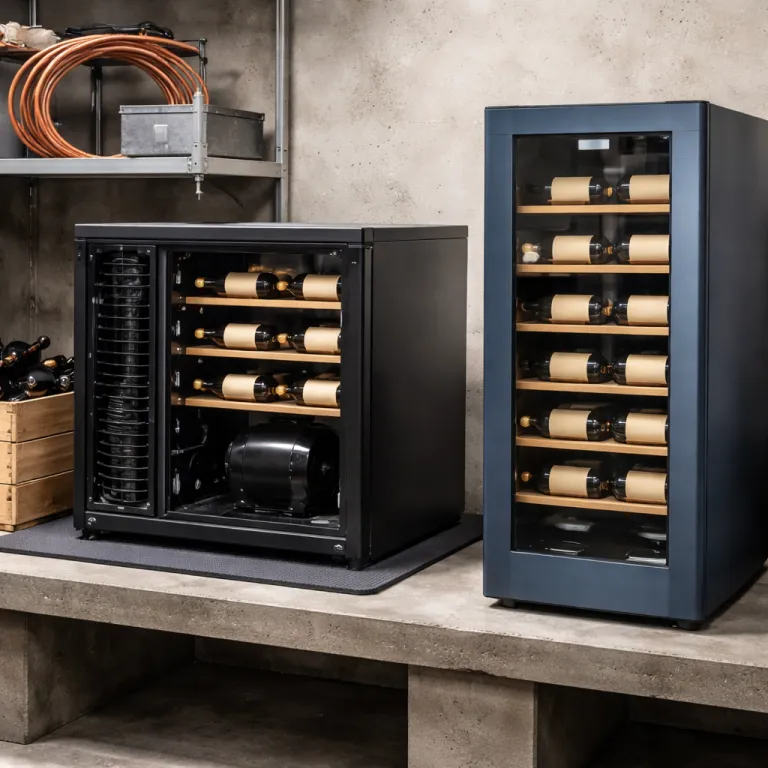
Compressor vs thermoelectric wine cooler: what really differs inside
A compressor vs thermoelectric wine cooler comparison starts with the physics inside the cabinet. A compressor based system uses vapour compression with refrigerant, similar to kitchen fridges, to move heat from the wine storage chamber to the surrounding air. A thermoelectric cooler relies on a Peltier (TEC) module, where an electric current pushes heat from one side of the device to the other side.
In practical terms, compressor cooling gives a wider usable temperature range and more stable temperatures when the room is warm or busy. Typical domestic compressor wine fridges can hold 5 to 18 °C even when the ambient air reaches 30 °C, according to manufacturer climate-class test data from brands such as Liebherr and Bosch. Thermoelectric cooling works best when the ambient air is mild, because the thermoelectric wine unit can usually cool only about 10 to 14 °C below the surrounding temperature under real conditions, which aligns with independent Peltier module performance curves published by TEC suppliers. When you read specifications for wine coolers or wine fridges, remember that the quoted temperature band assumes a relatively cool room, not a sun drenched kitchen.
Compressor systems cycle on and off, so the compressor wine fridge may hum briefly, then sit silent while the bottle wine slowly cools. Typical noise ratings for compact compressor wine cabinets fall around 38 to 43 dB at one metre, similar to a quiet library, based on manufacturer spec sheets for popular 30 to 50 bottle models. Thermoelectric coolers draw a steady low level of power and often sound like a computer fan, with many models rated between 30 and 38 dB in independent showroom measurements, which some people find less intrusive in a living room. For a first wine cooler, understanding how each cooling technology handles heat, air flow, storage load, and sound is more useful than memorising model series names or marketing claims.
Ambient temperature tests: kitchen versus basement reality
Place the same thermoelectric wine cooler in two rooms and you effectively own two different coolers. In a 20 °C basement, a compact thermoelectric cooler can keep a 12 bottle wine collection at a stable 12 to 14 °C without strain, because the TEC module only needs to move a modest amount of heat. Move that thermoelectric cooler to a 26 °C kitchen beside other fridges and the unit may struggle to cool more than 8 to 10 °C below room temperature, which matches many lab tests of entry level Peltier modules and user measurements with simple data loggers.
This is where the compressor vs thermoelectric wine cooler debate becomes concrete rather than theoretical. A compressor based wine fridge uses vapour compression to maintain set temperatures even when the surrounding air is warm, so the same bottle wine can sit at 12 °C while the kitchen hovers near 27 °C. Thermoelectric cooling simply cannot dump heat fast enough in that scenario, especially once you load the wine cabinet with dense glass bottles that retain heat and slow down temperature changes.
If your wine storage will live in a conditioned room that rarely exceeds 23 °C, thermoelectric wine fridges remain a sensible option for small wine collections. Once you talk about a garage, a loft, or a room with big west facing windows, compressor coolers become the safer choice for both red wine and white wine. Think about the hottest week in your home, not the average day, because that is when your wine cooler or wine cellar style cabinet is most likely to fail you and let temperatures creep above the ideal range.
Capacity, noise, and vibration: where marketing claims fall short
Manufacturers often rate thermoelectric coolers at optimistic capacities that assume slim Bordeaux bottles and perfect air circulation. In real homes, a 24 bottle thermoelectric wine fridge feels full at 18 bottles once you add wider Burgundy shapes and a few sparkling wine bottles. Compressor coolers handle larger capacities better, because compressor systems can move more heat from a densely packed wine cabinet without letting temperature drift, and many 40 to 60 bottle compressor wine fridges are tested to hold setpoints within about ±1 to 2 °C in EN 62552 style climate chamber tests.
Noise is more nuanced than the simple idea that thermoelectric equals quiet and compressor equals loud. Modern compressor wine fridges often use variable speed compressors and better insulation, so at three metres in a quiet living room you may only hear a soft hum during compressor cooling cycles. Thermoelectric wine units run continuously, and while the absence of a compressor reduces low frequency vibration, the small fan that pushes air across the TEC module can create a noticeable whir. Independent measurements with smartphone sound meters frequently show vibration levels from current compressor wine cabinets low enough that sediment in bottle wine remains undisturbed during normal use.
If you are sensitive to sound, stand on each side of a running display model and listen at the distance where your sofa or dining table will sit. A compact thermoelectric compressor hybrid is rare in entry level wine coolers, so you are usually choosing between pure thermoelectric systems and pure compressor systems. For collections under 20 bottles in a bedroom or study, a well built thermoelectric wine fridge can feel almost invisible, while a mid size compressor based fridge suits a busier kitchen where background noise masks short cooling bursts and makes the unit effectively unobtrusive.
Energy use, running costs, and long term reliability
Energy efficiency for a compressor vs thermoelectric wine cooler depends heavily on ambient temperature and how often you open the door. In a mild room, a small thermoelectric cooler can sip power steadily, because the TEC module only lifts heat across a small temperature difference. Typical 12 to 18 bottle thermoelectric wine fridges list annual consumption around 120 to 180 kWh under standard test conditions, figures that match many EU energy labels for compact Peltier based cabinets. Once the room warms up, the same thermoelectric cooling system must run at full power constantly, erasing much of its theoretical efficiency advantage.
Compressor coolers draw more power during each cooling cycle, yet they shut off once the wine storage chamber reaches the target temperature. Many 30 to 50 bottle compressor based wine cabinets quote yearly energy use in the 140 to 220 kWh range, depending on insulation and climate class, and third party reviews with plug in energy meters often confirm those numbers over a full year. Over several years, a quality compressor based wine cabinet can end up with similar or even lower total energy use than a budget thermoelectric cooler that never quite rests. Reliability also differs, as compressors are mature mechanical components, while cheap TEC modules and fans in low cost thermoelectric coolers may fail earlier under continuous heat stress.
For a first time buyer with a modest wine collection, the safest financial bet is usually a small compressor wine fridge if the unit will live in a warm or variable space. If your wine fridges will sit in a consistently cool hallway or shaded room, a thermoelectric wine unit can offer low running noise and acceptable energy use for under 20 bottles. Think in terms of total cost over ten years, including electricity, potential repairs, and the value of the wine you are trusting to these cooling systems, rather than focusing only on the purchase price.
A simple buying heuristic for first time wine cooler owners
When you strip away marketing language, a compressor vs thermoelectric wine cooler decision for beginners can follow one clear question. Will your wine cooler live in a conditioned room, stay under roughly 25 bottles, and avoid direct heat from ovens or sun exposed windows? If the honest answer is yes, a thermoelectric wine fridge or other compact thermoelectric coolers are usually sufficient and pleasantly quiet.
If your planned wine storage involves a garage, a utility room, or a large growing wine collection, you should lean firmly toward compressor coolers. A compressor based wine cabinet or under counter wine fridge uses robust vapour compression and compressor systems to hold precise temperatures even when the surrounding air swings widely. That stability protects both everyday bottle wine and the occasional special bottle that might otherwise suffer from repeated heat spikes and long recovery times.
Remember that you can always add a second small thermoelectric cooler later for serving temperatures, while keeping a main compressor wine fridge for long term cellaring. Many enthusiasts end up with a series of wine fridges over time, pairing a quiet thermoelectric cooler on one side of the living space with a larger compressor cooling unit near the kitchen. Start with the cooling technology that best matches your room conditions today, rather than chasing the largest capacity or the most elaborate digital temperature display, and use a simple checklist that covers ambient temperature, bottle count, noise tolerance, and budget.
Common myths about compressor and thermoelectric wine fridges
Several persistent myths make the compressor vs thermoelectric wine cooler choice more confusing than it needs to be. One myth claims that all compressor wine fridges shake the wine, yet modern compressor cooling uses damped mounts and insulated cabinets that keep vibration extremely low. Another myth insists that thermoelectric wine systems are always quieter, but in a silent bedroom the constant fan noise from a thermoelectric cooler can be more noticeable than short compressor bursts, especially if the fan runs near the upper end of its rated decibel range.
There is also a belief that thermoelectric compressor hybrids are standard, when in reality most entry level wine coolers use either pure thermoelectric cooling or pure compressor systems. Some buyers assume that any fridge shaped appliance will work as a wine cellar, yet standard fridges run at much colder temperatures and much lower humidity than a purpose built wine cooler. A dedicated wine cabinet or wine fridge keeps the corks from drying while maintaining gentle air circulation around each bottle wine on every side, which helps preserve aromas and flavours over time.
Finally, do not let the presence of a digital temperature display convince you that all coolers hold that temperature equally well. A small thermoelectric wine unit may show 12 °C while the actual air temperature near the door is several degrees warmer, especially after frequent openings. A well designed compressor based wine storage system, with thoughtful shelf layout and balanced air flow, will keep both the front and back of your wine collection at genuinely stable temperatures. When comparing models, look for published temperature uniformity tests, realistic capacity ratings, and energy labels that match how you plan to use the cooler.
Key statistics on compressor and thermoelectric wine cooling
- Compressor coolers dominate the premium wine cabinet segment because they maintain stable temperatures and handle larger capacities in a wide range of ambient conditions, often keeping internal air within about ±1 to 2 °C of the setpoint in climate chamber testing.
- Thermoelectric coolers are generally limited to small and medium capacities, which aligns best with first time buyers storing under 20 to 30 bottles and prioritising compact size over expansion room.
- Thermoelectric cooling tends to be more energy efficient in mild ambient conditions, but this advantage declines sharply once room temperatures rise significantly above typical indoor comfort levels and the module runs at full power.
- Modern compressor systems have reduced noise levels compared with older designs, narrowing the traditional sound gap between compressor wine fridges and thermoelectric wine fridges, with many models now rated below 42 dB in manufacturer specifications.
Frequently asked questions about compressor and thermoelectric wine coolers
Is a compressor wine cooler better than a thermoelectric model for beginners
For most first time buyers, a small compressor wine fridge is the safer all round choice if the unit will sit in a warm kitchen or garage. Compressor cooling handles higher ambient temperatures and larger wine collections without letting storage temperatures drift, and many entry level compressor cabinets are tested to maintain wine friendly ranges even at 30 °C room temperature. If your room stays cool and you plan to store fewer than 20 bottles, a thermoelectric cooler can still be a very reasonable option.
How many bottles can a thermoelectric wine cooler realistically hold
Marketing labels on thermoelectric wine fridges often assume slim bottles and perfect packing, which rarely matches real life. A unit advertised for 24 bottles usually feels comfortable at 16 to 18 bottles once you mix in different shapes and leave space for air circulation. If you already own more than 20 bottles or expect your wine collection to grow quickly, a compressor based wine cabinet is usually more practical and gives you room to expand without buying a second cooler immediately.
Will a thermoelectric wine fridge work in a hot kitchen or garage
Thermoelectric cooling struggles when the surrounding air is much warmer than your target storage temperature. In a hot kitchen or garage, a thermoelectric wine cooler may run constantly and still fail to keep wine at safe temperatures, especially near the door. In those spaces, a compressor cooler with vapour compression technology is strongly recommended, because it can reject heat faster and recover more quickly after you open the door.
Are compressor wine fridges too noisy for a living room
Modern compressor systems are quieter than many people expect, especially in mid range wine coolers designed for open plan homes. You will hear a brief hum during cooling cycles, but between cycles the fridge sits silent, which many find less intrusive than the constant fan noise of some thermoelectric coolers. If possible, listen to a running display model at the distance where you plan to sit before making your decision, and compare the stated decibel ratings on the specification labels.
Can I use a regular kitchen fridge instead of a wine cooler
A standard kitchen fridge is designed for food safety, not for wine storage, and usually runs much colder with lower humidity. Those conditions can dry corks, flatten aromas, and expose your wine collection to more temperature fluctuation near the door. A dedicated wine cooler or wine cabinet, whether compressor based or thermoelectric, offers gentler temperatures and more suitable conditions for both short and medium term storage, and can sit alongside other wine fridges or a larger wine cellar if your collection grows.
