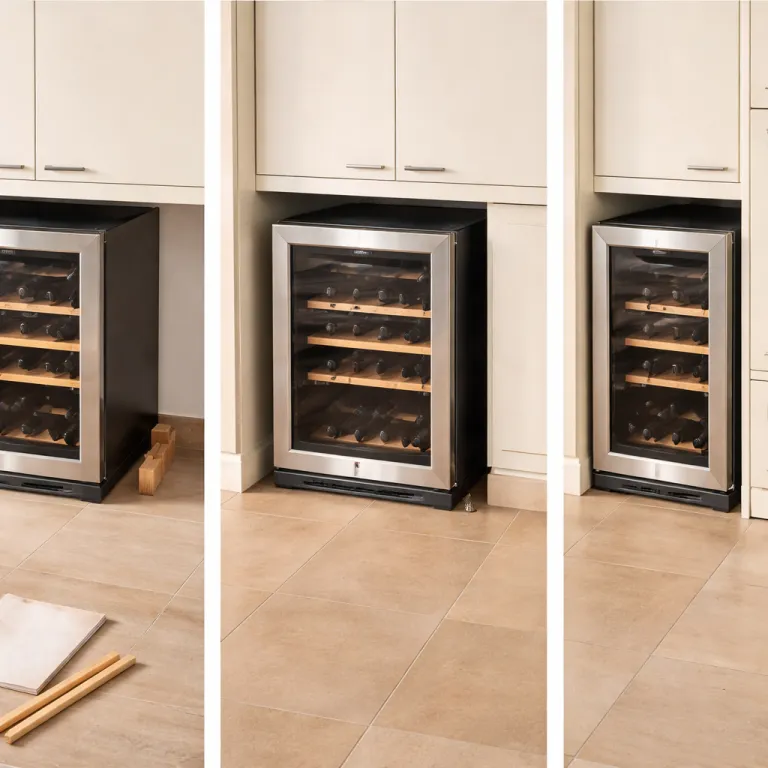
Why freestanding wine coolers feel flexible but often cause placement headaches
A freestanding wine cooler looks simple on paper yet often complicates real kitchens. Many first time buyers assume any wine refrigerator can slide beside a fridge or under a counter, but freestanding wine units are engineered to breathe around the cabinet and not through a front grille. That design choice makes a freestanding wine fridge wonderfully easy to move, while also making clearance and heat management absolutely critical.
Every compressor based wine cooler needs at least 5 centimetres of space on each side and at the back, and some larger series bottle models ask for closer to 8 centimetres to keep the motor from overheating. Thermoelectric coolers are even more sensitive, because their cooling plates can only drop the internal zone wine temperature about 10 to 12 °C below the surrounding air. If you push a freestanding wine refrigerator tight against a wall or another appliance, the hot exhaust air has nowhere to go and the unit will run constantly, shortening compressor life and wasting energy. These figures broadly match guidance from major manufacturers such as NewAir, Kalamera, and EdgeStar, who typically specify 5 to 10 centimetres of ventilation space in their installation manuals.
Manufacturers rarely highlight these constraints on the front of the box, so the problem usually appears on delivery day when the cooler does not fit the intended spot. A compact black single zone wine fridge that looked perfect beside your main refrigerator may suddenly need several centimetres of breathing room on each side, forcing you to shift cabinets or abandon the location. Thinking about the real footprint, including clearance, matters more than the stated width, height, and depth when you compare the regular price of different coolers.
Compressor versus thermoelectric: clearance rules and room temperature limits
Choosing between compressor and thermoelectric technology in a freestanding wine cooler is less about romance and more about physics. Compressor based wine refrigerators behave like compact fridges, using refrigerant and a motor to pull heat out of the bottle zone, while thermoelectric coolers rely on a solid state plate that moves heat using electricity and a fan. Both can protect your wine, but each demands different placement and clearance to work properly.
For compressor models, plan on 5 centimetres of clearance at the back and at least 3 centimetres on each side of the cooler, with a few extra millimetres above the door hinge wine area so the cabinet does not scrape. If you are tucking a freestanding wine fridge beside a tall pantry or another fridge, that side clearance becomes crucial because trapped heat can raise internal zone wine temperatures several degrees above the digital set point. In practice, that means your prized vino bottle collection might sit at 15 °C when you thought you had dialled in 12 °C for a red wine zone. Lab style tests by appliance reviewers such as Consumer Reports and Wirecutter have shown similar gaps between displayed and actual temperatures when ventilation is restricted.
Thermoelectric freestanding wine coolers need even more respect for ambient temperature and airflow. They work best in rooms that stay between 15 and 25 °C, and once the air climbs above about 25 °C they struggle to keep a single zone cabinet at serving temperature for white wine or any delicate bottle single vintage. If your only available spot is a warm kitchen corner, a compressor based wine refrigerator or a compact beverage refrigerator like the model reviewed in this back bar beer fridge and beverage cooler test will handle the heat better than a thermoelectric unit.
Best and worst rooms for a freestanding wine refrigerator in a real home
Once you understand the clearance rules, the next question is where a freestanding wine cooler actually belongs in your home. The most common instinct is to park the wine fridge in the kitchen, but that room also contains the most heat sources and the most vibration. A freestanding wine refrigerator squeezed between an oven and a dishwasher will run harder, warm up during cooking, and expose every bottle to more movement than necessary.
Better locations usually sit just outside the cooking triangle, such as the end of a kitchen island, a dining room corner, or a cool hallway near the living area. In those spots, a dual zone wine cooler can quietly maintain separate temperatures for red and white wine while staying away from the blast of the oven door and the steam from the dishwasher. If you are considering a garage or utility room, check that summer temperatures stay below 35 °C, because even robust compressor units start to struggle above that point and noise from the motor can increase noticeably.
Basements often make excellent homes for freestanding wine fridges, especially for larger wide FlexCount style cabinets that hold more than one series bottle configuration. A concrete floor dampens vibration, and the naturally cooler air means the compressor cycles less often, which is kinder to both your electricity bill and your bottle dual collection. For a compact mixed storage option that handles both wine and cans, the Antarctic Star unit reviewed in this compact drinks fridge review shows how a combined wine and beverage fridge can fit neatly into a dining area without dominating the room.
Heat, light, and floor surfaces: small placement details that protect your bottles
Beyond room choice, the micro environment around a freestanding wine cooler has a direct impact on how well it protects your wine. Direct sunlight through a window can heat the black side panels and the stainless steel door frame, forcing the compressor to cycle more often and slowly cooking labels and corks. Positioning the cooler so that the glass door avoids harsh afternoon light is as important as setting the correct temperature for your favourite bottle single Bordeaux or Champagne.
Heat sources inside the room deserve the same scrutiny. A freestanding wine refrigerator should sit at least 30 to 60 centimetres away from ovens, radiators, and heating vents, because those bursts of hot air can spike the internal zone wine temperature by several degrees. Dishwashers are another quiet enemy, since the steam they vent during drying can warm the air around a nearby wine fridge and increase humidity on the stainless steel exterior, which is not ideal for long term reliability.
Flooring matters more than most buyers expect, especially for freestanding wine coolers with tall series bottle capacities. Hard, level surfaces such as tile, concrete, or engineered wood keep the cabinet stable and reduce vibration that might disturb sediment in older vino bottle treasures. Thick carpet, by contrast, can block the bottom vents of a cooler, tilt the cabinet slightly off level, and transmit more wobble every time someone walks past, so if carpet is unavoidable, use a rigid mat or board under the fridge to create a firm base.
When freestanding beats built in – and when it really does not
Freestanding wine coolers exist because not every home has space or budget for a fully built wine wall or an integrated undercounter wine fridge. For renters, or anyone planning a kitchen remodel later, a freestanding wine refrigerator offers flexibility to move with you and adapt to new rooms. The trade off is that you must respect the ventilation needs and accept that the cabinet will always look more like an appliance than a piece of cabinetry.
Built in wine coolers, by contrast, are designed with front venting so they can slide into a cabinet opening with only a few millimetres of clearance on each side. If you already know your long term layout and want a seamless look, a built wine refrigerator under the counter or in a tall column will usually be quieter in the room and easier to keep at a stable temperature. The catch is cost, because integrated models often carry a higher regular price and may require professional installation to align the stainless steel door and the surrounding panels.
Freestanding wins decisively when you need to experiment with locations or when you want a dedicated beverage fridge that can shift between a dining room and a home office. A compact dual zone freestanding wine cooler, such as the 27 bottle dual zone freestanding wine cooler fridge with LED backlit black glass reviewed in this detailed dual zone freestanding wine cooler test, can start life beside a sideboard and later move to a basement bar. Built in shines when you care more about a flush stainless steel line and a perfectly aligned hinge wine door than about the ability to rearrange furniture around your collection.
Understanding capacity, zones, and pricing language before you buy
Capacity numbers on freestanding wine coolers can be misleading, especially for first time buyers with a modest collection. When a manufacturer advertises a 28 series bottle or 46 series bottle cabinet, that figure usually assumes standard 750 millilitre Bordeaux shaped bottles packed tightly together. Real collections include wider Burgundy shapes, Champagne, and odd sized vino bottle formats, which reduce the practical capacity by 20 to 30 percent.
Zone configuration is the next key decision. A single zone wine cooler keeps the entire interior at one temperature, which works well if you mostly drink red wine or if you are comfortable serving whites a little warmer and chilling them briefly in the main fridge before pouring. Dual zone cabinets split the interior into two compartments, allowing you to keep whites and sparkling wine around 7 to 10 °C while holding reds closer to 12 to 14 °C, but the extra complexity can raise the price and slightly reduce usable space for each bottle.
Pricing language can also confuse, especially when retailers highlight a sale price beside a higher regular price without explaining the differences between models. A stainless steel door and trim, a black cabinet, or a specific newair bottle configuration in a NewAir series might cost more than a similar capacity unit with a plain painted finish. Pay attention to whether the hinge wine orientation is reversible, whether the shelves support wide FlexCount style storage for mixed bottle dual shapes, and whether the unit uses a FlexCount Tru Vino or similar precision control system, because those details often matter more in daily use than a small discount during a seasonal sale.
What to check before committing to a spot – and the return policy trap
Before you peel the tape off a new freestanding wine cooler, treat the unboxing like a final site survey. Measure the intended space again, this time including the 3 to 5 centimetres of clearance on each side and at the back, and confirm that the door can swing fully without hitting a wall or cabinet. If the hinge wine side is not reversible, make sure the swing direction works with your room traffic so you are not forced to stand in a doorway every time you grab a bottle.
Next, check the floor with a spirit level and adjust the cooler feet until the cabinet sits perfectly stable, because a slight tilt can cause the door to swing open or closed on its own. Listen to the compressor or thermoelectric fan once the wine refrigerator starts, and imagine that sound during a quiet evening in your dining room or living space. If the noise feels intrusive, you may prefer to shift the freestanding wine fridge to a hallway or basement before you load every bottle dual into place.
Finally, read the retailer’s return policy before you recycle the packaging. Some stores only accept returns on freestanding wine coolers if you keep all internal packaging and the plastic film on the stainless steel or black panels, and many charge restocking fees once the cooler has been plugged in. Keeping the box for a few days while you confirm that the zone wine temperatures hold steady and that the door seal is tight gives you a safety net if the unit does not suit your space, your ears, or your collection at the advertised price.
Key figures and practical statistics for freestanding wine coolers
- Most compressor based freestanding wine coolers are designed to operate in ambient temperatures from about 5 to 35 °C, which covers typical basements and living spaces but can exclude very hot garages during peak summer. This range aligns with specifications published by brands such as Danby, NewAir, and Haier for their mid sized wine cabinets.
- Thermoelectric wine refrigerators usually specify an optimal ambient range of roughly 15 to 25 °C, and performance can drop sharply once the room exceeds that band, leading to internal temperatures several degrees warmer than the set point. These limits reflect the basic physics of Peltier cooling as well as guidance from manufacturers like Ivation and NutriChef.
- Energy consumption for a mid sized 30 bottle freestanding wine fridge often falls between 100 and 150 kilowatt hours per year, which is similar to a compact beverage fridge and significantly lower than a full size kitchen refrigerator. Energy Star listings and manufacturer data sheets for 25 to 36 bottle models commonly quote figures in this range.
- Placing a freestanding wine cooler near an oven or dishwasher can increase compressor runtime enough to raise annual energy use by an estimated 15 to 25 percent, especially in small, poorly ventilated kitchens. Appliance testing labs and home energy audits frequently report higher consumption for refrigerators installed next to major heat sources.
- Clearance of at least 5 centimetres around the back and sides of a freestanding wine refrigerator can reduce compressor cycling frequency, which in turn may extend compressor life by several years compared with a tightly enclosed installation. This recommendation is consistent with installation manuals from multiple wine cooler brands that link adequate airflow to longer service life.
FAQ about freestanding wine coolers and home placement
Can I put a freestanding wine cooler under a counter like a built in model ?
A true freestanding wine cooler should not be enclosed tightly under a counter, because it usually vents heat from the back and sides rather than through a front grille. If you slide it into a cabinet opening without at least 3 to 5 centimetres of clearance on each side and at the rear, the compressor can overheat and fail prematurely. Only models specifically rated as built in or front venting should be installed flush with cabinetry.
Is a garage a safe place for a freestanding wine refrigerator ?
A garage can work for a compressor based freestanding wine fridge if temperatures stay within the manufacturer’s stated range, typically up to about 35 °C. In very hot climates, summer peaks can push the cooler beyond its limits, causing higher internal temperatures and louder compressor noise. Thermoelectric units are generally a poor choice for garages, because they struggle once ambient temperatures rise above about 25 °C.
How much clearance does my freestanding wine cooler really need ?
Most freestanding wine coolers need at least 5 centimetres of space at the back and 3 centimetres on each side to allow proper airflow. Some larger or more powerful models may recommend even more clearance, so checking the manual before final placement is essential. Providing generous space around the cabinet helps maintain stable temperatures and reduces strain on the cooling system.
Should I choose a single zone or dual zone freestanding wine cooler ?
A single zone wine cooler suits people who mainly drink one style of wine, usually reds, and want a simpler, often more affordable cabinet. Dual zone models are better if you regularly serve both reds and whites, because they let you keep each style at its ideal temperature without constant adjustment. For very small collections under about 20 bottles, a well set single zone unit plus brief chilling in the main fridge can be a practical compromise.
Does floor type really matter for a freestanding wine fridge ?
Floor type affects both stability and vibration, which can influence how well your wine ages. Hard, level surfaces such as tile or concrete provide a solid base and help the cooler stay quiet, while thick carpet can block vents and allow more wobble. If you must place a freestanding wine refrigerator on carpet, using a rigid board or mat underneath improves airflow and stability.