Section 1 – How quiet is “quiet” for a wine cooler in real rooms ?
A quiet wine cooler should fade into the background of your home. In a kitchen or open plan living room, a unit rated at 38 dB(A) at one meter in a semi-anechoic test chamber will usually sound like a soft refrigerator hum when the compressor runs, while the same wine fridge in a small bedroom can feel much louder because the reflected noise has nowhere to go. When you read product description pages for any wine refrigerator, remember that those decibel numbers come from controlled lab tests at around 20 to 23 °C with hard, reflective walls and no extra clutter, not from a tiled loft kitchen at 23 °C with glasses and bottles vibrating on nearby shelves.
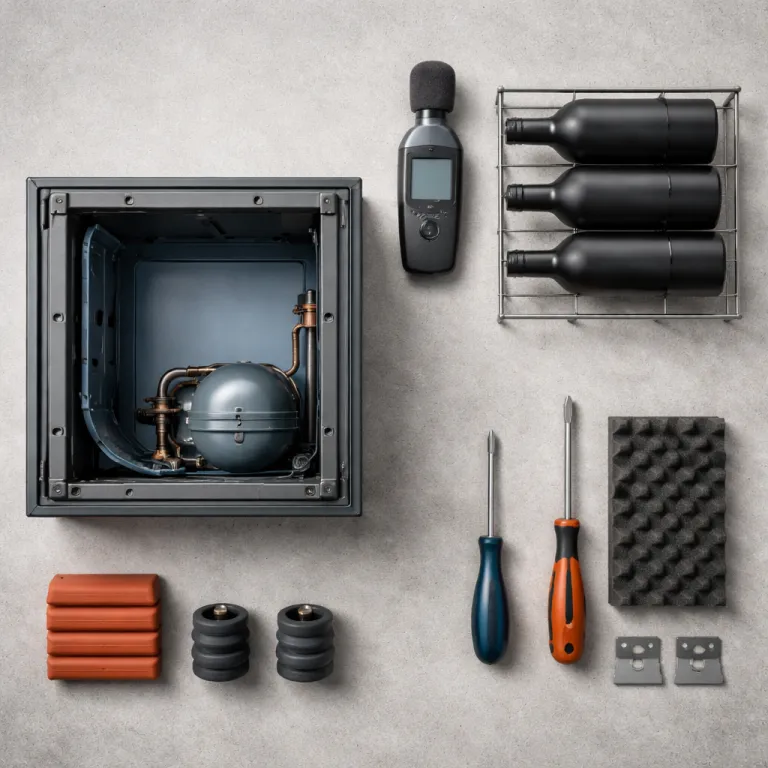
Think about where you plan to place the cooler before you fall in love with a sleek stainless steel door or a compact size specification. A 40 dB compressor wine cooler under a stone counter will sound different from the same wine fridge standing on a suspended wooden floor, because vibration transfers into the structure and amplifies the perceived noise. Rubber isolation pads under the feet can cut that perceived noise by roughly 2 to 4 dB(A) at one meter in a typical furnished room, which is enough to shift the sound from a noticeable background murmur to something you only register when the compressor cycles.
For a first time wine enthusiast with under 20 bottles, thermoelectric coolers rated around 25 to 35 dB(A) at one meter often feel whisper quiet in a study or guest room. These units lack a traditional compressor, so the noise profile is more of a gentle fan sound, which many owners rate with four or five stars in long term reviews when they use them for a small bottle wine collection. The trade off is cooling power, because a thermoelectric wine beverage cooler usually manages only about 18 to 20 °C below ambient temperature in manufacturer tests, which matters if your apartment regularly sits above 26 °C in summer.
Section 2 – Compressor vs thermoelectric: noise, temperature control, and where each system wins
Thermoelectric wine coolers use a solid state heat pump and fans, which makes them naturally quiet but relatively weak at pulling down temperature in warm rooms. Compressor based wine fridges work like a standard refrigerator, using a refrigerant loop and a motor that cycles on and off, which delivers stronger temperature control but introduces more noticeable noise spikes. For a quiet wine cooler in a city apartment, the choice between compressor and thermoelectric comes down to how warm your space gets and how serious you are about long term wine cellar style storage.
If your home rarely exceeds 24 °C, a thermoelectric single zone wine cooler can keep 12 to 18 bottles of wine at a stable serving temperature with very low noise. These units are usually lighter, easier to move between rooms, and better suited to a small zone wine collection of everyday bottles, though they struggle if you try to chill a full load of bottles for a party in a hot kitchen. When you live in a warmer climate or want to age red wine for years, a compressor wine refrigerator is the safer bet because it can hold a cellar friendly 12 to 14 °C even when the room runs hot, as long as the ambient temperature stays within the manufacturer’s stated operating range.
Compressor models also unlock more advanced layouts such as dual zone wine coolers, where one zone holds reds and the other chills whites or sparkling bottles at lower temperature. A dual zone wine fridge with a solid door and good insulation can serve as a compact wine cellar substitute for an enthusiast who lacks space for a built wine room, especially when paired with a dedicated wine cellar cooling unit as explained in this detailed guide on choosing the right wine cellar cooling units for your collection. Just remember that every extra fan, compressor, and zone adds potential noise sources, so you need to balance flexibility, size, and your tolerance for hums and clicks.
Section 3 – Why compressor cycling noise feels more annoying than the decibel rating
On paper, a 42 dB compressor wine cooler does not look much louder than a 35 dB thermoelectric model. In practice, the way a compressor cycles on and off makes the noise feel more intrusive, because your brain notices the change from silence to hum more than a steady background sound at the same level. That is why many wine enthusiast owners say they barely register a constant fan in their wine fridges but complain about the sudden start up of the compressor in late night reviews after a few months of use.
When a compressor kicks in, you often hear a brief click, then a rising hum as the motor reaches speed, and sometimes a faint rattle from bottles or shelves if the unit is not perfectly level. That short burst of extra noise can peak about 3 to 5 dB(A) above the advertised rating at one meter in a reflective kitchen, which is rarely mentioned in any glossy product description. Over time, as components wear and the rubber mounts soften, those peaks can grow sharper, and because perceived loudness is not linear, a 10 dB increase can sound roughly twice as loud to the human ear, which explains why a fridge that seemed quiet on day one may feel much less acceptable after six months of compressor cycling.
Premium wine refrigerator models try to tame this with variable speed compressors and vibration dampening systems, so the motor ramps up more gently and transfers less energy into the cabinet. Some high end wine coolers now pair these compressors with floating or suspension style shelves, a trend explored in depth in this article on mastering the art of wine cellar cooling, which reduces both noise and vibration reaching the bottle. For a first time buyer choosing the best quiet wine cooler, that kind of engineering matters more than a one line decibel spec, especially if the unit will live near a sofa or bed.
Section 4 – Real world noise: placement, vibration, and how to keep a wine fridge quiet
Where you place a wine cooler can change how loud it feels by a surprising margin. A compressor wine fridge sitting directly on a tile or hardwood floor will transmit vibration into the structure, which then radiates as low frequency noise that no decibel chart on the box ever mentions. Put the same wine refrigerator on a stable platform with rubber isolation pads under each foot, and the perceived noise often drops enough that you only notice the gentle airflow when you stand right next to the solid door.
Start by leveling the cooler carefully, because a tilted cabinet makes the compressor work harder and can cause bottles to rattle against each other. Use a small spirit level on the top panel, then adjust the front leveling feet until the bubble sits dead center, which protects both the compressor and your wine bottles from unnecessary vibration. Leaving a few centimeters of clearance at the back and sides also helps, because a cramped installation forces the compressor to run longer to maintain temperature, which means more frequent noise cycles and more wear over time.
Room acoustics matter as much as raw decibel numbers when you chase a truly quiet wine cooler. In a sparsely furnished room with hard surfaces, even a modest 38 dB compressor can sound sharp, while the same unit in a carpeted den with curtains and bookshelves feels much softer because those surfaces absorb reflections. If you are converting a small closet into a wine cellar, consider both insulation and acoustic treatment, and look at this practical guide on converting a closet into a wine cellar before you commit to a specific wine cooler or wine cellar cooling system.
Section 5 – Quiet performance over time: models, materials, and what long term owners report
Noise rarely stays constant over the life of a wine cooler, which is why long term reviews matter more than first week impressions. In owner forums and retailer reviews, patterns emerge where some compressor wine fridges stay stable for years while others develop rattles, fan buzz, or louder cycling after only a few seasons. Units with thicker insulation, a solid door instead of a glass panel, and heavier gauge stainless steel cabinets tend to age better, because the structure flexes less as the compressor vibrates.
For a first time buyer with a 12 to 18 bottle wine collection, compact single zone models from established brands often strike the best balance between quiet operation and reliable temperature control. These small wine coolers usually hold one neat row of bottles stacked two deep on each shelf, which keeps weight close to the cabinet walls and reduces flex that can amplify noise. In independent tests on popular 18 bottle compressor units run at 13 °C in a 22 °C living room, measured noise at one meter often sits around 39 to 42 dB(A) after six months of use, with brief start up peaks a few decibels higher, which aligns closely with what long term owners report in detailed reviews.
Customer service also plays a role in how quiet your wine cellar setup feels over time. A brand that responds quickly to fan failures, loose panels, or compressor issues can turn a potentially noisy refrigerator into a minor inconvenience, while poor support leaves you with a humming box in the corner and a stack of unresolved tickets. When a wine enthusiast community consistently reports that a manufacturer replaced noisy fans or supplied upgraded isolation mounts under warranty, that is a strong signal that the company stands behind its wine coolers rather than just the glossy product description.
Section 6 – Choosing your first quiet wine cooler: capacity, zones, and realistic expectations
Before you compare decibel ratings, decide how many bottles you truly need to store. A 12 bottle wine fridge may look perfect today, but most wine enthusiasts quickly outgrow that capacity once they start buying mixed cases and keeping a few special bottles for aging. Stepping up to a 24 bottle wine cooler or a compact 32 bottle wine refrigerator gives you room for everyday drinking bottles plus a small reserve, without jumping straight to a full wine cellar build.
Next, think about whether you need a single zone or dual zone layout. A single zone wine cooler keeps all bottles at one temperature, which works well if you mostly drink red wine or do not mind chilling whites briefly in a regular fridge before serving, while a dual zone wine fridge lets you hold reds and whites at their ideal temperatures simultaneously. For many first time buyers, a small dual zone wine cooler in the 18 to 32 bottle range offers the best mix of flexibility, size, and quiet operation, especially when the cabinet uses a solid door and good insulation to muffle compressor noise.
Finally, set realistic expectations about what “quiet” means in your specific room. A compressor based zone wine refrigerator will never be completely silent, but with careful placement, rubber isolation pads, and a model that has been well reviewed for low noise after months of use, it can fade into the background of your daily life. Treat the decibel spec as one data point alongside build quality, customer service reputation, and how you plan to grow your wine bottle collection, and you will end up with a quiet wine cooler that serves both your ears and your cellar ambitions.
Key figures on quiet wine coolers and noise performance
- Most thermoelectric wine coolers operate between 25 and 35 dB(A) at one meter in manufacturer tests, which is comparable to a quiet library and generally suitable for bedrooms or home offices according to published acoustic data.
- Typical compressor wine fridges are advertised between 38 and 48 dB(A) at one meter, roughly the sound of a residential refrigerator, but real world measurements in reflective kitchens often show brief peaks 3 to 5 dB higher during compressor start up.
- Thermoelectric systems usually cool up to about 18 to 20 °C below ambient room temperature in controlled tests, so a room at 28 °C limits the cabinet to around 8 to 10 °C, which can be marginal for sparkling wine but acceptable for most white wine styles.
- Independent acoustic tests on household appliances indicate that a 3 dB reduction in noise represents roughly a 20 to 25 % drop in sound energy, while listeners often describe a 10 dB change as “about twice as loud”, which explains why simple isolation pads can make a noticeable difference under a wine cooler.
- Market surveys of wine refrigerator buyers show that noise is one of the top three reasons for returns or exchanges, alongside temperature instability and build quality issues, highlighting the importance of reading long term owner reviews.
FAQ about quiet wine coolers and compressor noise
How loud should a quiet wine cooler be in a living space ?
For a living room or open kitchen, aim for a wine cooler rated around 38 to 42 dB(A) at one meter, which is similar to a modern refrigerator at a meter distance. In practice, placement, room acoustics, and vibration control matter as much as the spec sheet, so a well isolated 42 dB unit can feel quieter than a poorly installed 38 dB model.
Is a thermoelectric wine fridge always better than a compressor model for low noise ?
Thermoelectric wine fridges are usually quieter because they rely on fans rather than a cycling compressor, but they cannot handle very warm rooms or large capacities as effectively. If your home stays relatively cool and you store under 20 bottles, a thermoelectric single zone unit can be an excellent quiet choice, while larger collections or hotter climates still favor compressor coolers.
Why does my wine refrigerator seem louder after a few months of use ?
Noise often increases over time as compressor mounts soften, fans accumulate dust, and shelves or panels loosen slightly. Re leveling the cabinet, tightening accessible screws, cleaning the rear grille, and adding isolation pads under the feet can restore much of the original quiet performance, but persistent rattling may require a service visit.
Can I put a quiet wine cooler in a bedroom ?
Placing a wine cooler in a bedroom is possible, but you need to be selective. Look for a thermoelectric model or a compressor unit with strong owner feedback on low noise, install it on a stable surface with vibration damping, and accept that you may still hear occasional cycling if you are a very light sleeper.
Does a dual zone wine cooler make more noise than a single zone model ?
Dual zone wine coolers can be slightly noisier because they often use additional fans and more complex airflow paths to maintain two temperatures. However, good insulation, a solid door, and quality components can keep the difference small, so the choice should focus on your serving needs and space rather than noise alone.