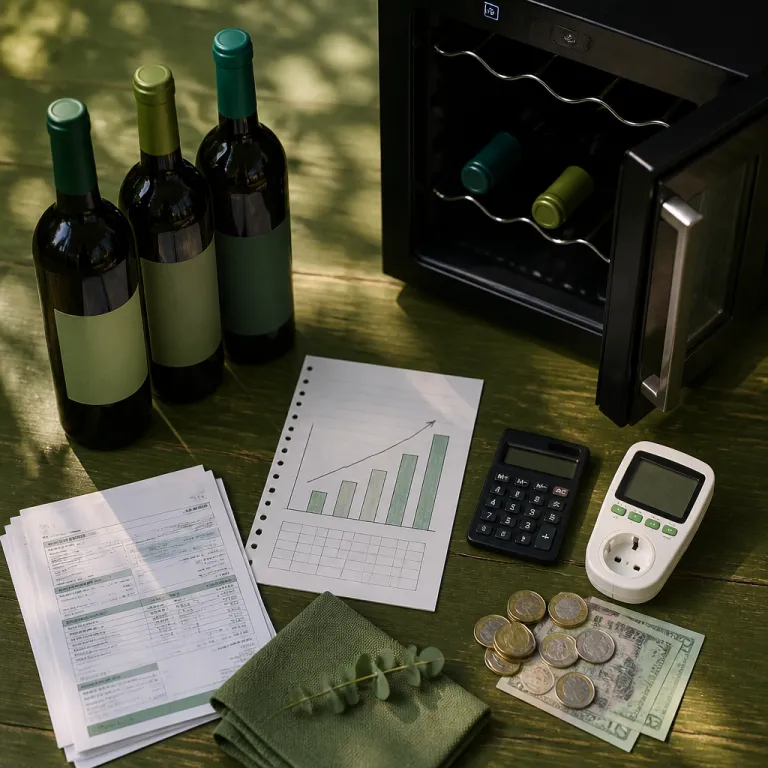
Why wine cooler energy consumption cost matters more than the sticker price
Most home enthusiasts focus on capacity and design when choosing a wine cooler. Yet over a five year period, the wine cooler energy consumption cost can quietly overtake what you paid at the checkout, especially with smaller thermoelectric coolers that run almost constantly. If you care about sustainable wine storage and your electricity bill, you need to weigh energy consumption as carefully as you weigh tannins in a structured red wine.
Think about a compact thermoelectric wine fridge rated at 80 watts, which is typical for a 12 to 24 bottle model marketed as silent and vibration free. If that cooler runs close to continuously to keep wine at a stable temperature in a warm kitchen, it will draw around 0.08 kilowatts every hour, all day, every day. Multiply that by roughly 8 760 hours in a year and you reach about 700 kilowatt hours of electricity, which is where the real cost story begins.
At an average residential electricity rate, that 700 kilowatt hours translates into roughly 70 to 90 units of your local currency per year, depending on your region and tariff. Over five years, the energy consumption alone can reach 350 to 450, which means the energy cost can exceed the original 300 purchase price of many entry level thermoelectric wine coolers. When you compare that to a similarly sized compressor wine refrigerator that cycles on and off and often uses only 30 to 60 per year, the long term cost gap becomes impossible to ignore.
The paradox is that the quietest coolers can be the least energy efficient, especially when placed in a warm room without proper ventilation around the rear and sides. A thermoelectric wine cooler behaves more like a space heater that happens to cool a small zone inside, dumping waste heat into your kitchen or living room while it works hard to keep wine at 12 °C. Compressor based wine fridges, by contrast, spike higher in wattage when the compressor starts but then rest, which is why their annual energy consumption often ends up lower for the same bottle capacity.
For a home wine collection of 20 to 60 bottles, this difference in energy efficiency is not an abstract environmental talking point, it is a line item in your household budget. A single zone thermoelectric model that seems affordable today can lock you into higher running costs for years, especially if you like to keep wine at serving temperature rather than just long term storage temperature. When you scale that up to dual zone wine fridges that manage both a cooler white wine zone and a slightly warmer red zone wine area, the energy math becomes even more important to understand before you buy.
Every compressor or thermoelectric cooler on the market publishes a wattage figure on its rating label, and that number is your starting point for calculating wine cooler energy consumption cost. To estimate annual cost, convert watts to kilowatts by dividing by 1 000, then multiply by the number of hours you expect the unit to run and by your local electricity rate per kilowatt hour. For compressor wine refrigerators, a realistic duty cycle is often around 30 to 50 percent, while thermoelectric coolers can approach 80 to 100 percent in warmer rooms, which is why the same wattage on paper can lead to very different real world bills.
Compressor vs thermoelectric: the energy cost inversion nobody talks about
Shoppers often assume that smaller thermoelectric coolers must be more energy efficient than larger compressor fridges, because the devices look lighter and simpler. In practice, the opposite is frequently true, and this energy cost inversion is one of the most important factors to understand when comparing wine cooler models for a growing wine collection. A compact 18 bottle thermoelectric wine fridge can quietly cost more in electricity over five years than a 32 bottle compressor wine refrigerator that is rated with better energy efficiency.
Thermoelectric cooling uses the Peltier effect, which is elegant in theory but relatively inefficient at moving heat compared with a modern compressor system. A thermoelectric wine cooler typically draws a steady 60 to 100 watts whenever it is on, and because it struggles to cool against high ambient temperature, it often runs almost continuously in a typical kitchen. That constant draw means energy consumption scales linearly with time, so your wine cooler energy consumption cost will climb steadily regardless of whether the cabinet is full of bottle wine or half empty.
Compressor based wine fridges work differently, cycling on at a higher wattage to cool the interior, then switching off once the target temperature is reached. A 150 watt compressor fridge that runs only 30 percent of the time can end up using less electricity over a year than a 70 watt thermoelectric unit that never gets a break. When you translate that into cost, a well designed compressor wine refrigerator can land in the 30 to 60 per year range for a 24 to 36 bottle capacity, while a smaller thermoelectric cooler can sit stubbornly in the 50 to 90 band for fewer bottles.
For buyers comparing single zone and dual zone wine coolers, the picture becomes more nuanced but the same principles apply. A dual zone compressor wine fridge that separates white and red wine storage with independent temperature controls will use more energy than a single zone equivalent, yet the incremental cost is often modest when the cabinet is well insulated and the compressor is modern. By contrast, dual zone thermoelectric coolers can struggle to maintain a stable cool zone for whites and a slightly warmer zone wine section for reds in a warm room, which pushes their energy consumption higher while still delivering weaker performance.
If you are planning a dedicated wine storage corner or a small cellar style space, it is worth reading a detailed guide on choosing the right wine cellar cooling units for your collection, such as the one available on this specialist resource about cellar cooling units. That kind of analysis helps you understand how compressor capacity, insulation quality, and proper ventilation interact to reduce energy use while keeping wine at a stable temperature. It also highlights why some wine refrigerators marketed as premium models justify their higher upfront cost through lower long term energy consumption and better protection for your wine collection.
Noise and vibration often push enthusiasts toward thermoelectric coolers, because these units have no compressor and therefore no start up hum. Yet many modern compressor wine fridges use inverter technology and well designed rubber mounts to keep vibration low enough that sediment in bottle wine is not disturbed, while still delivering far better energy efficiency. When you factor in that a quieter thermoelectric cooler can cost hundreds more in electricity over its life, the trade off between silence and wine cooler energy consumption cost becomes less clear cut than marketing suggests.
For a home collector with 30 to 50 bottles, a mid sized compressor wine refrigerator with a capacity around 24 to 36 bottles often hits the best balance between purchase price, energy efficiency, and usable storage. These fridges usually offer a single zone or dual zone layout, adjustable wooden shelves that keep wine stable, and a door seal that limits cold air loss when you open the cooler. Over five years, the combination of lower electricity use and better temperature stability can make these compressor models a more efficient wine storage solution than any similarly priced thermoelectric coolers on the market.
How placement, ambient temperature, and ventilation reshape your energy bill
Even the most energy efficient wine fridge can become a power hog if you place it badly. Ambient temperature, airflow around the cabinet, and how often you open the door all have a direct impact on wine cooler energy consumption cost, sometimes more than the efficiency rating on the product label. A poorly sited cooler can use 20 to 30 percent more electricity than the same model installed with proper ventilation and reasonable room temperature.
Start with ambient temperature, because every degree above the design range forces the cooling system to work harder to keep wine at the set point. A compressor wine refrigerator rated for a 10 to 32 °C environment will cycle more often if you tuck it into a sun drenched conservatory that regularly hits 30 °C in summer afternoons. Thermoelectric wine coolers are even more sensitive, because their efficiency drops sharply as the temperature difference between the inside and outside of the cabinet increases, which means they may never reach the target cool zone for whites when the room is hot.
Proper ventilation is the second major lever you control, and it is often misunderstood by buyers who treat a wine cooler like a standard kitchen fridge. Freestanding wine coolers need at least several centimetres of clearance at the back and sides so that warm air from the condenser can escape, otherwise heat builds up and the unit runs longer to compensate. Built in wine fridges with front ventilation grilles are designed differently, but even they require a clear airflow path at the toe kick to reduce energy use and protect compressor life.
Door habits matter more than most people expect, especially with glass door models that already lose some efficiency compared with solid door refrigerators. Every time you open the cooler to admire your wine collection or pull a single bottle wine for dinner, warm room air rushes in and the cooling system must work to pull the temperature back down. Over a year, frequent browsing can add several kilowatt hours to your energy consumption, which is not huge on its own but becomes meaningful when combined with high ambient temperature and poor ventilation.
If you are planning a more serious wine storage area, it is worth reading a technical guide on mastering the art of wine cellar cooling, such as the one hosted on this in depth article about cellar cooling. That kind of resource explains how insulation, vapor barriers, and correctly sized cooling units work together to reduce energy while keeping wine at a stable temperature. The same principles apply on a smaller scale to standalone wine fridges in apartments, where a thoughtful placement away from ovens and radiators can reduce energy by double digit percentages.
For dual zone wine fridges, placement choices can even affect how evenly each zone wine section performs, because the warmer side of the cabinet may face a wall or a heat source. If the white wine zone sits closer to a hot appliance, the compressor will cycle more often to protect that cooler zone, raising overall energy consumption for the entire wine refrigerator. Positioning the unit where both zones see similar ambient conditions helps keep wine in each compartment closer to its set temperature without unnecessary electricity use.
Finally, think about how full you keep the cabinet, because thermal mass works in your favor when the cooler is reasonably stocked. A wine fridge that holds 24 bottles but usually sits with only 6 bottles inside will see faster temperature swings when you open the door, which forces the compressor or thermoelectric module to work harder. Keeping a stable wine collection in the cooler, even if some bottles are everyday table wine, helps smooth out those swings and can slightly reduce energy consumption over the long term.
Inverter compressors, refrigerants, and the five year total cost of ownership
Once you start thinking in five year horizons, the conversation shifts from simple purchase price to total cost of ownership for your wine cooler. That total includes the initial cost of the wine fridge, the cumulative wine cooler energy consumption cost, and any maintenance or servicing related to the compressor, refrigerant, or electronic controls. For a serious home wine collection, getting this balance right means you keep wine safe, your bills predictable, and your environmental footprint reasonable.
Inverter compressors are the single most important technology to watch if you care about energy efficiency in wine refrigerators. Unlike fixed speed compressors that cycle on at full power and then off, inverter models vary their speed to match the cooling load, which reduces energy consumption by roughly 25 to 40 percent compared with older designs of similar capacity. Over five years, that efficiency gain can save enough electricity to offset a significant portion of the price premium you pay for an inverter equipped wine refrigerator, especially in dual zone models that manage two different temperature ranges.
Refrigerant regulations are also reshaping the landscape for wine fridges and other small refrigerators, with many manufacturers shifting to natural refrigerants such as R 600a (isobutane) and R 290 (propane). These gases have a much lower global warming potential than older refrigerants, which improves the environmental profile of energy efficient wine coolers, but they are also mildly flammable and require technicians trained to handle them safely. That can increase servicing costs slightly over the life of the cooler, which is another reason to factor maintenance into your five year cost calculations rather than focusing only on the energy bill.
When you evaluate specific models, look for clear energy consumption figures in kilowatt hours per year and compare them across similar capacities. A 24 bottle single zone compressor wine fridge rated at 90 kilowatt hours per year will be more efficient wine storage than a competing model rated at 130 kilowatt hours, even if both claim to be energy efficient on the box. If you multiply that 40 kilowatt hour difference by your local electricity rate and then by five years, you will see in hard numbers how much extra you would pay to run the less efficient cooler.
For many intermediate collectors, a 24 bottle to 36 bottle capacity hits the sweet spot between space and flexibility, and there is a detailed comparison of top 24 bottle wine coolers on this curated list of 24 bottle wine coolers. In that size range, the best compressor models combine dual zone layouts, solid insulation, and inverter compressors to keep wine at serving temperature with modest electricity use. Over five years, the total cost of ownership for such a fridge often undercuts cheaper thermoelectric coolers once you add energy and likely maintenance into the equation.
To run your own numbers, take the annual kilowatt hour rating, multiply by your electricity price, and then multiply by five to get a baseline five year energy cost. Add that figure to the purchase price and a small allowance for potential servicing, especially if the cooler uses newer refrigerants that may require specialized technicians. The result is a realistic picture of what each wine refrigerator will cost you to own, not just to buy, and that is the metric that should guide your final choice.
For a 300 thermoelectric cooler that uses around 80 per year in electricity, the five year energy cost lands near 400, which means you pay more to power the unit than to purchase it. A 500 compressor wine fridge with an inverter compressor that uses only 40 per year in electricity will cost about 200 to run over the same period, so your total outlay is similar but you get better temperature stability, more capacity, and lower environmental impact. When you frame the decision this way, the wine cooler energy consumption cost is not a footnote, it is the central argument for choosing the most efficient wine refrigerators your budget allows.
Key figures on wine cooler energy use and five year running costs
- Typical thermoelectric wine coolers for 12 to 24 bottles draw around 60 to 100 watts continuously, which leads to roughly 500 to 800 kilowatt hours of electricity use per year at high duty cycles, according to manufacturer specifications from major brands.
- Compressor based wine fridges of similar capacity often consume only 100 to 200 kilowatt hours per year because the compressor cycles on and off, which translates into roughly 30 to 60 in annual running costs at average residential electricity rates reported by national energy agencies.
- Energy efficient inverter compressor models can reduce energy consumption by approximately 25 to 40 percent compared with fixed speed compressor refrigerators of the same size, based on comparative testing published by appliance efficiency programs in Europe and North America.
- A budget thermoelectric wine fridge that costs 300 to buy and around 80 per year to run will accumulate roughly 400 in electricity costs over five years, meaning the energy bill exceeds the initial purchase price during the typical ownership period.
- Natural refrigerants such as R 600a and R 290 used in modern wine refrigerators have a global warming potential that is more than 90 percent lower than many legacy refrigerants, according to assessments by international environmental agencies, which significantly reduces the climate impact of each kilowatt hour used.
- Placing a wine cooler in a room that is 5 °C warmer than the manufacturer’s recommended ambient temperature range can increase annual energy use by 10 to 30 percent, based on controlled tests of household refrigerators and coolers conducted by independent efficiency laboratories.