Summary
Editor's rating
Is it worth the money compared to other options?
Slim, black, and mostly built for standard bottles
Build quality and feel of the components
How it holds up and what I expect long term
Cooling, noise and day‑to‑day use
What you actually get out of the box
Pros
- Very narrow 30cm width fits easily under most counters and in tight spaces
- Simple electronic temperature control with over‑temperature alarm that actually works
- Wooden slide‑out shelves look decent and make access to bottles easier
Cons
- Real‑world capacity drops with champagne and non‑standard bottles
- Single temperature zone only, not ideal for storing reds and whites at different temps

Specifications
View full product page →| Brand | CDA Products |
A narrow wine fridge that actually fits in a small kitchen
I picked up the CDA 19 Bottle Single Zone Wine Cooler mainly because I wanted something narrow to slide under the counter in a small kitchen. My old full‑size fridge was crammed with bottles and it was a pain every time I wanted a cold white. This one is just 30cm wide, so on paper it looked like the right compromise: not huge, not too noisy, and enough space for a small collection without taking over the whole room.
After a few weeks of use, I’d say it does pretty much what it promises: it cools wine, holds close to the advertised capacity, and looks decent in black. It’s not a luxury product and it doesn’t feel high‑end, but it’s not cheap junk either. The main thing I noticed is that it’s clearly designed for standard Bordeaux‑style bottles. If you drink a lot of champagne or chunky reds, the 19‑bottle claim becomes more of a theoretical number.
I also wanted something I could actually control without reading a 40‑page manual. The electronic temperature control here is straightforward: up and down arrows, digital display, and that’s about it. There’s also an over‑temperature alarm, which sounded once when I left the door half open while loading. So yes, that feature is real, not just marketing text. It’s a bit shrill, but at least you know when you’ve messed up.
Overall, first impression: it’s a practical little wine fridge that gets the job done. Nothing fancy, nothing that will impress a hardcore collector, but for a small flat or as a second cooler, it makes sense. The rest of this review is just me going through the details after actually living with it.
Is it worth the money compared to other options?
In terms of value, I’d describe this CDA cooler as good but not mind‑blowing. You’re mainly paying for the narrow 30cm width and the under‑counter format. If you have plenty of space, you can find larger coolers with more capacity for a similar price. But if you specifically need a slim unit that fits in a tight gap, your options shrink quickly, and that’s where this one starts to make sense.
What you get for the money: capacity for up to 19 standard bottles, single temperature zone, electronic controls, wooden shelves, over‑temperature alarm, and a decent‑looking black finish. There are no extra features like dual zones, lockable door, fancy lighting modes, or app control. So you’re not paying for smart features; you’re basically paying for a compact, simple wine fridge that fits in places a normal one won’t.
Compared to some cheaper off‑brand coolers I’ve seen, the build on this CDA feels a bit more trustworthy. The brand isn’t top tier, but it’s not totally unknown either. The Amazon rating around 4.5/5 (with few reviews so far) lines up with my feeling: generally positive, with a few things that could be better. If you’re super picky about noise levels or want perfectly flexible shelving for all bottle shapes, you might feel it’s slightly overpriced. If your main concern is “I need a narrow, reliable cooler that just works,” then the price feels reasonable.
So in my opinion, value is decent: not a bargain, not overpriced, just about right for what it offers. You’re trading advanced features for a compact footprint and straightforward use. If that’s what you’re after, your money isn’t wasted here. If you want more features per pound and have more space, you can probably do better with a wider model.
Slim, black, and mostly built for standard bottles
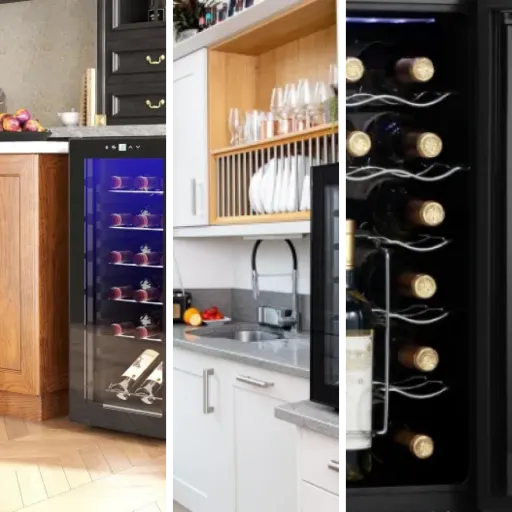
Design‑wise, this CDA cooler is pretty straightforward. It’s a 30cm wide black unit with a glass front door and wooden slide‑out shelves. The black finish is neutral enough to blend into most kitchens. It doesn’t scream for attention, which I actually like. The glass door lets you see what’s inside without opening it, and the handle is integrated rather than a big metal bar sticking out, so it keeps a clean line under the counter.
The layout inside is clearly optimised for standard 750ml bottles. The brand claims it holds 19 bottles, and that’s basically true if you stick to normal Bordeaux‑shaped bottles and don’t have too many chunky shoulders or weird shapes. Once I started mixing in a couple of prosecco bottles and a champagne, I had to shuffle things a bit and effectively lost a space or two. So in real life, for a mixed collection, I’d say 15–17 bottles is more realistic if you don’t want to force anything.
The shelves are wooden and they slide out, which looks nicer than metal racks and makes it easier to grab a bottle from the back. They aren’t heavy‑duty, but they don’t feel flimsy either. Pulling them out is smooth enough, as long as the fridge is level. I did have to adjust the feet slightly because at first the door wasn’t closing perfectly straight. Once I leveled it properly, the door seal felt a lot better and the alarm stopped complaining.
Visually, if you’re into super glossy or stainless‑steel appliances, this might feel a bit plain. But if you just want a discreet, slim black cooler that doesn’t clash with everything, it works. My only real complaint on design is that larger bottles are clearly an afterthought, and you have to play Tetris if your wine collection isn’t all the same shape.
Build quality and feel of the components
The materials on this CDA cooler are a mix of practical and cost‑controlled. The body is a standard painted metal in black, which feels okay but not premium. It doesn’t flex or feel thin when you press on the sides, so at least it doesn’t scream cheap. The front glass door feels solid enough, and the seal around it is decent once you’ve leveled the unit properly. I checked for obvious gaps with a piece of paper around the door, and it held in place, so the seal seems to be doing its job.
The standout detail inside is the wooden shelves. They’re not luxury wood, but they automatically look better than wire racks. They’re fairly light and slide on small runners. When fully loaded with bottles, they hold up fine, but you can feel that they’re not designed to be yanked out aggressively. If you pull them smoothly, they work well. I didn’t notice any warping or bending after loading and unloading a few times, but long‑term, I’d avoid overloading them with oversized bottles.
The interior walls are standard plastic, easy to wipe down. It doesn’t feel fancy, but it’s practical for cleaning. I spilled a bit of condensation water and wiped it with a cloth without any staining or marks. The control panel is inside near the top, with a simple digital display and a couple of buttons. The buttons have a basic clicky feel – not high‑end, not terrible, just functional.
Overall, the materials match the price point and the type of product. It’s not built like a professional cellar, but it’s also not flimsy like the cheapest coolers you sometimes see. For normal home use, I think the build is good enough. If you’re expecting thick wood, heavy glass and metal racks, you’ll be disappointed. If you just want something that feels reasonably solid and easy to clean, this does the job.
How it holds up and what I expect long term
I haven’t had this cooler for years obviously, but after a stretch of daily use, I can at least comment on how it behaves and what seems likely long term. In a few weeks, there were no weird rattles, no loose parts, no sudden temperature jumps. The compressor sound stayed the same from day one, which is usually a good sign. The door still closes firmly and the seal hasn’t started peeling anywhere.
I did a couple of basic checks to get a feel for durability. I loaded it close to full capacity with a mix of bottles, pulled the shelves in and out several times, and checked if anything loosened up. The wooden shelves didn’t sag, though they flex a tiny bit when fully loaded – nothing alarming, just something to be aware of. The runners still slide smoothly, as long as the fridge stays level. I’d say the shelves are the part I’d keep an eye on over a few years, just because wood and constant loading/unloading can eventually show wear.
The exterior paint hasn’t scratched easily so far. I brushed it against another appliance during installation and didn’t see any obvious marks. The glass door cleans up fine with a normal glass cleaner. The interior plastic also seems resistant enough; no staining or warping from condensation. There are no fancy electronics or screens on the outside, so fewer things to break, which I actually see as a plus for durability.
Realistically, for the price and category, I expect this to be a medium‑term appliance: solid enough for several years of regular use if you treat it reasonably, but not something you’ll pass down to the next generation. If you slam the door, overload the shelves with oversized bottles, or wedge it into a space with no ventilation, you’ll probably shorten its life. Used as intended, it feels reliable so far.
Cooling, noise and day‑to‑day use
On the performance side, I’d call this cooler solid but basic. It’s a single zone unit, so you pick one temperature for everything. If you like having reds and whites at different temps, you’ll need another solution. I mainly use it for whites, rosé, and a few reds I don’t mind being a bit cooler, so a single zone is fine for me. The electronic temperature control lets you pick your setting easily, and the digital display is clear enough to read even from a distance.
In terms of cooling, it behaves as expected for a small under‑counter unit. From room temperature, it took roughly an hour or a bit more to get down to my target setting. Once there, it stayed fairly stable, with small fluctuations when I opened the door several times in a row. The over‑temperature alarm went off once when I loaded too many room‑temperature bottles at once and kept the door open too long. It’s a bit annoying to hear, but it does its job: you realise quickly that you’re making it work too hard.
Noise is always a worry with these things, especially in an open‑plan kitchen or living space. This one isn’t silent, but it’s not loud either. You can hear a soft hum when the compressor kicks in, similar to a modern fridge. Sitting a few meters away watching TV, it didn’t bother me. If you’re super sensitive to noise and want something almost silent, you might notice it, but for normal use, I’d say it’s acceptable and not intrusive.
Day‑to‑day, it’s easy to live with. The door opens smoothly, the shelves slide out without sticking, and the temperature controls don’t require any fiddling once set. No Wi‑Fi, no app, no fancy modes – and honestly, I didn’t miss any of that. It’s a simple cooler that cools, which is all I wanted here.
What you actually get out of the box
Out of the box, the CDA 19 Bottle Wine Cooler is pretty barebones. You get the unit itself, a basic user manual and that’s it. No extra accessories, no fancy tools. It arrived well packed in thick cardboard with foam on the corners, so at least it felt protected during delivery. I unpacked it alone without too much hassle, though it’s a bit awkward to lift because of the height vs narrow width. Still manageable for one person if you’re careful.
The manual is short and fairly clear. It covers how to set the temperature, what the alarm means, and the basics of cleaning and spacing around the appliance. There’s nothing mind‑blowing in there, but I didn’t have to Google anything to get it running, which I appreciate. Plugging it in and setting the temperature took maybe 5 minutes. It reached the target temperature in about an hour or so from room temp, which is fine for a small cooler like this.
One thing to note: this model is described as a freestanding under‑counter cooler. That means it’s meant to slide under a counter, but it still needs space around it to breathe. It’s not a fully built‑in unit. In practice, I left a few centimeters at the back and sides as suggested in the manual. If you’re planning to wedge it tight between cabinets with no airflow, you’re asking for trouble. For my setup under a standard kitchen worktop, it slotted in without any real modification.
So in terms of presentation and first contact: it’s simple, functional, and doesn’t come with any surprises. If you’re expecting a fancy unboxing experience, this isn’t that. If you just want to plug it in and start cooling bottles the same evening, it’s perfectly fine.
Pros
- Very narrow 30cm width fits easily under most counters and in tight spaces
- Simple electronic temperature control with over‑temperature alarm that actually works
- Wooden slide‑out shelves look decent and make access to bottles easier
Cons
- Real‑world capacity drops with champagne and non‑standard bottles
- Single temperature zone only, not ideal for storing reds and whites at different temps
Conclusion
Editor's rating
Overall, the CDA 19 Bottle Single Zone Wine Cooler is a practical choice if you’re short on space and just want a narrow under‑counter unit that keeps your bottles at a stable temperature. It cools reliably, the temperature controls are simple, the over‑temperature alarm actually works, and the wooden shelves make it look a bit nicer than the cheapest metal‑rack models. Noise is acceptable for most people, and the build quality feels solid enough for normal home use.
It’s not perfect though. The 19‑bottle capacity is realistic only if you mainly use standard Bordeaux‑style bottles; once you start adding champagne or odd‑shaped bottles, the real capacity drops a bit. It’s also single zone only, so if you’re serious about storing reds and whites at different temperatures, this won’t cover all your needs. And for the price, there are bigger coolers out there if you have the space and don’t need the 30cm footprint.
I’d say this cooler is best for people with small kitchens, flats, or anyone who has a 30cm gap under the counter they want to turn into wine storage. If you’re a casual wine drinker who wants bottles at a decent serving temperature and you don’t care about smart features, it’s a pretty solid option. If you’re a collector with expensive bottles, need dual zones, or care a lot about perfect shelf flexibility, you should probably look at higher‑end or wider models instead.