Summary
Editor's rating
Value for money: decent deal if you really want dual zones
Design: looks good, footprint is narrow but deep
Day-to-day use: bottle handling and practical annoyances
Materials and build: decent overall, some parts feel a bit cheap
Durability impression after a few weeks
Performance: cooling, noise, and real dual-zone use
What you actually get with this KLARSTEIN Shiraz
Pros
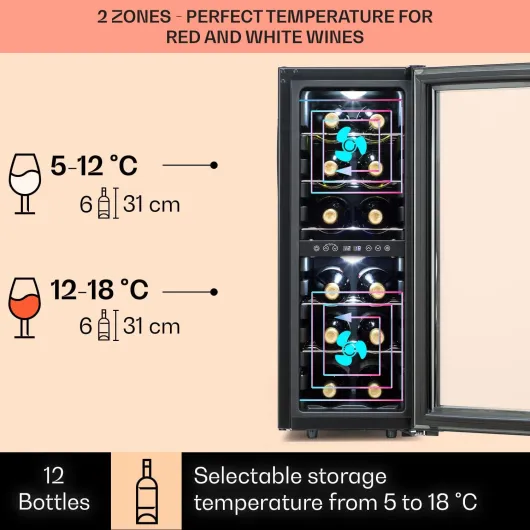
- Real dual-zone cooling with independent temperature settings from 5–18 °C
- Compact and narrow footprint that fits easily in small kitchens or living rooms
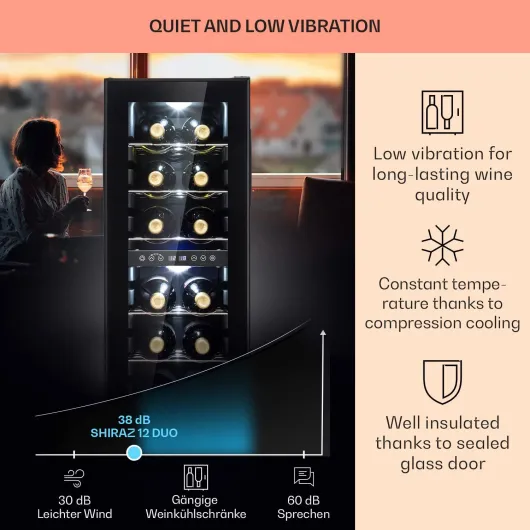
- Quiet operation (around 38 dB), suitable for home use without being annoying
Cons
- Energy efficiency class G, not ideal if you care a lot about power consumption
- 12-bottle capacity is optimistic with Champagne or non-standard bottle shapes
- Some interior parts feel a bit cheap (plastic supports, basic finishes)

Specifications
View full product page →| Brand | KLARSTEIN |
A small wine fridge for people who don’t have a cellar
I picked up the KLARSTEIN Shiraz 12-bottle wine cooler because I was tired of having white wine and bubbles crammed in the kitchen fridge and red bottles sitting at room temperature, especially in summer. I don’t live in a huge place, so I needed something compact, not too noisy, and not costing the same as a “real” cellar. This model kept popping up with a decent 4.1/5 rating, so I gave it a shot.
I’ve been using it for a few weeks now, mostly for everyday reds and whites plus a couple of nicer bottles I don’t want ruined by heat. In that time, I’ve played with the temperature settings, checked how noisy it is at night, and tried different bottle sizes to see how realistic the “12 bottles” claim is. Spoiler: you can hit 12, but not with every bottle shape.
Overall, it’s clearly a practical, entry-level wine fridge. It’s not a pro sommelier tool, and it’s not going to impress hardcore collectors, but that’s not really who it’s for. It’s for people like me who just want their wine at the right temperature without spending a fortune or rebuilding the kitchen.
If you’re wondering whether it’s actually quiet, if the dual zones really work, and if it’s worth the space and power bill (energy class G, so not exactly efficient), I’ll walk through all that. There are things I liked, and a couple of details that are a bit “meh” or feel a bit cheap, especially at this price point.
Value for money: decent deal if you really want dual zones
In terms of value, this KLARSTEIN Shiraz sits in that middle zone: not dirt cheap, not high-end. You’re paying mainly for the dual-zone feature, the compact form factor, and the decent design. If you don’t care about having two separate temperatures, you can find single-zone 12-bottle fridges for less. But if you actually use both reds and whites regularly and want them at proper serving temps, the dual-zone here is the main selling point.
What you get for the price: a fairly quiet compressor unit, working temperature range from 5 to 18 °C, UV-tinted glass door, touch controls, and a compact footprint. The downsides are the energy class G (so not very efficient), some plastic parts that feel a bit cheap, and the fact that the 12-bottle capacity is optimistic if you have a lot of non-standard bottles. There’s no fancy feature like humidity control or smart monitoring, but at this price I didn’t expect that.
Compared to other similar models I’ve seen or used, I’d say the Shiraz is pretty solid but not spectacular. It doesn’t feel like a bargain, but it doesn’t feel overpriced either. It hits that “good enough for most people who like wine but aren’t collectors” sweet spot. If you mainly drink one type of wine and don’t need dual zones, you could save money with a simpler unit. If you’re picky about temperatures and like having a mix of reds, whites, and bubbles always ready, then the extra cost makes sense.
So from a value standpoint: for my use (small apartment, mixed wines, no space for a big cellar), I’m satisfied. It’s not perfect, but it gets the job done reliably and looks decent doing it. Just go in knowing what it is: a compact, practical wine fridge with a couple of compromises, not a luxury piece of gear.
Design: looks good, footprint is narrow but deep
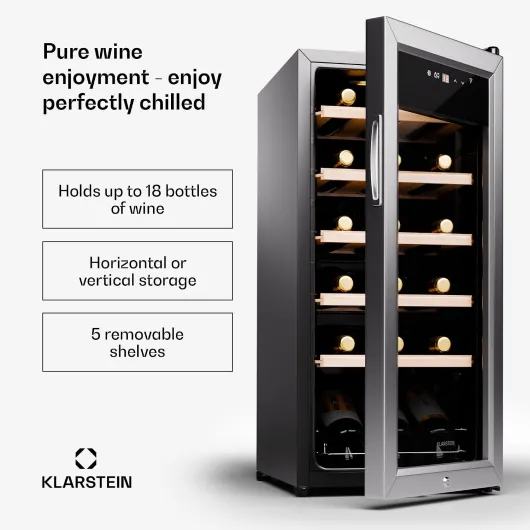
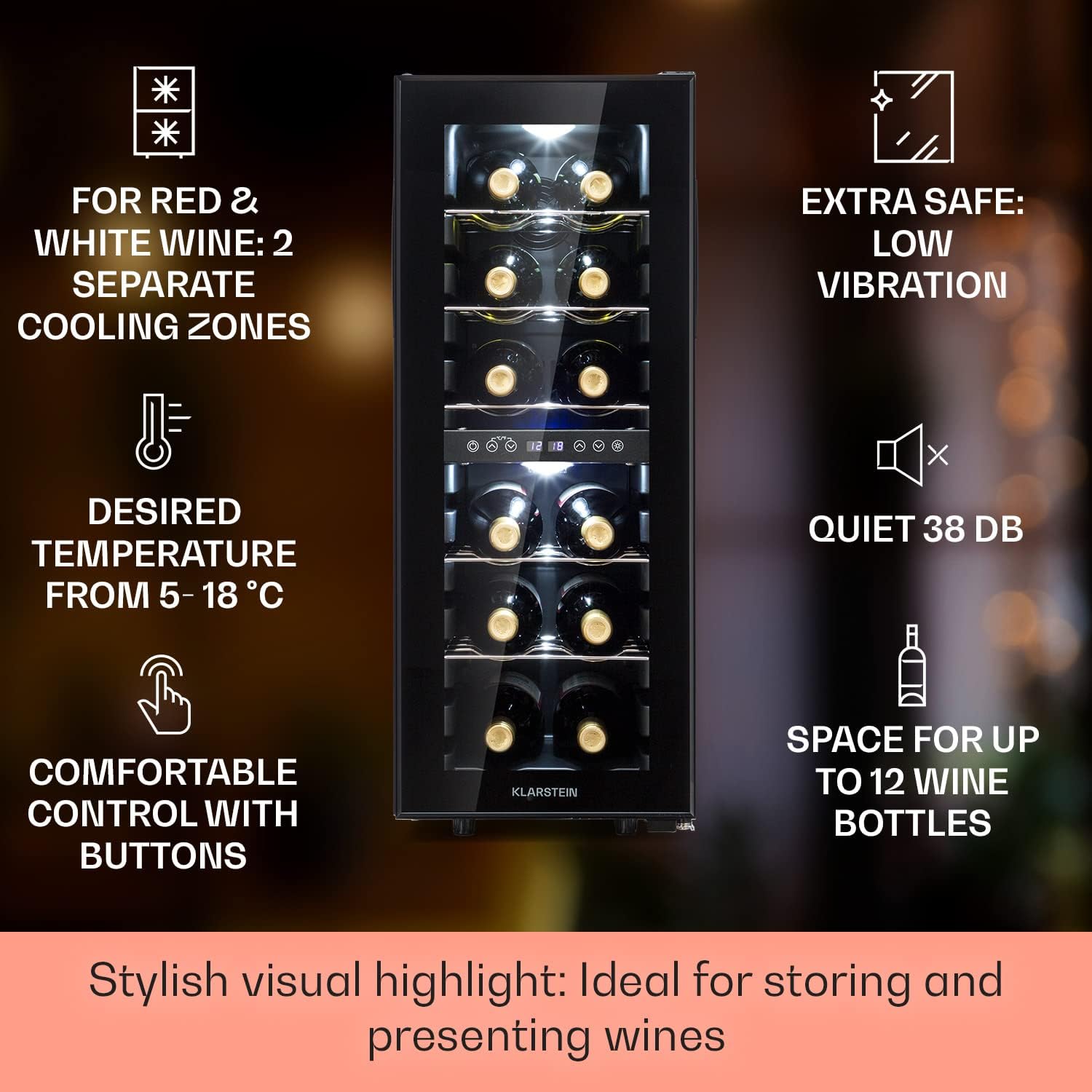
Design-wise, this wine fridge is pretty clean and modern. Black body, stainless steel frame around the glass door, and a simple rectangular shape. It doesn’t scream for attention, but it looks decent in a kitchen or living room. I put mine near a sideboard and it blends in nicely. The glass door with the UV tint is dark enough so you don’t feel like you’re staring at a supermarket fridge, but you can still see the bottles when the LED light is on.
The thing I really noticed is the form factor: it’s quite narrow (28.5 cm wide) but fairly deep (56.2 cm). That’s good if you don’t have much wall space, but you do need a bit of depth so it doesn’t stick out awkwardly. Also remember you need some space at the back and sides for ventilation, plus room in front to open the door fully (depth with door open is about 56 cm). If you were hoping to squeeze this into a tight built-in niche, forget it – it’s meant to be freestanding.
The front touch panel is integrated in the door frame, which looks neat. The buttons react well, no lag or double presses. The display is simple white/blue digits. Nothing fancy, but it doesn’t look cheap from a distance. The LED interior light is white and gives a clean look to the bottles. Personally, I leave it off most of the time and just turn it on when I’m showing someone or picking a bottle in the evening.
One small downside in design: the door orientation is fixed right-hinged, and you can’t reverse it. For my setup it’s fine, but if your layout needs a left opening, that’s annoying. Also, the door doesn’t have a built-in handle sticking out; you pull from the edge of the frame. It’s okay, but with slightly wet hands it can feel a bit slippery. Overall, though, for a compact unit, the design is pretty solid and doesn’t look tacky or overly “gadgety”.
Day-to-day use: bottle handling and practical annoyances
In everyday use, the biggest comfort factor is how easy it is to load and grab bottles. For standard wine bottles, it’s pretty straightforward: slide them in, they sit securely on the glass shelves, and you can see the labels through the door if you’ve turned the light on. The height between shelves is okay for most reds and whites. The problem starts when you have bigger bottles – Champagne, some rosés, and some bulky craft beers. Then you often have to remove a shelf or angle bottles a bit, which cuts the total capacity.
Realistically, if you mix normal wine and a couple of sparkling bottles, you’ll probably use it like this: top zone with 4–5 whites or bubbles, bottom zone with 5–6 reds, and maybe one awkward bottle placed sideways. So yeah, “12 bottles” is true, but only if you play by the rules of standard shapes. That’s not unique to this fridge, though – most compact 12-bottle units have the same limitation.
The manual LED light is slightly annoying. You open the door and instinctively expect the light to turn on, but it doesn’t. You have to press the touch button. It’s a small detail, but when your hands are full or slightly wet, it’s not super convenient. Also, there’s no alarm if you leave the door open. I did that once for several minutes by mistake, and only noticed because I walked past and saw the door ajar. After that, I just made it a habit to give the door a firm push.
On the plus side, the noise level makes it easy to live with. In my kitchen, I barely notice when the compressor runs. The vibration is low, so bottles don’t rattle. Controls are simple enough that even guests can figure out how to tweak the temperature if needed. No app, no Wi‑Fi, no learning curve. It’s a “set it and forget it” appliance, and from a comfort perspective, that’s actually nice.
Materials and build: decent overall, some parts feel a bit cheap
When you unbox it, the first impression is that the outer shell and door frame feel solid enough. The black body panels don’t flex much, and the stainless steel frame around the glass door gives it a more serious look than the fully plastic models. The glass door itself feels sturdy, and the UV tinting is a nice touch if you’re putting it in a brighter room. The door closes with a clear “thunk”, not flimsy, and the seal seems even all around.
Inside, the shelves are glass, not metal racks. That’s good for stability, but it also means you’re putting glass bottles on glass shelves, so you do get a bit of clinking when you slide bottles in and out. One of the Amazon reviews mentioned they expected metal rails but got plastic – in my unit, the support rails and side elements feel more like plastic than metal, and that’s where the product feels a bit budget. They do the job, they don’t bend under the weight of full bottles, but they don’t give that “solid hardware” vibe.
The touch controls and display are embedded in a plastic strip, which is standard for this price range. Buttons work fine, and I haven’t had any issues with them misreading touches. The interior LED strip is basic but does its job. There’s no fancy brushed metal inside, no wooden shelves, nothing like that – it’s clearly a functional, mid-range build, not a luxury piece.
One thing to keep in mind: this is made in China, like most units in this category. The weight is around 20.9 kg, so it’s not super heavy, but heavy enough to feel like there’s a proper compressor and insulation inside. Over a few weeks of use, nothing has rattled loose, no weird vibrations in the body, and the door seal hasn’t warped. Still, if you’re very picky about materials and want metal rails, wooden shelves, and a more “premium” interior, you’ll probably find this a bit basic. For my use – a home kitchen / small bar – I find the materials acceptable for the price, just don’t expect high-end finishes.
Durability impression after a few weeks
I haven’t had this fridge for years, so I can’t pretend to give a long-term durability verdict, but after a few weeks of daily use I can at least talk about the build stability and early signs. So far, there are no weird noises, no rattling shelves, and the compressor cycles feel normal. The door seal still sits tight, with no gaps or parts peeling off. The glass shelves haven’t warped or shown cracks, even when fully loaded.
The compressor type listed is “hermetic reciprocating / rotary / scroll” which is a bit vague in the specs, but in practice it behaves like a standard compact compressor unit. Starts, runs, stops – nothing special, nothing alarming. The unit is heavy enough (around 21 kg) that it doesn’t feel hollow or flimsy. I’ve moved it slightly a couple of times to clean behind it, and it handled that fine without flexing or creaking.
Where I have some doubts long term is the plastic components inside, like the shelf supports and small trim parts. They feel okay, but not exactly tough. If you’re rough with sliding bottles or constantly taking shelves in and out, I could see something cracking after a while. Also, with any glass door appliance, you need to be a bit careful when moving it or bumping things into it. It’s not fragile, but it’s still glass.
Looking at the Amazon reviews, there aren’t tons of horror stories about units dying quickly, which is a good sign. Still, this is clearly not built like a professional cellar that’s meant to last 15–20 years. I see it more as a mid-term appliance: solid enough for several years of normal home use, as long as you don’t abuse it. For the price point, that’s acceptable, but if you want something ultra-robust for a big collection, you’d probably go for a higher-end brand and pay a lot more.
Performance: cooling, noise, and real dual-zone use
Let’s talk about what matters: does it actually cool properly and stay quiet? In my case, yes, it does the job. I set the top zone to 8 °C for whites and bubbles and the bottom zone to around 14–15 °C for reds. With a room temperature of about 22–24 °C, the fridge usually reaches the set temperatures in about 1–2 hours after loading room-temp bottles. If you fill it all at once with warm bottles, expect it to work harder and take longer, which is normal.
The dual-zone function isn’t fake: the two zones really do show and hold different temperatures. I checked with a simple fridge thermometer and there was usually a 1 °C difference between the display and the actual shelf temperature, which is fine. Wine isn’t that picky. Once it stabilises, it doesn’t swing wildly. You can store your whites and reds at different temps and actually feel the difference when you pour a glass.
On the noise side, the compressor is rated around 38 dB. In practice, that means: when the compressor kicks in, you can hear a low hum if you’re in the same quiet room, but it’s not louder than a normal fridge. If you have it in the kitchen or a utility room, you’ll barely notice it. I wouldn’t put it right next to a bed, but in a living room it’s acceptable. Several Amazon reviews say it’s very quiet, and I agree – no annoying high-pitched whine, just the usual fridge sound on cycles.
Energy-wise, it’s class G, which is not great. It’s a small unit, so the actual power draw won’t destroy your bill, but it’s not the most efficient thing you can buy. If you plan to run it 24/7 all year just for a few bottles, that’s something to keep in mind. For me, it’s a compromise: I like having wine at the right temperature more than I like saving the last possible watt, but it’s not the product you buy if your top priority is energy efficiency.
What you actually get with this KLARSTEIN Shiraz
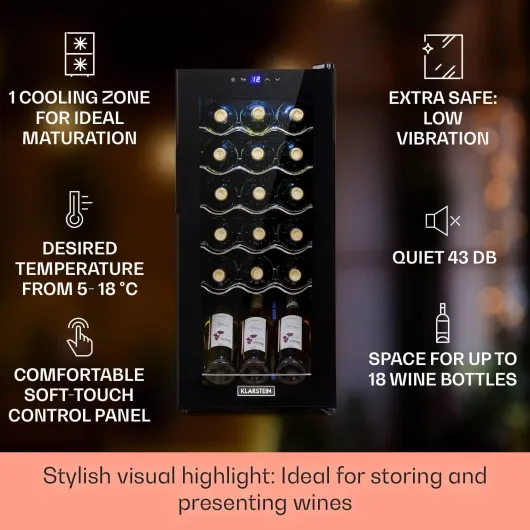
On paper, this is a 42L, 12-bottle, dual-zone, freestanding wine fridge. In practice, that means: one vertical black box about 72 cm high, 28.5 cm wide, and 56.2 cm deep, with a glass front door and a digital touch panel. It plugs into a normal outlet (Euro plug), has a compressor cooling system, and lets you set temperatures between 5 and 18 °C for each of the two zones. So you can keep whites up top and reds below, or vice versa.
Inside, there are 5 glass shelves. The layout is clearly thought out for standard 0.75 L wine bottles. If you mostly buy classic Bordeaux-style bottles, you’ll be fine. As soon as you start adding chunky Champagne bottles, fat rosé bottles, or weird-shaped craft beers, you have to start playing Tetris: remove a shelf, stagger bottles, or accept you’ll fit fewer than 12. For normal wine, 10–12 bottles is realistic; for mixed shapes, I’d say more like 8–10 without hassle.
The control panel is simple: touch buttons for power, light, and temperature up/down for each zone. There’s an LCD that shows the set temperature. It’s basic but clear, even in a dim room. One thing to note: the LED light is manual. It doesn’t turn on when you open the door; you have to press the button. Not a big deal, but after a few days I caught myself waving at the door out of habit, then remembering it’s not a kitchen fridge.
In terms of usage, you just plug it in, leave it upright for a few hours to let the compressor oil settle (important if it was moved or delivered lying down), then set your temperatures. Mine took roughly 1–2 hours to reach the target temps from room temperature. After that, it stabilised pretty well. There’s no fancy app, no Wi‑Fi, no smart features. It’s literally a small box that cools wine, which is honestly all I needed.
Pros
- Real dual-zone cooling with independent temperature settings from 5–18 °C
- Compact and narrow footprint that fits easily in small kitchens or living rooms
- Quiet operation (around 38 dB), suitable for home use without being annoying
Cons
- Energy efficiency class G, not ideal if you care a lot about power consumption
- 12-bottle capacity is optimistic with Champagne or non-standard bottle shapes
- Some interior parts feel a bit cheap (plastic supports, basic finishes)
Conclusion
Editor's rating
After using the KLARSTEIN Shiraz 12-bottle dual-zone wine cooler for a few weeks, my overall feeling is that it’s a good, practical option if you want proper serving temperatures for both reds and whites without taking up much space. The dual zones actually work, the noise level is low enough for a kitchen or living room, and the design is clean and unobtrusive. It’s not a luxury object, but it doesn’t look cheap either, especially with the glass door and stainless frame.
It’s not flawless. The energy efficiency (class G) is clearly a weak point, the interior has some plastic elements that feel a bit budget, and the “12 bottles” capacity assumes mostly standard bottle shapes. The manual light and non-reversible door are small annoyances, but not deal-breakers. For everyday use – keeping a few whites chilled and reds slightly below room temperature – it just works, and that’s what most people will care about.
Who is it for? People who enjoy wine regularly, want better storage than a random kitchen shelf, and have limited space. Also good if you like having whites and reds ready at different temperatures for dinners or small gatherings. Who should skip it? Serious collectors, anyone obsessed with low power consumption, or those who need to store lots of large-format or oddly shaped bottles. If you’re okay with those limits, this Shiraz model is a solid little workhorse that does what it says without too much fuss.