Summary
Editor's rating
Value for money: fair price for what it does
Design: simple black box that hides in the room
Materials and build: decent, but you feel the price point
Durability and daily use: built for light duty, not rough handling
Cooling performance and noise: does it actually keep things cold?
What you actually get with the Aire20
Pros
- Cools properly to typical fridge temperatures (around 3–7°C) for drinks, snacks, and medication
- Low noise level (~40 dB) suitable for bedrooms and quiet offices
- Frost-free design with no ice box, so the full 20L is usable space and no defrosting hassle
Cons
- Build quality and finish feel budget, with some reports of dents and cosmetic flaws
- Thermoelectric cooling is sensitive to room temperature and not as strong as a compressor fridge
- Lock feels basic and more like a deterrent than real security

Specifications
View full product page →| Brand | Subcold |
A small fridge that’s actually useful, not just a toy
I’ve been using the Subcold Aire20 LED Mini Fridge (the 20L black model) for a few weeks, mainly in a bedroom/office setup. I didn’t buy it to look cool on Instagram; I just wanted somewhere to keep drinks, a bit of food, and some meds cold without having to go to the kitchen every time. In that sense, it’s doing the job pretty well. It’s a simple little box that cools things, doesn’t make much noise, and doesn’t eat much power.
In practice, this sits on top of a chest of drawers next to my desk. I’ve loaded it with cans, a couple of small milk bottles, yoghurts, and some chocolate. The 20L capacity is more useful than it sounds on paper. You’re not storing a week’s shopping in there, but for one person’s drinks and snacks, or a few meds that need to stay cool, it’s enough. The thermostat is manual, nothing fancy, but once you set it, it stays fairly stable.
What pushed me toward this model was the balance between low noise, low energy use, and the fact it’s frost free. I didn’t want a tiny freezer box that ices up and steals space, so the fact this is just a simple fridge was a plus. The brand shouts a lot about 75kWh/year and 40dB noise. I can’t measure exactly, but after using it in a bedroom, I’d say those numbers are believable enough.
It’s not perfect: build quality is a bit “budget appliance”, and if you look closely you’ll spot a few rough edges. The lock also feels more like a deterrent than serious security. But overall, for the price and for what I needed, it’s a pretty solid little fridge, as long as you know its limits and don’t expect the finish of a big-name kitchen brand.
Value for money: fair price for what it does
In terms of value, I’d put the Subcold Aire20 in the “good but not insane bargain” category. You’re paying for a compact, quiet fridge with low energy use and a proper cooling range, not just a novelty cooler. Compared to some super cheap mini fridges that barely cool below room temperature, this is a clear step up. Compared to full-size fridges, obviously the price per litre is high, but that’s normal for this category.
The low energy consumption (around 75 kWh/year, with 55W listed) is a plus long term. It means you can leave it plugged in all the time without worrying too much about your bill. If you’re using it for medication or as a constant bedside fridge, that matters. Also, the lack of a freezer box means you’re not wasting energy on something you might not need, and you get all 20L for chilled space. For a student room or guest room, that’s pretty efficient.
Where the value feels slightly weaker is the build quality and finish. It does the job, but it doesn’t feel premium, and the quality control comments on Amazon are something to keep in mind. If you’re unlucky and get a dented or misaligned unit, you’ll have the hassle of a return. On the other hand, there’s a 1-year warranty, and most people seem to receive theirs in good shape based on the 4.3/5 rating and reviews.
Overall, if your expectations are realistic – a practical little fridge for drinks, snacks, and meds, not a showpiece – the price is justified. There are cheaper options, but they often compromise on noise or cooling power. There are also more expensive glass-door models that look nicer but insulate worse. This one sits in the middle: decent performance, low running cost, and a price that feels fair for everyday use.
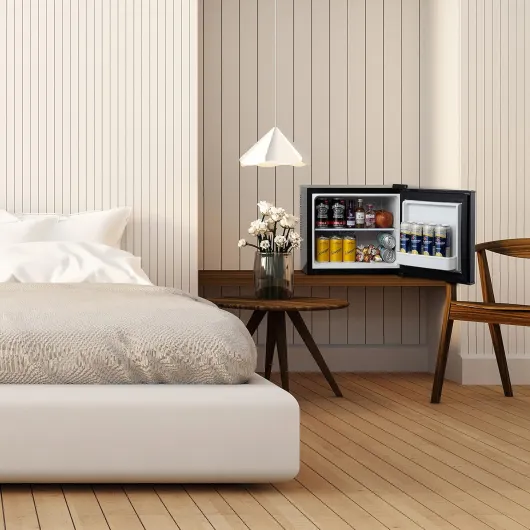
Design: simple black box that hides in the room
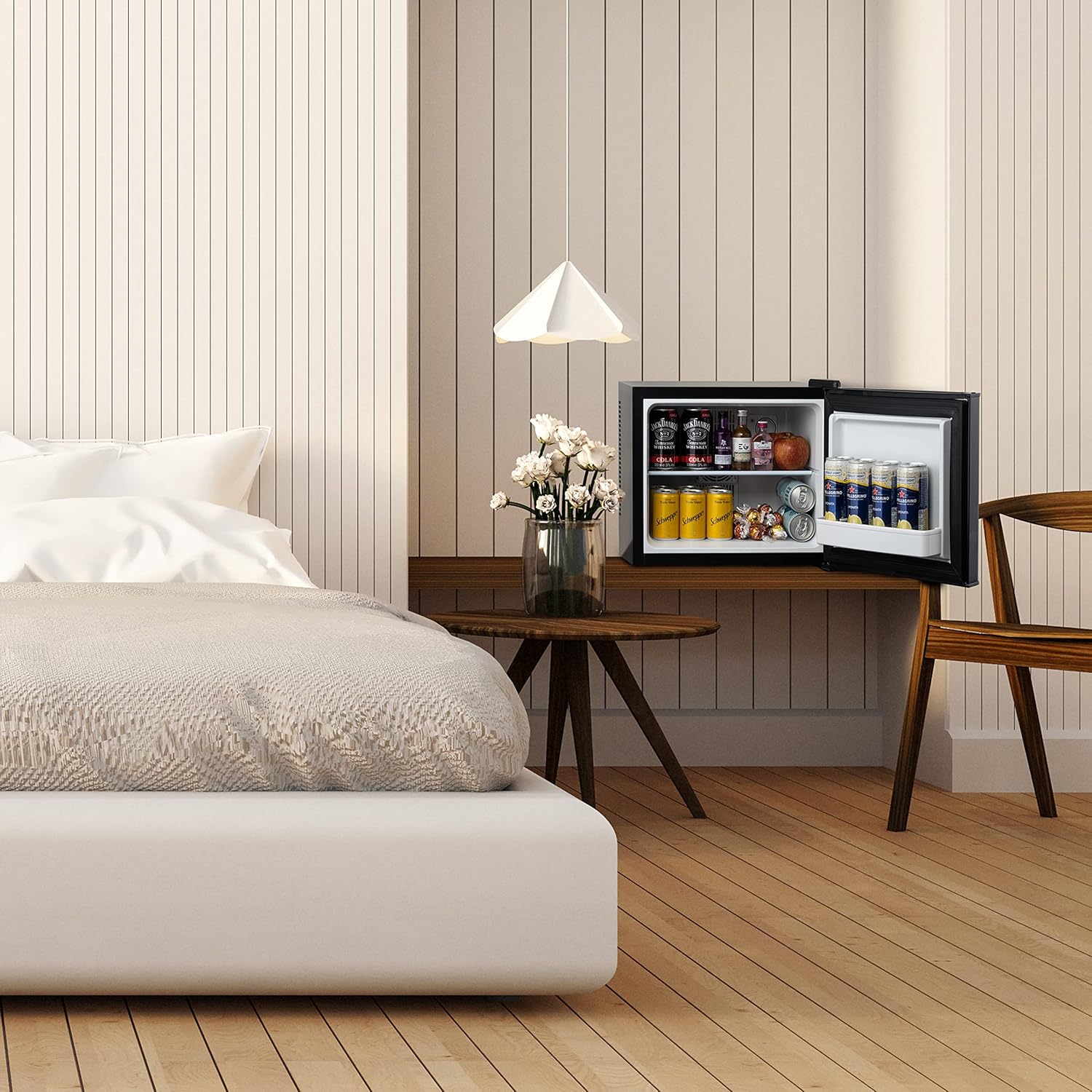
Design-wise, the Aire20 is clearly built to blend in, not to be a focal point. It’s a matte black cube (roughly 40 cm wide, 42.2 cm deep, 35.2 cm high) with a solid door. No glass front, no big logo shouting at you. On a desk or sideboard, it just looks like a small cabinet or speaker from a distance. I actually like that. It doesn’t scream “mini bar”, which is nice in a bedroom or office where you don’t want it to look tacky.
The solid door is a plus for me. I’ve had glass-front mini fridges before and they lose cold faster and show fingerprints and smudges nonstop. Here, the door is plastic with a matte finish, so it hides marks fairly well. The handle is integrated at the side of the door, so nothing sticks out to catch on clothes or bags as you walk past. The door opens to the right and doesn’t seem reversible, so keep that in mind if you’re tight on space.
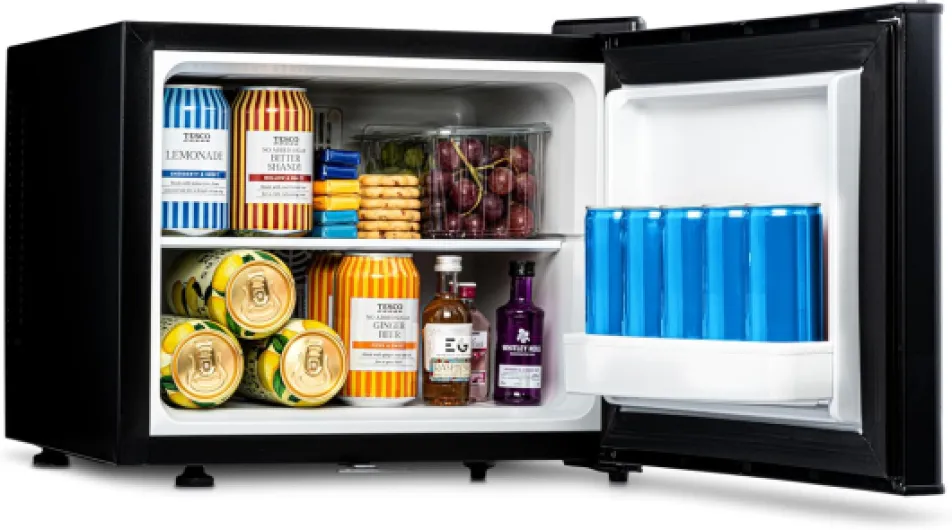
Inside, the layout is basic but practical: one glass shelf, one door shelf, LED light at the top. There’s no wasted space on a freezer box, so you get the full 20L for chilled stuff. The LED light is white and not too bright, so it doesn’t light up the whole room when you open the door at night. The thermostat and switch are at the back, which is slightly annoying if the fridge is against a wall, but once you’ve set it, you’re not touching it every day anyway.
If I nitpick, the design feels a bit “appliance from a budget hotel” rather than high-end. Some users mentioned dents and minor cosmetic flaws; mine was fine, but I can see how the outer casing could pick up dings easily if shipping is rough. Still, from a normal distance it looks clean and modern enough. Function over style, which fits what this thing is built for.
Materials and build: decent, but you feel the price point
The body of the Subcold Aire20 is a high-density foam injection cabinet with a plastic outer shell and a solid foamed door. Translation: it’s light (around 7.5 kg), reasonably insulated, but you’re not dealing with thick metal panels like a full-size kitchen fridge. When you tap the sides or the door, you get that hollow plastic sound. It doesn’t feel super premium, but it also doesn’t feel like it’s going to fall apart in your hands.
Inside, the walls are smooth white plastic, which is easy to wipe down. The tempered glass shelf is the nicest-feeling part of the whole thing. It’s sturdy, sits well in the grooves, and doesn’t wobble when you load it with cans or jars. The door shelf is also plastic, and it clips in firmly enough. I haven’t had it pop off even when loading it with a couple of heavy drink cartons. The LED light is small and tucked away, so you’re not constantly bumping into it with taller items.
The lock and key system is where the materials feel the most “budget”. It works, but you can tell it’s more for keeping curious kids or roommates out than for serious security. The lock itself is a small metal barrel in fairly thin material, and there are two basic keys included. Some Amazon reviews mention warped doors and misaligned locks on their first unit, which points to quality control being a bit hit or miss. Mine doesn’t have those issues, but if you’re picky about cosmetic perfection, you might notice minor imperfections in the plastic or the alignment.
Overall, the materials match the price and purpose: it’s a light, compact appliance meant to sit on a table or worktop, not survive a move every two months. For a dorm, bedroom, or office, it’s fine. If you expect the same thickness and metal finish as a big Bosch or Samsung fridge, you’ll be underwhelmed. For me, as long as the door seals properly and the interior is easy to clean, I’m okay with the slightly cheap-feeling exterior.
Durability and daily use: built for light duty, not rough handling
After a few weeks of daily use, the Subcold Aire20 is holding up fine. The door seal is still tight, the hinge doesn’t sag, and the glass shelf hasn’t shifted or cracked even with a decent load of cans and jars. I open it several times a day for drinks and milk, and there’s no sign of the door loosening or the magnet getting weak. So for normal home or office use, it feels stable enough.
That said, this is clearly not designed for constant moving or heavy abuse. The outer casing can dent if you knock it hard, and the plastic edges don’t look like they’d enjoy being banged around in frequent house moves or thrown in the back of a van. One of the Amazon reviewers mentioned getting a unit with a dented door and badly fitted lock, which tells me the protection during shipping and final inspection aren’t perfect. If you’re unlucky, you might get one with cosmetic issues and have to return it once.
Inside, the materials are easy to wipe, and there are no complex parts to break – no freezer flap, no drawers, no fancy rails. That’s a plus for durability. The thermoelectric cooling system also has fewer moving parts than a compressor-based fridge, so in theory there’s less to fail mechanically. The fan is the main thing that could wear out over time, but so far it hasn’t made any weird noises or given signs of trouble.
Overall, I’d say durability is good enough for a fixed spot: next to a bed, on a kitchen counter, or in a uni room. If you’re thinking of using it in a more mobile setup or somewhere it will be knocked around a lot, I’d be a bit more cautious. Treat it as a small appliance to be left in place, not as a rugged travel fridge, and it should last a fair while.
Cooling performance and noise: does it actually keep things cold?
This is the part that matters: does it cool properly and can you sleep next to it? Short answer: yes, it cools well for a thermoelectric mini fridge, and noise is low enough for bedroom use. I’ve mainly used it around the colder end of the thermostat range, aiming for roughly 4–6°C inside. With the room at about 20–22°C, drinks come out properly chilled, not lukewarm. It’s noticeably colder than some cheap “drinks coolers” I’ve tried that never really get down to fridge temperature.
The brand claims a temperature range of 3–15°C. I don’t have lab-grade gear, but using a basic fridge thermometer, I was sitting around 4–7°C depending on how often I opened the door and how much I’d loaded it. If you stuff it full of warm cans all at once, it takes a while to pull everything down to temperature – that’s normal for this kind of cooling system. Once it stabilises, it’s fairly consistent. There’s no frost build-up, which is nice: the auto-defrost / frost-free design means no scraping ice off walls or losing space to frozen buildup.
On the noise side, it’s rated at 40 dB, and that lines up with what I’m hearing. It’s not totally silent, but it’s more of a soft hum than a loud buzz. In a quiet bedroom at night, I can hear it if I focus on it, but it doesn’t keep me awake. It does make a short, slightly more noticeable noise when it kicks in after the door has been opened, but it calms down quickly. Compared to compressor mini fridges I’ve used before, this is quieter and less rattly, which was important for me.
One thing to know: thermoelectric fridges are more sensitive to ambient temperature. If your room is very hot (like over 28–30°C), don’t expect ice-cold drinks. It will still cool, but you’ll lose a few degrees of performance. In a normal UK indoor setting, though, it’s solid. For keeping medication, drinks, and snacks at a safe and comfortable temperature, it gets the job done with no drama.
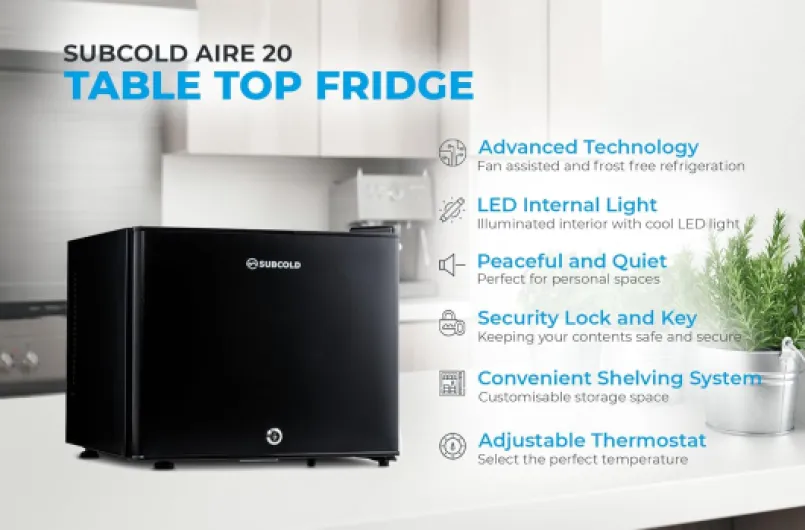
What you actually get with the Aire20
Out of the box, the Subcold Aire20 is basically a black cube with a door. No gimmicks. In the package I had: the fridge, a removable tempered glass shelf, a small door shelf, the power cable (UK plug), and two keys for the lock. That’s it. No fancy accessories, no trays, no bottle rack gymnastics. The manual is basic but enough to understand the thermostat and the minimum clearance you should leave around it.
The internal layout is simple: one main compartment with a glass shelf you can remove or reposition, and a door shelf that can hold a couple of small bottles or cans. The 20L capacity in real life means something like: a dozen standard cans plus a few extras, or a mix of cans, 500 ml bottles, yoghurts, and snacks. If you remove the shelf, you can stand taller bottles upright. There’s a small LED light inside, which is handy in a dark room. It’s not super bright, but enough to see what’s in there at night.
The fridge uses thermoelectric cooling (no compressor), and the temperature is adjustable from about 3°C to 15°C using a dial at the back. In practice, I’ve kept it around the colder end for drinks and it does keep them properly chilled, not just “slightly cool” like some cheap mini fridges do. You don’t get a digital display or anything smart-home related, which honestly I don’t miss. It’s just a basic knob and you learn by trial and error which setting works for your room temperature.
Overall, the presentation is very straightforward: a compact, no-frills mini fridge intended for bedrooms, offices, dorms, or hotel-style use. No freezer, no ice box, no nonsense. If you expect a lot of compartments and fancy features, you’ll be disappointed. If you just want a small cold box that plugs in and works, this is pretty much that.
Pros
- Cools properly to typical fridge temperatures (around 3–7°C) for drinks, snacks, and medication
- Low noise level (~40 dB) suitable for bedrooms and quiet offices
- Frost-free design with no ice box, so the full 20L is usable space and no defrosting hassle
Cons
- Build quality and finish feel budget, with some reports of dents and cosmetic flaws
- Thermoelectric cooling is sensitive to room temperature and not as strong as a compressor fridge
- Lock feels basic and more like a deterrent than real security
Conclusion
Editor's rating
The Subcold Aire20 LED Mini Fridge is a practical 20L mini fridge that focuses on the basics: it cools properly, it’s reasonably quiet, and it doesn’t use much energy. In daily use, it’s been handy for drinks, snacks, and a bit of medication storage right next to the bed/desk. The solid door, frost-free interior, and simple layout make it easy to live with. You don’t get fancy features, but you also don’t get pointless gimmicks.
It’s not perfect. The materials and finish are clearly in the budget range, and quality control can be hit or miss based on some user reviews. The lock works, but it feels more like a light deterrent than serious security. Also, because it’s thermoelectric, it depends a bit on your room temperature – in a very hot room it won’t be as cold as a full-size compressor fridge. But for normal home, dorm, office, or guest room use, it’s pretty solid.
If you want a compact, quiet fridge for a bedroom, uni room, office, or hotel-style setup, and you care more about function than fancy looks, this one is a good fit. If you’re picky about perfect cosmetics, need a freezer, or want a fridge that can handle rough transport and heavy use, you might want to look at a sturdier (and more expensive) compressor mini fridge. For most everyday users who just want cold drinks and snacks within arm’s reach, the Aire20 gets the job done without fuss.