Summary
Editor's rating
Is it worth the money?
Mirrored door: looks good, shows fingerprints
Build quality and shelves: solid enough, with a few quirks
How sturdy it feels and what I expect long term
Cooling, noise and daily use: does it actually perform?
What you actually get with this 62L wine cooler
How well it actually works as a wine and drinks cooler
Pros
- Cools reliably and stays reasonably quiet in everyday use
- Mirrored door and blue LED give it a modern look suitable for visible spaces
- Flexible internal layout with removable racks and space for larger bottles
Cons
- Single temperature zone only, not ideal for serious wine collectors
- Mirrored finish shows fingerprints and needs regular cleaning

Specifications
View full product page →| Brand | Russell Hobbs |
A small wine fridge that actually earns its space
I’ve been using the Russell Hobbs 20 Bottle 62L Mirrored Door Wine Cooler (model RH20WC201MR) as an extra drinks fridge in my kitchen for a few weeks now. I didn’t buy it to build some fancy wine collection; I mainly wanted cold whites, beers and soft drinks without cramming everything into the main fridge. So I’ve treated it like a normal person would: packed it before a weekend, half-ignored it in the week, and opened it a million times when people came over.
Right away, the main thing I noticed is that it’s basically plug-and-play. Unbox it, let it stand upright for a bit (standard with fridges), plug it in, set the temperature on the touch controls, and you’re done. It hit my target temperature in roughly an hour or so, which lines up with what other users said. No weird noises, no confusing menus, just a simple digital display with up/down buttons and a light button.
In terms of use, I’ve run it both as a proper wine cooler (bottles laid on the racks) and as a mixed drinks fridge with cans, water bottles and a couple of big bottles at the bottom. It doesn’t feel huge, but for a 62L unit, it swallows a decent amount of drinks. You do have to play Tetris a bit if you mix bottle sizes, but that’s normal for this size.
Overall first impression: it does exactly what it says. It cools well, it looks decent in the room, and it doesn’t sound like an airplane. It’s not a luxury appliance, but for a mid-range wine cooler, it feels pretty solid and practical. There are a few small annoyances, but nothing that makes me regret using it.
Is it worth the money?
Price-wise, it sits around £170–£180 from what I’ve seen, which puts it in the mid-range for a 20-bottle drinks fridge. For that price, you’re getting a known brand (Russell Hobbs), a mirrored door that looks fairly modern, adjustable shelves, touch controls, and a reversible door. There are cheaper basic black mini fridges out there, and there are much pricier wine cabinets with dual zones and wooden shelves. This one is clearly sitting in the middle.
In terms of what you actually get for the money, I’d say the value is good but not mind-blowing. The build feels solid, the cooling is reliable, and the design is nice enough to leave in a visible spot. If you only want something to chill a few beers in the garage, this is probably overkill and you could get a cheaper plain mini fridge. But if you want something that looks decent in a kitchen or living room and can handle both wine and soft drinks, the price starts to make sense.
Running costs aren’t negligible, but they’re not crazy either. 136 kWh per year is fine for an extra appliance if you actually use it regularly. If it’s going to sit half-empty most of the year, then it’s not great value, to be blunt. Where it really makes sense is if you regularly host people, or you like keeping a small selection of bottles and drinks ready to go without overloading your main fridge.
Overall, I’d rate the value as solid. You’re paying a bit of a premium for the mirrored design and brand name compared to the cheapest options, but you’re also getting a cooler that feels reliable and not cheap. There’s better out there if you want fancy wine features, and there’s cheaper if you just need cold cans in a shed. For a normal home setup where looks and practicality both matter, the price feels fair.
Mirrored door: looks good, shows fingerprints
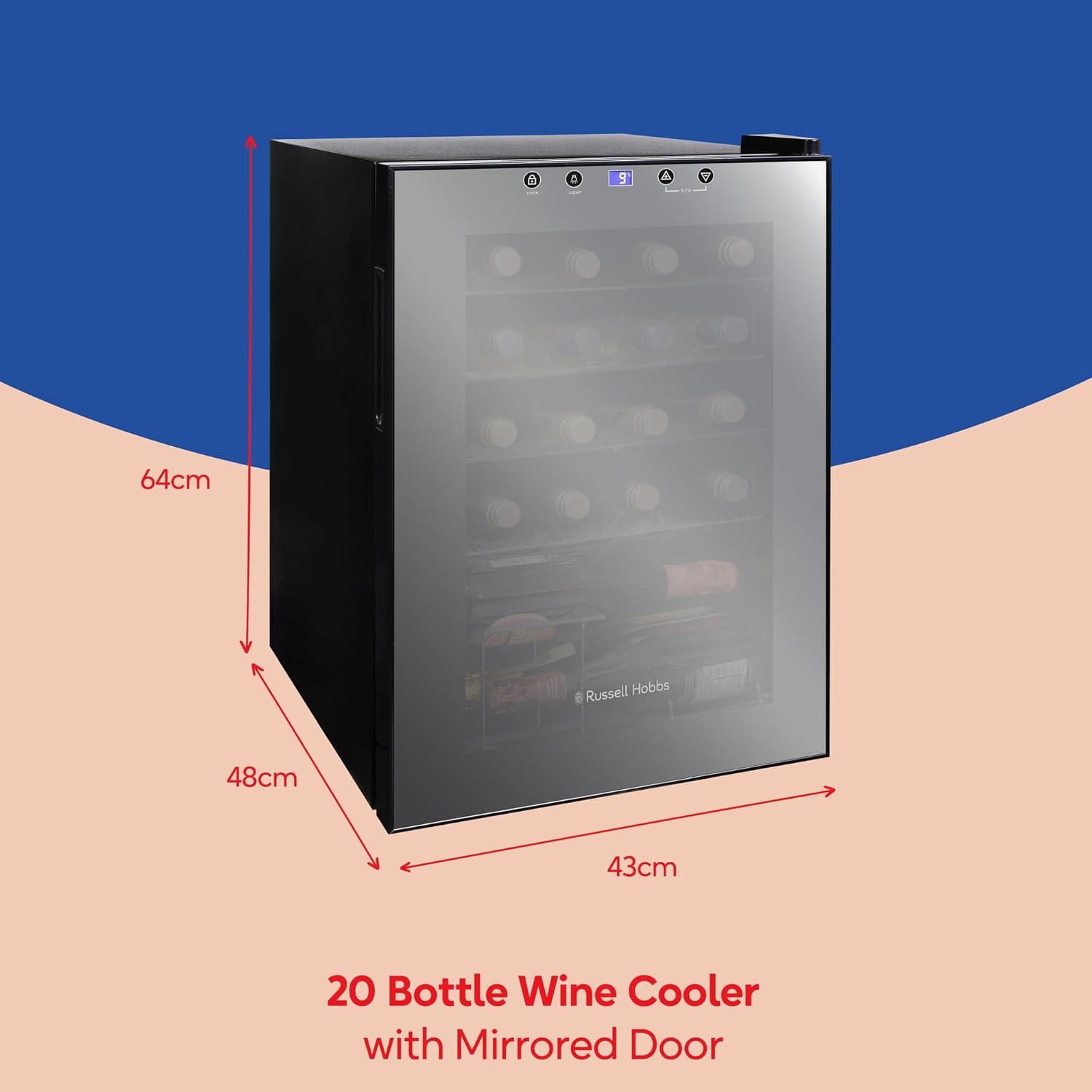
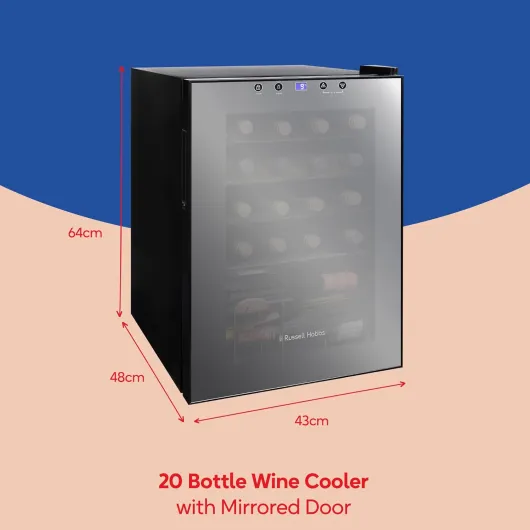
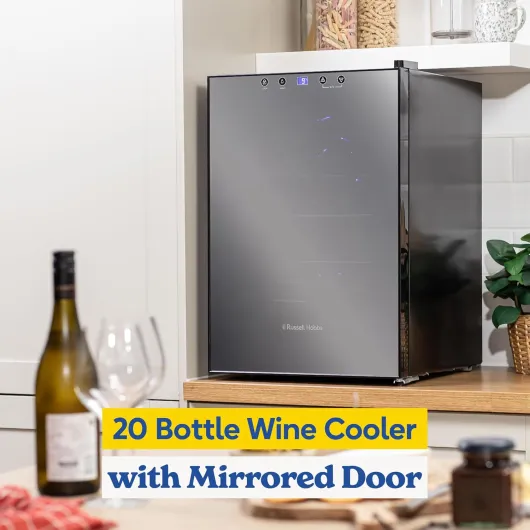
The main design feature here is the mirrored glass door. In a normal kitchen or living room, it does look clean and modern. When it’s off or the light is off, it’s basically a dark mirror; when the internal blue LED is on, you can see the bottles inside with a bit of a bar vibe. If you like minimal black appliances, it fits in nicely and doesn’t look cheap from a few steps away.
The flip side is that the mirror finish shows fingerprints and smudges pretty easily. Every time you grab the door with slightly greasy or damp fingers, you’ll see it. I found myself wiping it down with a microfiber cloth fairly often. It’s not a disaster, but if you’re picky about marks or you have kids constantly opening it, be aware you’ll be cleaning it regularly. The rest of the body is basic black, slightly textured metal, which hides marks much better.
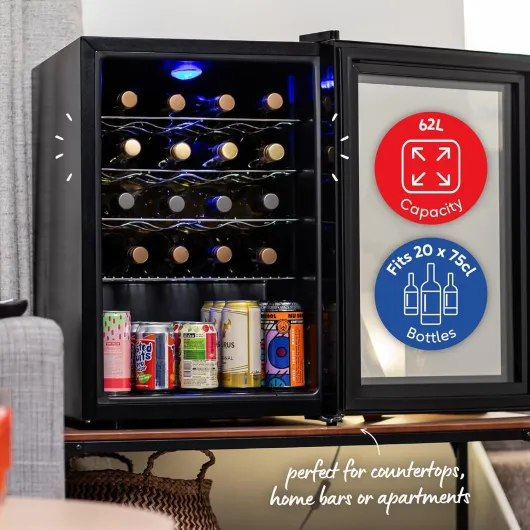
Inside, the layout is fairly simple: metal racks that hold wine bottles on their side, plus space at the bottom for bigger bottles or random stuff. The racks are slightly curved to cradle bottles, which works fine for standard wine bottles. For big champagne-style bottles, I ended up using the lower area instead. The internal blue LED light is strong enough to see everything without being blinding. It’s more for visibility and a bit of mood than anything else.
One thing I liked is the overall footprint. It’s compact enough not to dominate the room, but not so tiny that it’s pointless. It looks okay both in the kitchen and in a living room corner. It’s not some design icon, but for the price range, it looks more "decent appliance" than "cheap mini fridge". If you hate mirrored finishes, this will annoy you a bit; if you like that modern look and don’t mind wiping it, you’ll probably be happy with it.
Build quality and shelves: solid enough, with a few quirks
In terms of materials, this is clearly mid-range, not luxury, but not flimsy. The main cabinet feels sturdy, with a decent weight to it. The door has a nice, firm action and the seal sits properly all around; I didn’t notice any obvious gaps or condensation problems on the seal. The mirrored glass feels thick enough that I’m not worried about it cracking from normal use, though I wouldn’t slam it or let kids hang on it.
The internal metal racks are fairly standard. They slide in and out easily, and they don’t bend under the weight of full bottles. They’re not super heavy-duty restaurant-grade, but for home use they’re absolutely fine. You can remove one or more if you want to stack cans or stand bottles upright. I did that a few times when I needed more space for soft drink cans and large water bottles, and it handled it without any issue.
The plastic parts inside (like the sides and shelf supports) are basic but acceptable. They don’t feel premium, but they also don’t feel like they’ll crumble in a year. After moving the racks around a few times, nothing cracked or warped. The feet are adjustable, which helps if your floor isn’t perfectly level. Once levelled, the unit doesn’t wobble when you open or close the door.
If I had to nitpick, the only thing that feels a bit on the cheaper side is the internal finish – it’s just plain, slightly shiny plastic. It’s easy to wipe clean, but it doesn’t give that "high-end wine cellar" vibe. For the price though, I’m fine with it. The important part for me is that nothing feels like it’s about to fall apart, and so far it passes that test.
How sturdy it feels and what I expect long term
I obviously haven’t had this cooler for years, but based on a few weeks of regular use, it feels like it should hold up fine in a normal home. The door hinges are firm, the seal hasn’t loosened, and the compressor hasn’t made any weird noises. I’ve opened and closed it a lot – especially during a weekend with friends where it basically became the main drinks station – and nothing started rattling or shifting.
The racks slide in and out without scraping or bending, and they don’t feel like they’ll deform under normal use. I’ve loaded them with full bottles several times, rearranged things, taken racks out and put them back in. Everything still sits straight. The internal plastic hasn’t scratched badly from bottles sliding around, though I’m not babying it. Wiping it down after a spill was easy, and there were no stains left.
From other Russell Hobbs stuff I’ve owned (kettle, toaster, a small fridge), the brand tends to be reliable but not fancy, and this cooler fits that pattern. It doesn’t feel like a high-end wine cabinet, but it also doesn’t feel like a disposable appliance. If you treat it normally – don’t slam the door, don’t block the vents, don’t keep it in a boiling hot conservatory – I’d expect it to last several years without drama.
The only long-term concern I could see is the mirrored door finish. Because you’re cleaning it often, over time you might get fine scratches if you use rough cloths or dodgy cleaners. If you stick to a soft cloth and glass cleaner, it should be okay. Overall, I’d say the durability looks promising for the price bracket, with no obvious weak points showing up so far.
Cooling, noise and daily use: does it actually perform?
Performance-wise, this cooler is pretty solid for the size and price. From room temperature, it took around an hour or so to get down to the target temperature I set, which matches what other users described. Once it’s there, it holds the temperature fairly steadily. I checked with a cheap fridge thermometer, and the reading inside was usually within about 1°C of what the display said, which is fine for wine and drinks.
In daily use, I’ve mainly kept it between 6–8°C for white wine, beer and soft drinks. It gets drinks properly chilled, not just slightly cool. If you stuff it completely full with warm bottles, it obviously needs a bit longer to bring everything down, but that’s normal. The airflow seems decent – I didn’t notice big hot or cold spots inside, as long as I didn’t block the back completely with bottles.
Noise level is low but not silent. You hear a soft hum when the compressor kicks in, similar to a decent modern fridge. In an open-plan living room/kitchen, I noticed it at first, and then my brain just filtered it out. If you put it in a quiet bedroom or office, you’d hear it, but in a normal kitchen or dining area it’s totally acceptable. No rattling, no weird buzzing, just a standard fridge sound.
Energy-wise, it’s rated at about 136 kWh per year, which is not ultra-efficient but also not horrible for a small drinks fridge. If you run it all year, you’ll feel it a little on your bill, but it’s not outrageous. For me, the performance balance is: it cools reliably, stays reasonably quiet, and doesn’t run hot on the outside. Nothing special or high-tech, but it gets the job done without drama.
What you actually get with this 62L wine cooler
On paper, this thing is a 62L freestanding wine cooler that can hold up to 20 bottles. Realistically, that number is based on standard 750ml bottles, and if you start mixing in chunky champagne bottles or lots of cans, the layout changes fast. Inside the box you get the cooler itself, a user manual, and the removable metal shelves. No extra gadgets, no app, no Wi‑Fi nonsense – which, honestly, I’m fine with for this type of product.
The dimensions are 48 cm deep, 43 cm wide and 64 cm high, and that matches what I measured. It’s not a full-height undercounter unit, more like a compact fridge that can slide under some worktops or sit at the end of a counter. I’ve had it on the floor and also on a sturdy side unit; the weight (about 22 kg) is manageable for one person to shuffle around, but you’ll probably want two people to lift it safely if you’re going higher than floor level.
Controls are dead simple: touch buttons at the top of the door for temperature up/down, light, and a lock function, plus a small digital display showing the internal temperature. No separate zones, just one temperature for the whole thing. The door is reversible, which is actually useful – I did swap the hinge so it would open away from my main fridge. It’s not complicated but you’ll need a screwdriver and a bit of patience. Once done, it feels solid and doesn’t sag.
From a usage point of view, I’d describe it as a straightforward, single-zone drinks fridge. You can store wine, beer, soft drinks, water, whatever. It’s freestanding only, so it needs space to breathe at the back and sides; don’t jam it tight into a cabinet and expect miracles. If you’re after dual temperature zones, built-in installation, or fancy smart features, this isn’t it. If you just want a compact, reliable cold box for drinks, this fits that role pretty well.
How well it actually works as a wine and drinks cooler
As an actual wine and drinks cooler, it does its job well enough that I stopped thinking about it, which is usually a good sign. I’ve kept a mix of red, white and rosé in there, plus beer and cans. For reds, I just set the temperature a bit higher when I knew we’d mostly drink red that week, and it kept them at a nice, slightly cool temperature. For whites and beers, I dropped it down, and they came out properly chilled.
The claimed 20-bottle capacity is realistic if you’re using mostly standard wine bottles and stick to the rack layout they intend. When you start mixing in larger bottles, it becomes more like 14–16 bottles plus some random space at the bottom. That’s not really a fault; it’s just how these compact coolers work. The flexibility of the shelves helps a lot – I often removed the top rack when I wanted to stack cans and keep only a few bottles.
In practice, what I liked most is simply having a dedicated cold space for drinks. Before this, my main fridge was always crammed and I’d end up shoving bottles wherever they fit. With this cooler, I can prep for a weekend or a barbecue and have everything ready without playing fridge Tetris. The internal light also helps when you’re grabbing a drink at night; you can see what’s in there in one glance.
It’s not perfect: there’s only one temperature zone, so you can’t keep reds and whites at different ideal temperatures at the same time. If you’re a serious wine nerd with specific temperature needs for different bottles, you’ll probably want something more advanced. But for a normal household that just wants wine and drinks kept nicely chilled, it’s more than good enough.
Pros
- Cools reliably and stays reasonably quiet in everyday use
- Mirrored door and blue LED give it a modern look suitable for visible spaces
- Flexible internal layout with removable racks and space for larger bottles
Cons
- Single temperature zone only, not ideal for serious wine collectors
- Mirrored finish shows fingerprints and needs regular cleaning
Conclusion
Editor's rating
The Russell Hobbs RH20WC201MR is basically a no-nonsense wine and drinks cooler that does what most people actually need: it keeps up to around 20 bottles (or a mix of bottles and cans) properly chilled, looks decent in a kitchen or living room, and doesn’t sound like a tractor. The mirrored door and blue LED give it a modern look, and the reversible door plus adjustable shelves make it flexible enough for different setups. Performance is stable, noise is low, and the build feels solid for a mid-range product.
It’s not perfect. There’s only one temperature zone, so it’s not aimed at serious collectors who want different conditions for reds and whites at the same time. The mirror finish looks good but shows fingerprints, and the energy use is okay rather than great. If you just want the cheapest way to chill cans in a garage, this is probably more than you need. But if you want a compact, tidy-looking drinks fridge that can sit in a visible spot and handle everyday use without fuss, it’s a good fit.
I’d recommend it to people who regularly host, have a small wine collection, or just want to free up space in their main fridge. If you’re super picky about wine storage, want dual zones, wooden shelves, or ultra-low energy use, you should probably look at higher-end models. For most normal users, though, this cooler is a pretty solid balance of price, looks and practicality.