Summary
Editor's rating
Value for money: decent if you keep your expectations realistic
Design: looks decent, but clearly budget gear
Noise, everyday use, and how annoying it is (or isn’t)
Build quality and durability: feels okay, but long-term is a question mark
Performance: keeps wine cool, but don’t expect lab-grade precision
What you actually get out of the box
Pros
- Compact 8-bottle format that fits easily on a countertop or small bar area
- Quiet thermoelectric operation with low vibration, suitable for small apartments
- Simple digital temperature control in the 11–18°C range, easy to set and forget
Cons
- Generic brand with unknown long-term reliability and basic build quality
- Struggles to maintain low temperatures in hot rooms and not ideal for rapid chilling
- Limited flexibility with larger or oddly shaped bottles, and door seal feels a bit cheap

Specifications
View full product page →| Brand | Generic |
A small wine fridge for people who are short on space (and patience)
I’ve been using this 8-bottle electronic wine cooler for a few weeks now in my small apartment kitchen. I mainly wanted something to keep a few bottles of red at a stable temperature and to avoid stuffing wine next to leftovers in my main fridge. This one caught my eye because it’s compact, freestanding, and honestly, one of the cheaper options I could find in this size. The brand is basically generic, so I didn’t expect miracles, just something that works and doesn’t sound like a tractor.
In day-to-day use, the main thing I noticed is that it really is built for people with limited space and a small wine stash. If you’re someone who keeps 20–30 bottles on hand, this is not for you. But if you rotate through a few bottles a month, it’s enough. I usually had 4–6 bottles inside, and it handled that without any issue. With 8 bottles, it’s a bit tight but doable if you don’t have many oversized bottles.
The temperature range is 11–18°C (52–64°F), so it’s clearly meant more for serving and short-term storage than for hardcore long-term cellaring. I set mine around 13–14°C for reds and bumped it up a bit when I had whites I wanted slightly cooler. The LED controls are basic but clear. You press a couple of buttons, and that’s it. No app, no Wi‑Fi, no nonsense.
Overall, my first impression is: it gets the job done, but it feels like what it is—a budget, no-name wine cooler. The noise level is decent, the temperature is reasonably stable, and it looks okay on the counter. If you’re expecting premium build, advanced features, or perfect temperature accuracy, you’ll probably be a bit disappointed. If you just want a small box that keeps wine cooler than your room, this one is fine.
Value for money: decent if you keep your expectations realistic
Since this is a generic-brand unit, the main attraction is usually the price. Compared to similar 8-bottle coolers from big brands, this one tends to be cheaper. You don’t get fancy features, premium build, or super precise temperature control, but you do get the basics: 8-bottle capacity, digital temperature adjustment, low vibration, and relatively quiet operation. If you just want to stop storing wine on its side in a random cupboard, this is a step up without spending a fortune.
In terms of what you actually get for your money, here’s how I see it: you’re paying for compact size and convenience, not for luxury. The pros for value are: small footprint, simple controls, and enough capacity for casual drinkers. The cons are: no brand reputation, unknown long-term reliability, and some small compromises on build (door seal, rack smoothness, etc.). If this cooler is significantly cheaper than recognized brands where you live, then the trade-off might be worth it. If the price is close to a known brand, I’d probably spend a bit more for better support and warranty.
Another angle is energy use. At 70 watts, it’s not a huge power hog, but it does run frequently to maintain temperature, especially in warmer rooms. It’s not going to destroy your electricity bill, but don’t expect ultra-high efficiency either. I’d call it average. For the space it frees up in your main fridge and the convenience of having wine at a consistent temperature, I think the price is fair as long as you catch it at a discount or lower price point.
Overall, I’d say the value is good but not outstanding. It makes sense for someone who wants a simple, entry-level wine fridge and doesn’t care much about brand names or extra features. If you’re a big wine nerd with expensive bottles, I’d invest in something higher-end. For casual drinkers who just want their reds and whites stored a bit better than room temp, this cooler is a reasonable deal.
Design: looks decent, but clearly budget gear
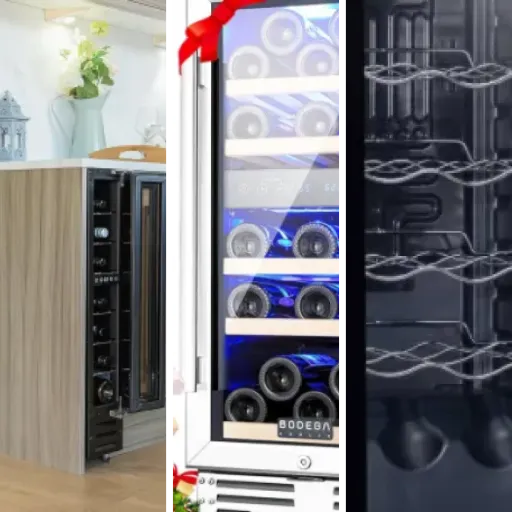
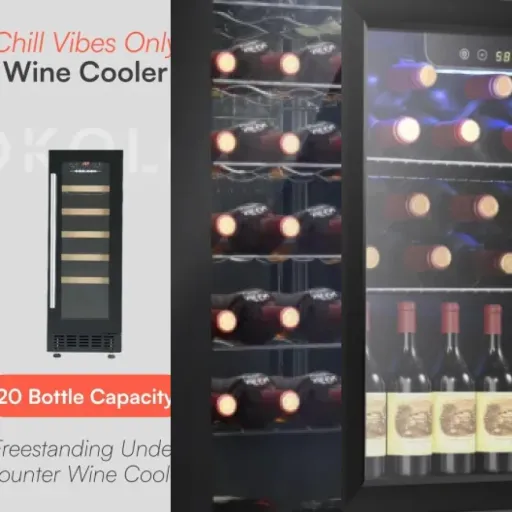
Design-wise, it’s pretty standard for a small wine cooler: a black body, a glass front door, and a basic digital display on the top of the door. The glass door is the main visual element. It does look nice enough in a kitchen or small home bar, especially if you like seeing the bottles inside. The interior is dark, which is good for UV protection, and there’s no flashy lighting that screams “cheap gadget”. It blends in rather than standing out, which I personally prefer.
The layout inside is simple: metal racks that slide in and out just enough to place or remove bottles. With normal 750 ml bottles, you can line them up horizontally. Where it gets annoying is with non-standard bottles—thicker bases, fancy shapes, or sparkling bottles. Those don’t fit as well, and with 8 bottles, you need to play Tetris a bit. If you mostly drink standard Bordeaux or Burgundy-style bottles, you’ll be fine. If you love big Champagne bottles or odd-shaped rosé bottles, expect some frustration.
The digital control panel on the front shows the set temperature and lets you adjust it. It’s not touch-sensitive glass or anything fancy; it’s just a basic LED display with physical buttons. It feels a bit old-school, but it works. The door opens smoothly enough, but you can tell the hinge and seal are not top-tier. You need to close it firmly to make sure the seal catches properly. Once or twice, I thought I’d closed it, but the door was slightly ajar and the inside warmed up a bit more than it should have.
Overall, the design is functional and pretty solid for the price, but you can see where they saved money: basic materials, simple controls, and no real customization. If you want a showpiece wine fridge that impresses guests, this isn’t it. If you just want something that doesn’t look ugly on your counter and lets you see your bottles, it’s fine. I’d call the design decent but nothing more.
Noise, everyday use, and how annoying it is (or isn’t)
For a small apartment, noise was a big concern for me. This cooler is advertised as “whisper-quiet” thanks to thermoelectric technology. In practice, I’d say it’s quiet but not totally silent. You can hear a soft humming and the fans when the cooling kicks in, especially in a silent room at night. It’s much quieter than a normal fridge, though. I had it about 2 meters from my sofa, and it didn’t bother me while watching TV. If you’re extremely sensitive to noise and plan to put it in a bedroom, you might notice it, but for a living room or kitchen, it’s fine.
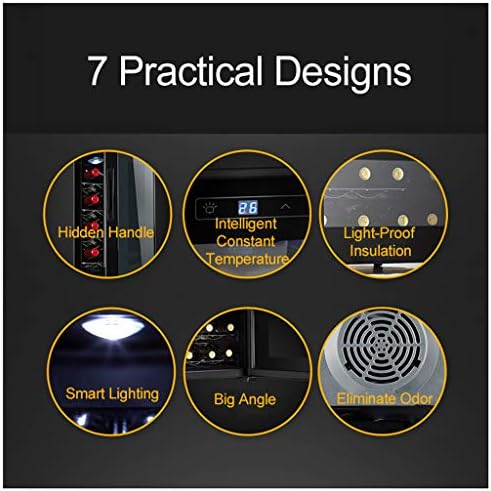
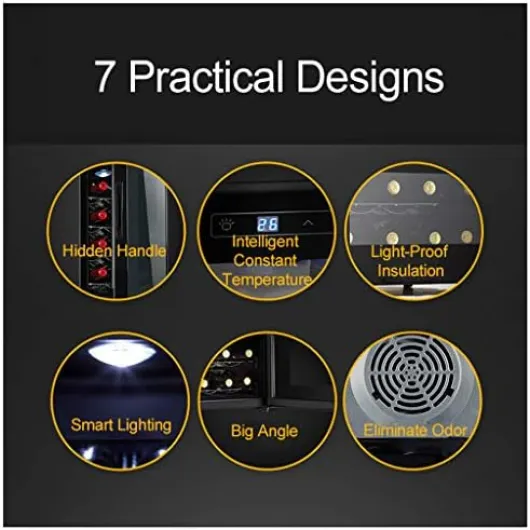
Daily use is pretty straightforward. Open door, slide rack, take bottle, close door. The racks slide decently but not super smoothly. With heavier bottles, you feel a bit of friction, and sometimes you need to guide the bottle so it doesn’t scrape the top. Nothing dramatic, just not super polished. The door handle is integrated into the side of the door frame, so there’s no protruding handle to bump into. I liked that detail because it keeps the front clean and you’re less likely to snag clothes on it.
One minor annoyance I noticed: the interior lighting is minimal. When the room is dim, it’s a bit hard to see the labels clearly through the glass. There is light, but it’s not very strong and doesn’t stay on long. It’s not a big deal, but if you like to show off your bottles, this cooler doesn’t really highlight them. On the flip side, the darker interior is good for protecting the wine from light, so it’s a trade-off.
Overall comfort of use is pretty solid. It doesn’t get in your way, it doesn’t make a ton of noise, and once you’ve set the temperature, you mostly forget about it. The only real “comfort” downside is the limited flexibility with bottle sizes and the slightly cheap feel of the racks and door seal. But for an 8-bottle generic-brand cooler, that’s about what I expected. It’s easy enough to live with on a daily basis.
Build quality and durability: feels okay, but long-term is a question mark
Since this is a generic brand, I was curious about build quality. Out of the box, nothing felt completely flimsy, but you can tell it’s not a high-end appliance. The outer shell is lightweight, the door is fairly thin, and the racks are simple metal wire. After a few weeks of use—opening and closing the door daily, sliding the racks in and out—it’s holding up fine. No bending racks, no loose screws, no broken plastic. So in the short term, it seems solid enough.
The door seal is something I kept an eye on. If the seal fails or doesn’t sit properly, you lose temperature stability fast. I noticed that you really have to push the door until you hear or feel that final “thunk” for a proper seal. If you close it gently, it sometimes doesn’t fully seal, and you can see a slight gap. That’s more of a design/fit issue than an immediate durability problem, but over time, if the seal warps, it might get worse. For now, it’s fine, but it doesn’t give the same confidence as a bigger brand’s fridge.
Another point is the thermoelectric system and fans. Those are usually the first things to fail in cheap wine coolers. I obviously haven’t used it for years, so I can’t say how long it will last, but so far the fans run smoothly without rattling or weird noises. If, after a while, you start hearing louder noises or vibrations, that’s usually a bad sign. For now, it’s still quiet and stable. The 70-watt input power is modest, so it’s not working insanely hard under normal conditions.
Overall, I’d rate durability as acceptable but not guaranteed. It doesn’t feel like something that will break in a month, but I also wouldn’t be shocked if, after a few years, the cooling performance drops or a fan needs replacing. If you’re looking for a long-term, 10-year solution, I’d lean toward a known brand. If you just want a small cooler for a few years and don’t mind if it’s not heirloom quality, this one is probably fine.
Performance: keeps wine cool, but don’t expect lab-grade precision
On the performance side, the main question is: does it actually keep the wine at the temperature you set? In my tests, with a cheap fridge thermometer inside, the temperature was usually within about 1–2°C of the set value. For example, when I set it to 13°C, I often read 14–15°C on the thermometer. That’s not perfect, but for casual home use it’s acceptable. You’re not running a professional cellar here. It’s more than enough to keep wine out of the heat and at a stable serving temperature.
The cooler uses thermoelectric technology, which is common in small wine fridges. The upside: fewer vibrations and generally quieter than a compressor-based fridge. The downside: it struggles more if your room is very hot. In my case, in a room at around 23–25°C, it held 13–14°C inside without too much trouble. When the room hit 28–29°C during a warm afternoon, the internal temperature drifted a bit higher, closer to 16–17°C, even though I had it set lower. So it works best in a reasonably cool room, not in a hot garage or next to an oven.
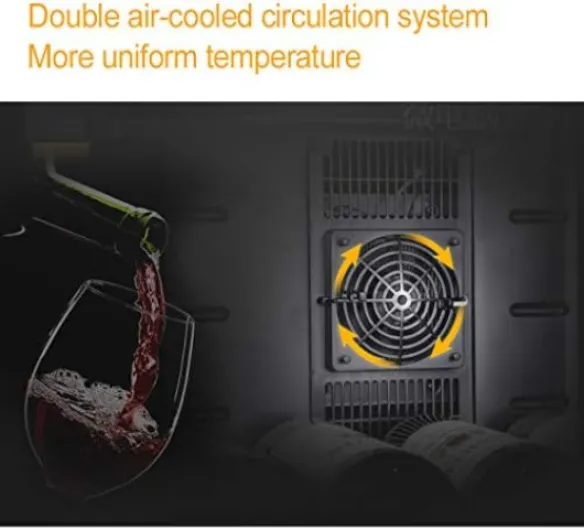
The dual-fan circulation system does help keep the temperature relatively even inside. I checked top shelf vs bottom shelf with a thermometer and didn’t see huge differences—maybe 1°C at most. That’s good enough so you don’t have to think about which shelf to use for which bottle. They also mention it helps with odor prevention. I can’t say I noticed any smell at all, which is a good sign. No plastic odor after a few days, and no weird damp smell after a couple of weeks with bottles inside.
In terms of cooling speed, don’t expect it to chill a warm bottle quickly. If you put in a bottle at room temperature and want it at serving temperature, plan for several hours. It’s more of a storage and gentle cooling device than a rapid chiller. For that, your main fridge or an ice bucket is still faster. So in performance terms: it’s decent for maintaining temperature, weaker for rapid cooling, and sensitive to ambient heat. For the price and format, that’s pretty normal, but it’s worth knowing before you buy.

What you actually get out of the box
When the wine cooler arrived, the packaging was pretty standard: one cardboard box, some foam, and a plastic bag around the unit. Nothing fancy, but it survived the delivery without dents or scratches, which is what matters. Inside the box, you basically get the fridge, a very short user manual, and that’s it. No extra accessories, no fancy wine racks, just the basics. The manual is simple but clear enough: plug it in, set the temperature, wait a few hours before loading bottles.
The fridge itself is a compact freestanding unit with an 8-bottle capacity and about 23L volume. It’s designed to stand on a countertop or a low shelf. I tried both. On my kitchen counter it fit fine under the cupboards, but I had to pull it slightly forward so the door could open fully. On a small bar cart, it also worked, but you need a stable surface because it’s a bit front-heavy once loaded with bottles. Net weight is 9 kg, so you can move it alone without breaking your back, but it’s not feather-light either.
In terms of first setup, it’s straightforward. You plug it into a 220V/50Hz socket, let it sit for a few hours to settle the coolant (standard advice for fridges), then turn it on and choose your temperature using the front panel. It took around an hour to get from room temperature (about 23°C) down to 13–14°C empty. Once I added bottles, it needed a bit more time, but nothing crazy. There are no complicated modes, no presets for red/white/sparkling—just a simple up/down temperature control and an on/off switch.
My honest take on the overall presentation: it feels like a budget appliance but not like a toy. Everything is functional and minimal. If you like gadgets with tons of options, you’ll find it a bit barebones. If you like devices that just do one thing without a learning curve, you’ll probably appreciate the simplicity. For a generic brand, it’s okay, but don’t expect the same polish you get from bigger names.
Pros
- Compact 8-bottle format that fits easily on a countertop or small bar area
- Quiet thermoelectric operation with low vibration, suitable for small apartments
- Simple digital temperature control in the 11–18°C range, easy to set and forget
Cons
- Generic brand with unknown long-term reliability and basic build quality
- Struggles to maintain low temperatures in hot rooms and not ideal for rapid chilling
- Limited flexibility with larger or oddly shaped bottles, and door seal feels a bit cheap
Conclusion
Editor's rating
After using this 8-bottle electronic wine cooler regularly, my overall opinion is that it’s a decent budget option that does the basics and not much more. It keeps wine at a relatively stable temperature within the 11–18°C range, the noise level is low enough for a small apartment, and the compact format works well if you’re short on space. The design is simple and neutral, so it doesn’t look out of place in a kitchen or home bar, even if it clearly feels like a budget appliance when you touch the door and racks.
Who is it for? People who keep a handful of bottles at home, want them cooler than room temperature, and don’t want to spend big money. If you mostly drink standard-sized bottles and don’t mind minor quirks like slightly imprecise temperature and basic build quality, you’ll probably be satisfied. Who should skip it? Serious wine collectors, anyone storing expensive bottles long-term, or people who live in very hot rooms and need rock-solid cooling. Those users are better off with a larger, better-known brand with a wider temperature range and stronger cooling power.
In short: it’s pretty solid for casual use, nothing special, but effective enough. If you catch it at a good price and accept its limits, it gets the job done. If you expect premium performance and long-term durability, you’ll want to look higher up the range.