Summary
Editor's rating
Value for money: decent if you catch it at the right price
Slim, decent-looking, with a couple of design annoyances
Everyday use: loading bottles, noise, and small annoyances
Materials feel mid-range: not cheap junk, but not premium either
Build and durability after some use
Cooling performance: decent, but room temperature matters a lot
What you actually get with the DH10
Pros
- Slim 43 cm width fits nicely into narrow undercounter gaps
- Stable cooling range (around 5–18°C) that works well for everyday wine and beer
- Decent-looking black glass door and overall design for a modern kitchen
- Fairly quiet operation (around 39 dB), fine for most kitchens
Cons
- Real bottle capacity is lower than the advertised 28, especially with champagne or chunky bottles
- Poor G energy rating, not ideal for long-term running costs
- Temperature display is hard to see clearly through the tinted glass door
- Shelves and interior feel a bit light and basic compared to higher-end wine coolers

Specifications
View full product page →| Brand | Dellonda |
A compact wine fridge that mostly does what it says
I’ve been using the Dellonda Baridi 28 Bottle Wine Fridge (model DH10) as a secondary drinks fridge in the kitchen, mainly for wine and a few beers. I didn’t buy it expecting some luxury cellar, more just a compact cooler that fits under a counter and keeps bottles at a steady temperature. On that front, it largely delivers, but there are a few quirks you only really notice after living with it for a bit.
The first thing that stood out is the size. At 43 cm wide and 84 cm high, it really is a slim unit. It slid into a spare undercounter gap I had without any drama, and the adjustable feet helped level it. If you’ve got one of those awkward narrow spaces in your kitchen, this kind of footprint is pretty handy. Just be aware the depth (45 cm) plus the plug and cable means you need a bit of space behind it too.
In daily use, the fridge is fairly straightforward: set the temperature on the touch screen, load your bottles, and forget about it. The compressor kicks in now and then, and you hear a low hum, but it’s not the kind of noise that dominates the room unless you’re very picky about silence. The LED light inside is more for looks than utility, but it’s enough to see what’s in there when you open the door.
Overall, my first impression is that this is a practical, no-frills wine fridge. It looks decent, chills properly as long as the room isn’t too hot, and it hasn’t done anything weird like random temperature swings or condensation leaks. It’s not perfect — especially if you’re fussy about bottle sizes or energy ratings — but for a mid-range, compact cooler, it feels like a pretty solid option, as long as you understand its limitations from the start.
Value for money: decent if you catch it at the right price
For value, I’d put this Dellonda DH10 in the “good but not unbeatable” category. It usually sits in the mid-range price bracket for wine fridges of this size. You’re paying for the slim design, the glass door, and the compressor cooling, not for fancy features or premium materials. If you mainly want something that looks tidy in the kitchen, keeps around two dozen bottles at a drinkable temperature, and doesn’t take up a full 60 cm slot, it earns its keep.
Where the value drops a bit is the energy rating (G) and the slightly optimistic 28-bottle claim. If you’re buying this purely on the bottle count, prepare to be a little underwhelmed once you start loading in real-world bottles, especially sparkling wine. Also, for a similar price, you can sometimes find dual-zone coolers or units with better shelving, but they’re often wider and don’t fit into narrow spaces. So the comparison really depends on your kitchen layout. If you absolutely need the slim width, this one makes more sense.
On the positive side, the average Amazon rating (around 4.3/5 from more than a thousand reviews) lines up with my experience: generally solid, with a few quirks. It’s not the cheapest on the market, but it feels a step up from the really budget models that look and feel flimsy. The automatic defrost, quiet-ish operation, and decent temperature stability add to the sense that you’re getting a fair deal, not a bargain-bin compromise.
So in short: if you catch it at a reasonable price and you understand its limitations (single zone, real capacity slightly under the headline number, G energy rating), I’d say it offers good value. If you don’t care about the slim design and you want maximum features or top energy efficiency, then there are better options out there for a similar or slightly higher price, and this one will feel a bit basic by comparison.
Slim, decent-looking, with a couple of design annoyances
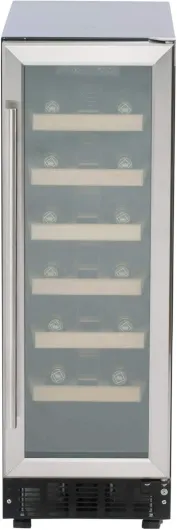
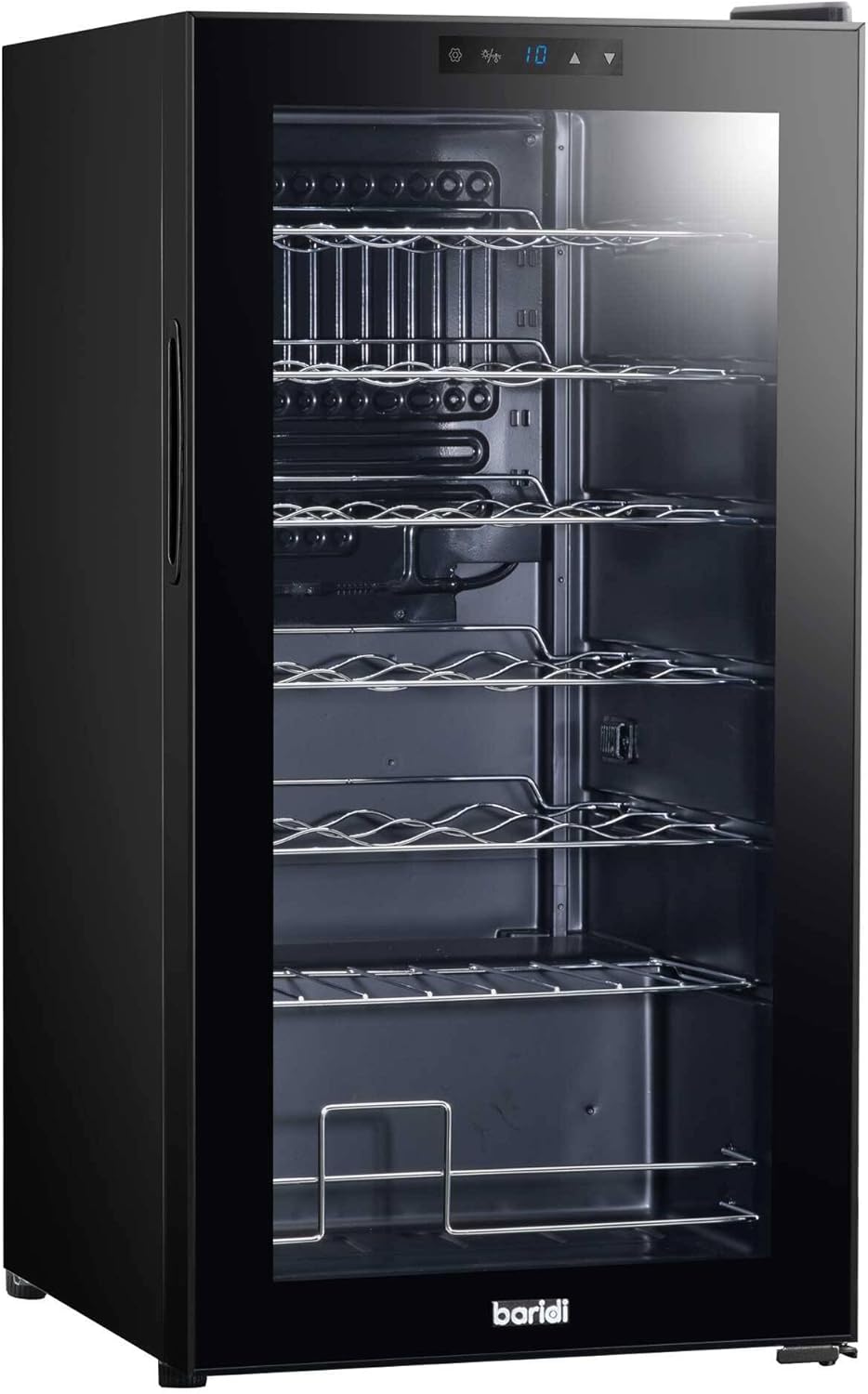
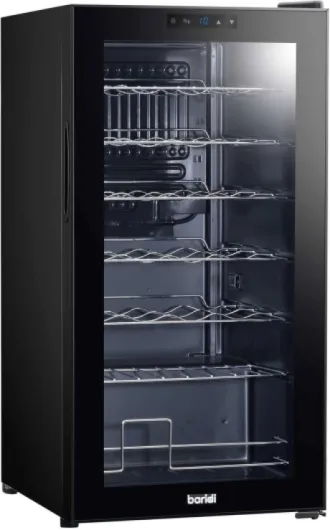
Design-wise, the slim footprint is the big win here. At 43 cm wide, it fits nicely into narrow kitchen gaps where a standard 60 cm undercounter appliance wouldn’t go. From the front, the black glass door and simple handle look clean and modern. It doesn’t scream “cheap appliance” when you see it in a fitted kitchen. The mirror effect on the glass is quite reflective, which helps hide fingerprints and smudges a bit, but you’ll still see streaks if you’re picky about that kind of thing.
The touch controls are on the front of the door, but one thing that bugs me (and other buyers mentioned it too) is that you can’t really see the temperature display when the door is shut. The angle and the tint of the glass make the digits quite faint unless you’re standing right in front, and even then it’s not super clear in bright daylight. It’s not a deal-breaker, but if you like to check the temperature at a glance from across the room, this design isn’t ideal.
Inside, the layout is pretty standard: multiple shelves for horizontal bottle storage and some space at the bottom. The interior light is a cool white LED at the top. It looks nice when you open the door, but it’s not some showcase display light, more just functional so you can see what’s where. The door opens on one side only (no reversible hinge option), so you need to plan your placement accordingly. If your kitchen layout really depends on the door opening the other way, that’s something to think about before ordering.
Overall, I’d say the design is simple and practical, with a couple of small annoyances. It looks good enough in a modern kitchen, the slim body is genuinely useful, and the handle is straightforward once you’ve fitted it. The main design missteps are the slightly awkward temperature display visibility and the lack of flexibility with the door opening direction. If you can live with those, the rest of the design is fine for everyday use.
Everyday use: loading bottles, noise, and small annoyances
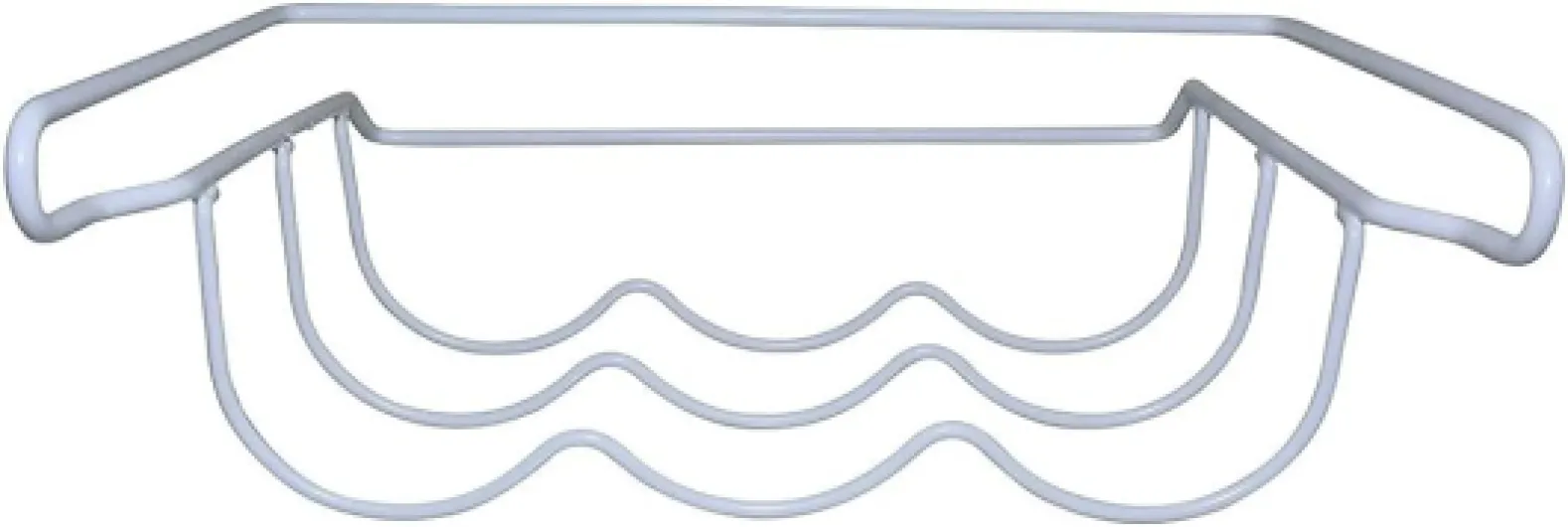
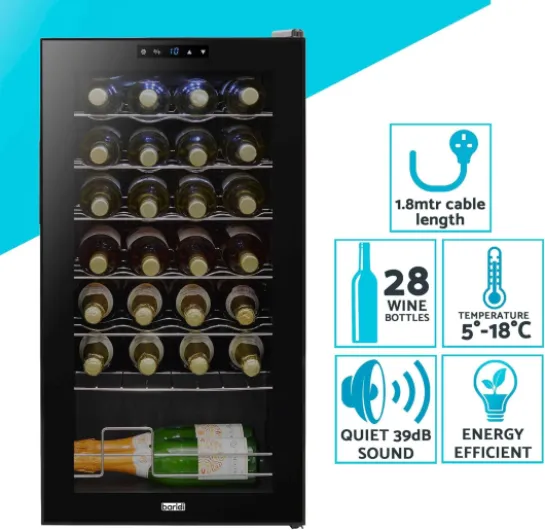
Day to day, using this fridge is mostly straightforward, but there are a few “living with it” details worth mentioning. Loading bottles is fine as long as you mostly have standard wine shapes. The shelves are shaped for horizontal storage, and you can slide them out to reach the back. Where it gets annoying is with chunkier bottles: champagne, some Proseccos, or odd-shaped craft beers. Those either don’t fit nicely in the waves or force you to remove a shelf, which then reduces the overall capacity. So yes, it’s a “28-bottle” fridge in theory, but in real mixed use I’d say it’s closer to low 20s unless you’re very organised.
The handle installation is a bit fiddly but not hard. You have to attach it yourself, and if you over-tighten or twist the seal while doing it, the door can feel slightly off until you adjust it. One Amazon user mentioned a tiny bit of olive oil on the seal to help it sit properly, and that’s actually a decent tip. Once done, the door opens and closes smoothly, and the magnetic seal is strong enough that it doesn’t flop open by accident.
Noise-wise, in everyday life, I’d call it quiet but not invisible. When you’re cooking or chatting in the kitchen, you don’t really notice it. Late at night, if you’re sitting nearby and the compressor kicks in, you’ll hear it for a few minutes. It’s on par with a small bar fridge. If you want absolute silence, this isn’t it, but for a normal household it’s acceptable. One review even said “quiet as a mouse,” which I think is slightly generous, but not totally off if your expectations are realistic.
Usability of the controls is okay but not perfect. The touch buttons respond fine, but as mentioned earlier, the screen visibility through the glass is weak. You’ll often find yourself opening the door to check or adjust the temperature, which is a bit pointless for something that’s meant to be visible from the outside. Still, once you’ve set your preferred temperature, you rarely touch it again, so it’s more a minor irritation than a serious flaw. Overall, comfort of use is decent: a few rough edges, but nothing that makes you regret buying it.
Materials feel mid-range: not cheap junk, but not premium either
In terms of materials, this fridge sits firmly in the middle of the road. The outer casing is a standard painted metal that feels solid enough, not flimsy. The glass door is the best part: it’s tempered, has a mirror tint, and feels sturdy when you open and close it. The door seal is reasonably thick and grips well once you’ve got the handle fitted properly. One of the user reviews mentioned using a tiny bit of olive oil on the seal after installing the handle to help it sit right, and I can see why — the seal can twist slightly if you’re rough with it.
Inside is where it feels a bit cheaper. The shelves are described as metal in some places, but in practice they feel more like lightweight, thin construction than heavy-duty racking. They’re fine for standard bottles, but if you start loading heavier glass or stacking things awkwardly, they flex a bit. They do slide in and out easily enough, which is useful if you want to make space for a taller bottle, but don’t expect the kind of solid wooden or thick metal shelves you get in higher-end wine coolers.
The interior liner is basic plastic, which is what you’d expect at this price. It wipes clean easily, but you can tell it’s not built for rough treatment. The feet at the bottom are plastic screw-in types; they do their job for leveling, but one reviewer mentioned having to sand them down to fit under a low worktop, which gives you an idea of the material quality — functional, not fancy. The power cord and plug (UK type G) feel standard, nothing special there.
So, materials are okay for the price. The outside looks better than the inside feels. If you’re after something that looks stylish in the kitchen and you’re not constantly rearranging bottles every day, you’ll probably be fine with it. If you expect heavy-duty shelving and a more robust interior, you may end up a bit disappointed, but then you’d need to spend more on a different brand or a higher range.
Build and durability after some use
I haven’t had this fridge for years, but based on a few months of use and reading through a chunk of the 1,000+ Amazon reviews, I’d say durability seems okay for the price. The compressor type (rotary scroll) is standard stuff for this kind of appliance, and there aren’t many moving parts beyond the fan and the door. I haven’t noticed any rattling, loose panels, or weird vibrations developing over time, which is usually what goes first on cheaper units.
The door hinge still feels tight, and the seal hasn’t started sagging or splitting. The glass hasn’t fogged up or shown any signs of moisture inside the layers. The interior plastic does scratch if you’re careless with metal bottle caps or drag things around, so it’s worth being a bit gentle when loading. The shelves haven’t bent or warped under normal use, but I wouldn’t load them with very heavy bottles for long periods. They’re clearly made for standard wine, not for stacking big beer bottles on top of each other.
Energy-wise, the G rating and 145 kWh/year figure mean it’s not exactly a champion for long-term running costs, especially if you’re trying to cut your bills. It’s not terrible, but newer A/B-rated appliances will cost less to run over many years. That doesn’t affect durability directly, but it does affect how long you might want to keep it before upgrading. If you’re picky about energy efficiency, this could be a reason to look at other models.
From what I’ve seen and read, there’s no widespread pattern of early failures or big design flaws. A few people mention the usual appliance issues (occasional faulty unit, transport damage, etc.), but nothing that screams systemic problem. If you treat it like a normal fridge — give it ventilation space, don’t block the vents, don’t overload the shelves — it feels like it should last a reasonable amount of time. Just don’t expect industrial-grade toughness; it’s more “domestic use, handled with some care” level.

Cooling performance: decent, but room temperature matters a lot
Performance-wise, the DH10 uses a compressor cooling system with an advertised temperature range of 5–18°C. In practice, it hits those numbers as long as your room isn’t roasting. One important line in the product description is that it “will not reach a higher temperature than the ambient temperature of the room.” Translated: if your kitchen is very warm, don’t expect the fridge to magically keep wine at a perfect 5°C. In a normal UK kitchen that sits around 20–23°C, I found it can hold 7–10°C for whites and about 12–14°C for reds without much drama.
The temperature seems reasonably stable once it settles. I checked with a cheap fridge thermometer inside, and the reading was usually within 1°C of what I set on the panel, which is good enough for everyday drinking. It’s not lab-accurate, but this isn’t meant for serious ageing, so I’m fine with that. The automatic defrost feature means you don’t get ice building up on the back wall, which is one less thing to worry about. I didn’t notice any condensation issues or water pooling inside during normal use.
Noise is where opinions differ a bit. Officially it’s rated at 39 dB, and that roughly matches what it feels like. When the compressor kicks in, you hear a low humming sound — louder than a completely silent room, quieter than a full-size fridge. One reviewer said it’s “a bit loud when the refrigerator kicks in,” and I agree to a point: if your living room and kitchen are open-plan and you’re very sensitive to noise, you’ll notice it. In a normal kitchen, it blends into the background most of the time.
Overall, I’d call the performance solid for a compact wine fridge. It cools to the advertised range, keeps things consistent enough for regular wine and beer, and doesn’t do anything weird like constant cycling or big temperature swings. Just remember: it’s heavily dependent on the ambient room temperature, so don’t stick it in a very hot conservatory and expect miracles. For a standard kitchen or dining room, it does the job without much fuss.
What you actually get with the DH10
On paper, the Dellonda Baridi DH10 is a 28-bottle wine fridge with a 77-litre capacity, compressor cooling, and a temperature range between 5°C and 18°C. It’s designed as an undercounter or freestanding slim unit. The door is a black tempered glass with a mirror-style finish, and you get a small digital touch control panel on the front. There are six removable shelves inside, and the whole thing weighs around 27 kg, so it’s light enough for two people to move without too much swearing.
The brand advertises it as quiet (39 dB), low-energy (145 kWh/year, though energy class G isn’t exactly great), and suitable for standard 750 ml wine bottles up to a height of 330 mm. In reality, the capacity and bottle fit are a bit optimistic. You can get close to the 28 bottles if you mostly use standard Bordeaux-style bottles. As soon as you start mixing in chunky Prosecco bottles or champagne with a wider base, you end up sacrificing one or two spaces or removing a shelf.
Out of the box, it’s pretty minimal: just the fridge, the shelves already in place, a handle you have to fit yourself, and a basic manual. No fancy accessories or extra gadgets. The touch controls are simple: temperature up/down, light on/off, and that’s about it. You don’t get dual zones, humidity control, or any advanced features. It’s basically a single-zone chiller aimed at people who want their wine and beer cold, not collectors trying to age bottles for years.
In practical terms, I’d describe the DH10 as a “plug it in and forget it” kind of product. It doesn’t bombard you with options, which I actually like. But if you’re expecting something more sophisticated than a straightforward beverage fridge, you’ll probably feel it’s a bit basic. For the price bracket it usually sits in on Amazon, that feels fair enough, but it’s worth being clear: this is a simple, compact cooler, not a high-end wine storage solution.
Pros
- Slim 43 cm width fits nicely into narrow undercounter gaps
- Stable cooling range (around 5–18°C) that works well for everyday wine and beer
- Decent-looking black glass door and overall design for a modern kitchen
- Fairly quiet operation (around 39 dB), fine for most kitchens
Cons
- Real bottle capacity is lower than the advertised 28, especially with champagne or chunky bottles
- Poor G energy rating, not ideal for long-term running costs
- Temperature display is hard to see clearly through the tinted glass door
- Shelves and interior feel a bit light and basic compared to higher-end wine coolers
Conclusion
Editor's rating
The Dellonda Baridi 28 Bottle Wine Fridge is a practical, mid-range wine and drinks cooler that does what most people need: it keeps bottles at a steady, reasonably cool temperature and fits into tight kitchen spaces. The slim 43 cm width and black glass door make it easy to slot into an existing layout without ruining the look of the room. Cooling performance is stable enough for everyday wine and beer, and the noise level is low enough that it fades into the background in a normal kitchen.
It’s not without its flaws. The advertised 28-bottle capacity is optimistic once you start adding champagne or chunky bottles, the energy rating is poor by modern standards, and the temperature display is annoyingly hard to see through the tinted glass. The interior materials and shelves feel on the lighter side, so if you’re expecting a serious wine storage cabinet, this will feel a bit basic. But as a straightforward single-zone chiller for casual drinkers, it gets the job done without much hassle.
I’d recommend this fridge to people who want a slim, decent-looking wine cooler for a kitchen or bar area, aren’t obsessed with perfect bottle capacity, and can live with the G energy rating. If you’re a serious collector, want dual zones, or care a lot about efficiency and top-tier materials, you should probably look higher up the range or at other brands. For regular home use, though, it’s a pretty solid, no-nonsense option.