Summary
Editor's rating
Value for money: worth it if you need the 15 cm width
Design and installation: slim, decent-looking, but a bit basic inside
Build quality and materials: okay, but clearly budget-focused
Durability and reliability impressions so far
Cooling, noise and day-to-day performance
What this fridge actually is in day-to-day use
Pros
- Ultra-slim 15 cm width fits awkward undercounter gaps most other fridges can’t use
- Keeps 6 standard bottles nicely chilled with simple 5–20°C digital control
- Looks clean and modern from the front with low noise and automatic defrost
Cons
- Real capacity is closer to 6 bottles due to the bottom rear bend and limited space for chunky bottles
- Basic plastic interior and G energy rating make it poor value if you don’t need the slim form factor

Specifications
View full product page →| Brand | Dellonda |
A skinny wine fridge for awkward gaps in the kitchen
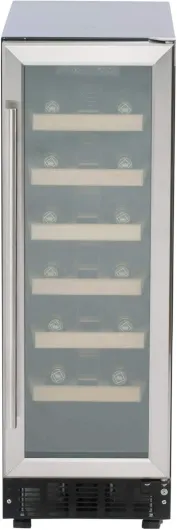
I picked up the Dellonda Baridi 7 Bottle Extra-Slim Undercounter Wine Fridge (model DH76) because I had a dead 15 cm gap at the end of my kitchen units that was just collecting dust and lost bottle caps. I didn’t want a full wine cabinet, just somewhere to keep a few bottles ready to drink and free up space in the main fridge. This one kept coming up because of the very narrow width and the decent amount of reviews, so I gave it a go.
After a couple of weeks of use, it’s pretty clear what this fridge is and what it isn’t. It’s basically a compact, tall, skinny box that keeps 6–7 normal bottles cool enough for most people. It’s not a serious wine storage solution for ageing expensive bottles, and it’s not magic: if you put it in a hot room, it’s going to struggle to reach the lowest temperatures. But as a daily “grab a cold bottle for dinner” kind of thing, it’s fine.
What stood out to me right away is how specific the use case is. If you don’t actually need the 15 cm width, there are better options with more capacity and nicer shelves. But if you’ve got that exact annoying narrow gap under your worktop and you want to fill it with something useful, this is one of the few products that fits. I was in that situation, so I basically accepted the compromises from the start.
Overall, my experience so far is that it looks good in the kitchen, it cools properly, but it does have a few design quirks and limitations you only notice once it’s in place. I’ll go through the design, performance, noise, build quality and value so you know what you’re getting into before you order it and start sanding down the feet like a few reviewers ended up doing.
Value for money: worth it if you need the 15 cm width
On value, this fridge sits in an interesting spot. If you only look at capacity and energy rating, it doesn’t look great: 20 litres, realistically 6 bottles, and a G energy rating at around 137 kWh/year. For the same money, you can often get a wider 12-bottle cooler with better internal shelves and sometimes a slightly better energy class. So if you have space for a 30 cm or 40 cm wide unit, this Dellonda starts to make less sense on pure value metrics.
Where it makes sense is if you specifically need a 15 cm undercounter unit. There just aren’t that many options in this exact size, and most of the competing products are in the same ballpark on price and features, or worse. In that context, paying a bit more per bottle of capacity is the trade-off for filling an otherwise useless gap and keeping your main fridge less cluttered. For me, freeing up a whole door shelf in the main fridge and making that skinny gap actually useful was worth the cost.
Running costs are not amazing but not terrible. 137 kWh/year is roughly what you’d expect from a small compressor fridge that’s on 24/7. If that bothers you, you can copy what one reviewer did and put it on a switched plug to turn it off when not needed, especially if you only use it heavily at weekends or for guests. The noise level and build quality are acceptable for the price, not premium but not junk either.
So in terms of value, I’d say: decent if you’re solving a specific space problem, average if you’re comparing it loosely to standard-width wine coolers. If you just want a cheap way to chill wine and don’t care about fitting it under a worktop, I’d look at other models. If you need slim and undercounter, this one starts to look like a sensible compromise.
Design and installation: slim, decent-looking, but a bit basic inside
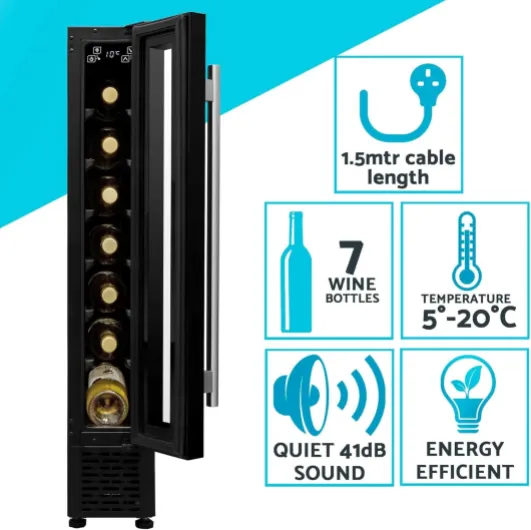
Design-wise, the main selling point is obvious: this thing is very slim. At 15 cm wide, it slides into places where nothing else fits. Under my standard-height worktop, it lines up well, and the door sits nicely above the kickboard. I did have to fiddle a bit with the adjustable feet to get it level, and I can see why one reviewer mentioned sanding a bit off the screw-in feet to get it low enough under their bar. If your flooring isn’t perfectly level or your worktop height is slightly off, expect a bit of messing about to get it sitting just right.
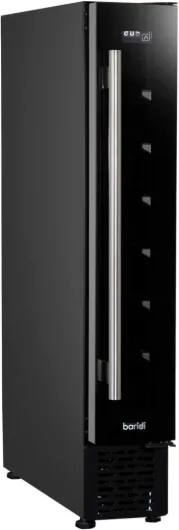
The front looks decent. You get a black body, a glass door, and a stainless steel handle. It’s not luxury, but it doesn’t look cheap from a normal distance either. The reversible door is handy if your layout demands it. Fitting the handle is straightforward, although one reviewer’s tip about a tiny bit of olive oil on the seal to help it sit properly again was actually useful; I had a slight seal twist when I first did it and that trick fixed it quickly.
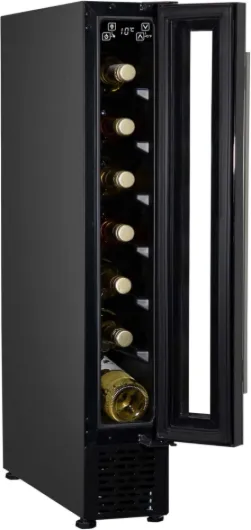
Inside, the design is more functional than pretty. The moulded plastic channels instead of removable shelves feel a bit budget. They work, but they don’t give you much flexibility. There’s no way to adjust heights or easily slide bottles in at an angle to fit odd shapes. Champagne bottles fit, but only certain ones; fancier or more bulbous Prosecco bottles can be a pain, exactly like one of the reviewers mentioned. The LED light looks nice when it’s on, but it switches off after about 10 minutes, which is a bit annoying if you like the look of it lit up as part of the room.
One thing that could have been thought through better is the position and visibility of the touch screen controls. You can adjust the temperature fairly easily, but once the door is shut, the display is basically hidden, so you can’t just glance over and see the current temperature. It’s not a deal-breaker, but it feels like a missed opportunity. Overall, the design is clean and practical from the outside, a bit no-frills on the inside, and clearly built with the narrow width as the priority rather than fancy internal layout.
Build quality and materials: okay, but clearly budget-focused
In terms of materials, this fridge feels solid enough, but you can tell where they saved money. The outer shell and the door frame feel sturdy; the door has a bit of weight to it, and the stainless steel handle is decent. The glass door doesn’t feel flimsy, and the seal sits properly once you’ve got it bedded in. The reversible hinge is fine and doesn’t wobble when the door is opened and closed normally.
Inside is where the cost-cutting shows more clearly. The moulded plastic interior looks and feels a bit cheap compared to wire or wooden shelves you see in more expensive wine coolers. The channels hold bottles securely, but there’s no premium feel to it. One reviewer said the shelves feel cheap but acceptable for the price, and that’s pretty much my view too. It’s not the sort of interior that makes you want to show it off with the door open, but it’s functional and easy to wipe clean.
The digital touch panel is basic but works. The buttons respond reliably, but the plastic around it doesn’t feel high-end. The LED light is fine, not too harsh, and does the job of letting you see what’s inside. The overall finish is clean enough, with no sharp edges or obvious defects on my unit. Some people have had issues with damage on delivery, but that’s more about shipping than the materials themselves. In my case, the unit came intact and there were no dents or scratches.
For a Chinese-made, budget-friendly wine fridge, the materials are in line with the price. You’re not getting thick insulation, heavy-duty racks or fancy trim, but you’re not getting something flimsy either. If you’re expecting premium cabinetry-level quality, you’ll be disappointed. If you just want something that looks okay from the outside and doesn’t feel like it’s going to fall apart when you pull a bottle out, it’s acceptable.
Durability and reliability impressions so far
I haven’t had this fridge for years, so I can’t pretend to give a long-term durability verdict, but I can share what I’ve seen so far and what I’ve picked up from other users’ comments. After a few weeks, it’s running steadily with no odd noises, no rattling, and no temperature swings that I can notice. The compressor cycles on and off as expected, and the automatic defrost seems to be doing its job since there’s no ice build-up inside.
The door still closes firmly, and the seal hasn’t loosened. The handle feels secure and doesn’t wobble. The plastic inside hasn’t warped or discoloured with normal use. I’ve pulled bottles in and out regularly, and the channels haven’t cracked or shown any stress marks. It’s not a tank, but for a small domestic appliance, it feels like it should hold up under normal home use as long as you’re not slamming the door or overloading it.
Looking at other reviews, you see the usual mix: a lot of people happy after months of use, and the occasional unit arriving damaged or failing early. The positive bit is that several users mention good customer service, with the seller arranging quick replacements when something arrived dented or not working. That doesn’t fix the hassle, but it’s better than being left stuck. With a 4.3/5 average rating from over a thousand reviews, it suggests most units are fine, but like any budget appliance, there are some lemons in the batch.
My honest feeling: durability is probably average for the price bracket. It doesn’t feel indestructible, but it also doesn’t feel like a disposable gadget. If you want something to last 10+ years in heavy use, I’d be looking at a more expensive brand and a less cramped design. If you want 3–5 years of light to moderate use out of a slim undercounter fridge, this seems realistic based on build, compressor type, and the general feedback it’s getting online.
Cooling, noise and day-to-day performance
Performance-wise, this fridge does what it’s supposed to do, with a couple of caveats. It uses compressor cooling with an automatic defrost, so it behaves more like a small normal fridge than a thermoelectric cooler. I’ve had it set between 8°C and 12°C most of the time, and it hits and holds those temperatures reasonably well in a normal kitchen that sits around 20–22°C. The brand clearly says it won’t go colder than the ambient room temperature, which sounds obvious but is worth repeating: if your kitchen is roasting in summer, don’t expect it to sit at 5°C comfortably.
From room temperature, bottles take a few hours to properly chill. It’s not instant, but I wasn’t expecting it to be. If you keep it stocked and just rotate bottles, it works fine. There’s no fancy multi-zone stuff, it’s just one simple cavity with a set temperature. The automatic defrost means you don’t get a big ice build-up, and so far I haven’t had any water pooling or weird condensation issues beyond what you’d expect when you open it in a humid room.
On noise, I’d call it low to moderate. The spec says 41 dB, which matches what my ears tell me: it’s quieter than a full-size fridge but not totally silent. When the compressor kicks in, you can hear a gentle hum. One reviewer said it’s a bit loud when it starts up; I’d say you notice it in a very quiet room, but as background noise in a normal kitchen or living space, it fades pretty quickly. Compared to a basic tabletop bar fridge I used to have, this one is roughly on par or slightly quieter, so I’m fine with it.
Where it slightly under-delivers is capacity versus the claim. In real life, this is basically a 6-bottle fridge with a spare awkward slot rather than a clean, easy 7-bottle layout. That bottom rear bend that someone mentioned is real: a standard wine bottle doesn’t sit properly there. If you drink a lot of champagne or chunky bottles, you’ll notice the limitations quickly. For straight, standard bottles, it’s fine, but don’t expect to cram in seven fat bottles and close the door without a fight.
What this fridge actually is in day-to-day use
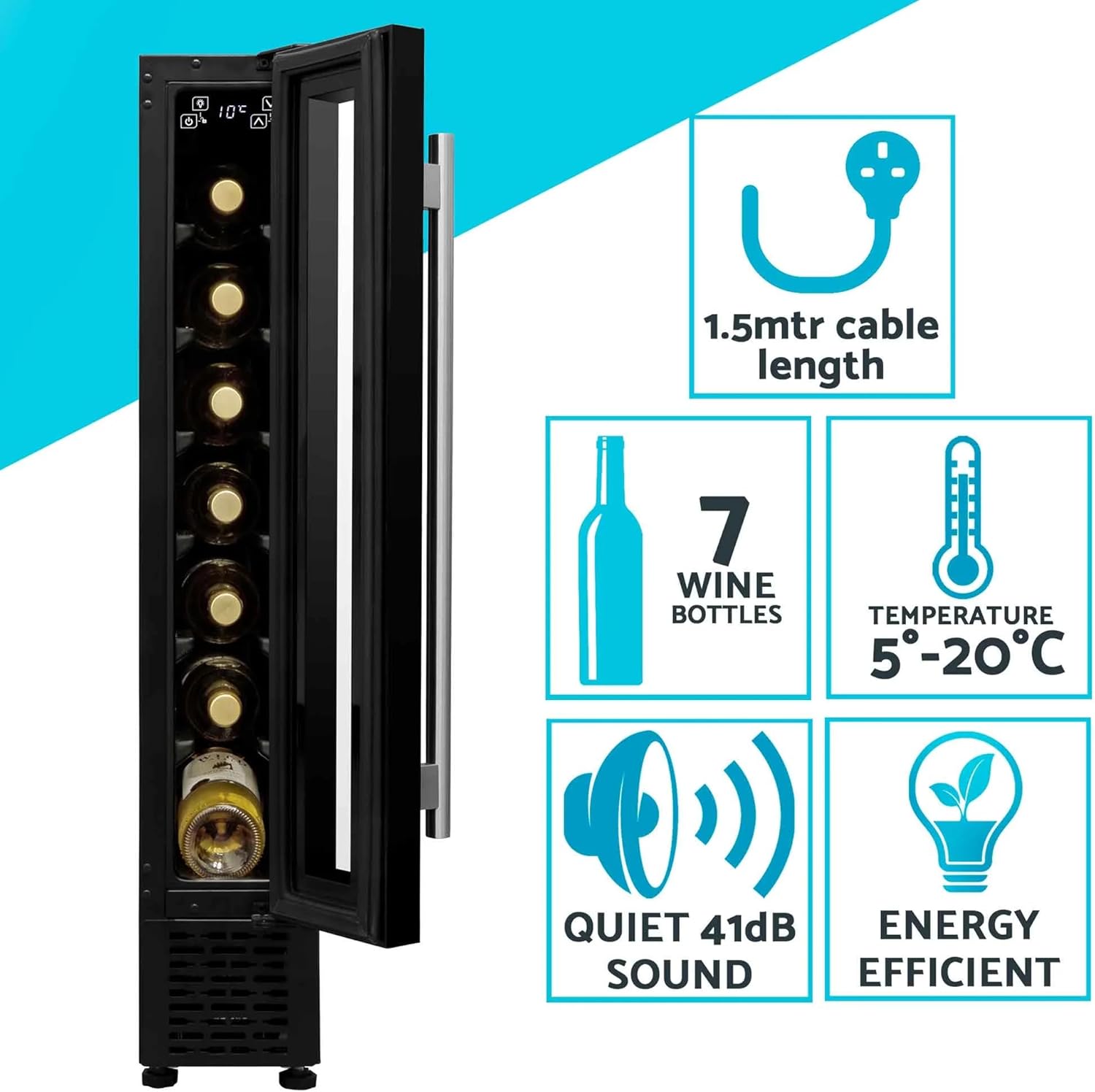
On paper, the Dellonda DH76 is a 7-bottle, 20-litre, compressor-based undercounter wine fridge that’s only 15 cm wide, 52 cm deep and 87 cm high. In reality, it behaves like a small, narrow drinks fridge that’s mainly designed around standard 750 ml wine bottles. The brand pushes the “7 bottle” capacity, but in practice you’re looking at more like 6–6.5 bottles if your bottles are on the chunky side. One Amazon reviewer mentioned the bend at the bottom at the back that blocks a full bottle, and I ran into the same thing with a fatter bottle of red that just didn’t sit right.
Inside, there aren’t traditional wire shelves like you see in most wine coolers. It’s all moulded plastic channels, each one meant to hold a single bottle. It looks a bit basic when you open the door, but the bottles do sit in place and don’t roll around. The fridge has a small LED light and a digital touch control panel that lets you set the temperature between 5–20°C. The odd thing is that you can’t really see the display properly when the door is closed, so checking or changing the temperature usually means opening the door anyway.
In daily use, I’ve been keeping it around 8–10°C for whites and fizz, and that seems fine. It cools down from room temperature in a few hours, not instantly, but fast enough if you’re not in a rush. It’s rated at 137 kWh per year, which isn’t great on paper (G rating), but for a small compressor fridge that runs all the time, it’s not shocking either. Some people get around this by putting it on a switched plug and turning it off when not needed; I’ve done that a few times when I knew I wouldn’t be using it for a week.
So in practice, this is a simple, narrow, small-capacity wine fridge that’s mainly about fitting into a 15 cm gap. It cools properly, it’s fairly quiet, but it’s not packed with clever features and it’s definitely not built like a premium wine cabinet. If you go in with those expectations, it’s easier to live with its quirks.
Pros
- Ultra-slim 15 cm width fits awkward undercounter gaps most other fridges can’t use
- Keeps 6 standard bottles nicely chilled with simple 5–20°C digital control
- Looks clean and modern from the front with low noise and automatic defrost
Cons
- Real capacity is closer to 6 bottles due to the bottom rear bend and limited space for chunky bottles
- Basic plastic interior and G energy rating make it poor value if you don’t need the slim form factor
Conclusion
Editor's rating
The Dellonda Baridi DH76 is a very narrow, simple wine fridge that mainly exists to solve one problem: filling a 15 cm undercounter gap with something more useful than a blank panel. It looks clean from the front, the stainless handle and glass door are decent, and it cools wine reliably between 5–20°C in a normal kitchen. Noise is low enough for everyday use, and the automatic defrost and compressor cooling mean you don’t have to babysit it.
On the downside, the inside is basic plastic, the “7 bottle” capacity is optimistic, and the G energy rating isn’t great. The moulded channels limit flexibility, especially if you like chunky champagne or Prosecco bottles, and you can’t really see the temperature display properly with the door closed. It’s not built like a high-end wine cabinet, and if you have more width available, there are better value options with more capacity and nicer interiors.
I’d recommend this fridge if you have a tight 15 cm space under a worktop or bar and just want 6 or so bottles ready to drink without cluttering your main fridge. It’s also fine if you care more about looks from the outside than fancy shelving inside. If you’re serious about wine storage, want to age bottles, or you’re chasing the best energy efficiency and capacity for the money, you should probably skip this and look at a wider, better-specced cooler.